Industrial age · state
Sikh Empire
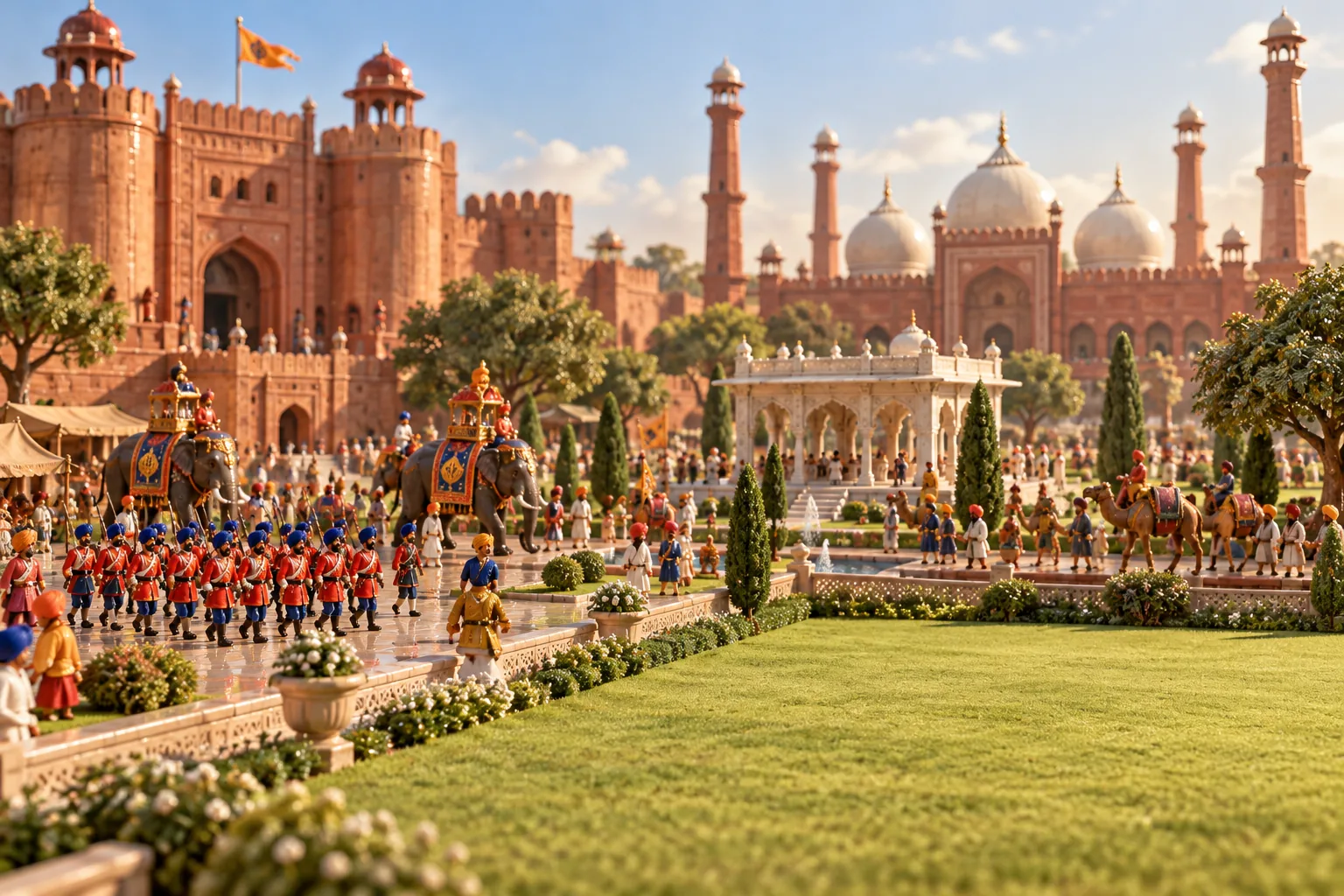
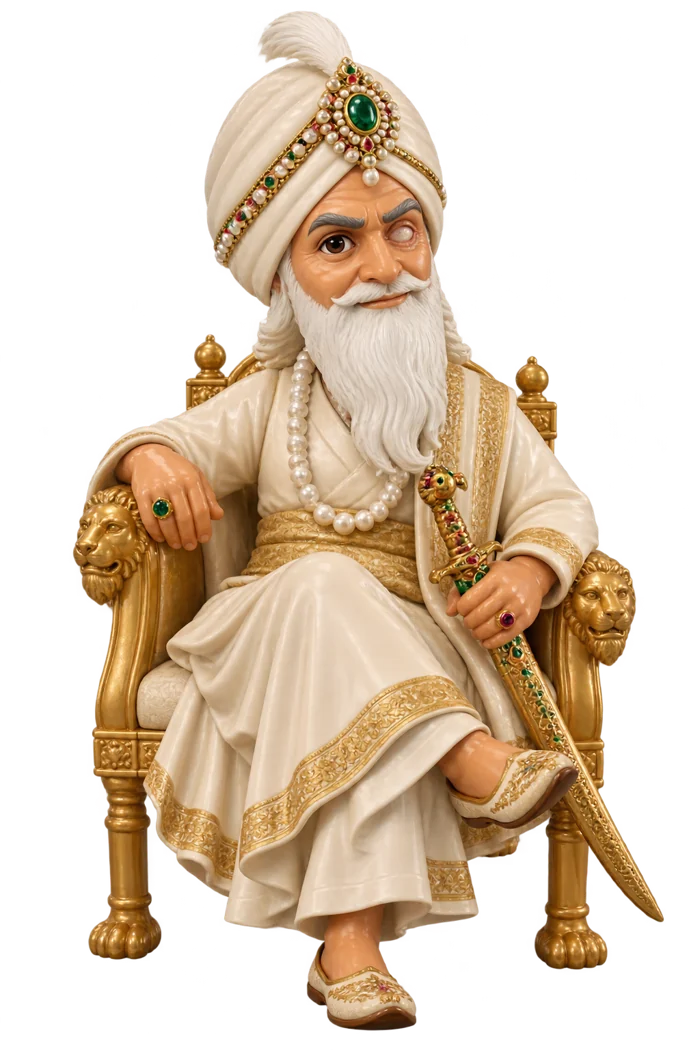
Ranjit Singh forged it from rival Sikh bands into a power with European-trained troops, and it owned the Koh-i-Noor diamond.
In the 18th century the Punjab was split among twelve Sikh confederacies, the misls, which fought the Mughals and the invading Afghans of Ahmad Shah Abdali. In 1799 Ranjit Singh of the Sukerchakia misl captured Lahore, and on 12 April 1801 he was crowned there by Sahib Singh Bedi, a descendant of Guru Nanak. His state called itself the Sarkar-i-Khalsa; Europeans called it the Kingdom of Lahore.
Ranjit Singh took the lands of the Durrani Afghans one by one. He annexed the Kashmir Valley after the battle of Shopian in 1819, his general Hari Singh Nalwa won victories in Hazara and Peshawar, and Peshawar was formally annexed in 1834. At its height the empire reached from Gilgit and Tibet to the deserts of Sindh, and from the Khyber Pass to the Sutlej. His court drew on Sikhs, Hindus, Muslims and Christians, and European officers, among them Frenchmen, Italians and Americans, rose high at court.
After Ranjit Singh died in 1839, the court fell into feuds and murders, and the child Duleep Singh came to the throne with his mother Jind Kaur as regent. The Khalsa army fought two wars with the British East India Company. After the second, ended by defeat at Gujrat, the Punjab was annexed in 1849.
Read more on Wikipedia
Sources: en.wikipedia.org/wiki/Sikh Empire, en.wikipedia.org/wiki/Ranjit Singh


