Middle Ages · war
Siege of Baghdad (1258)
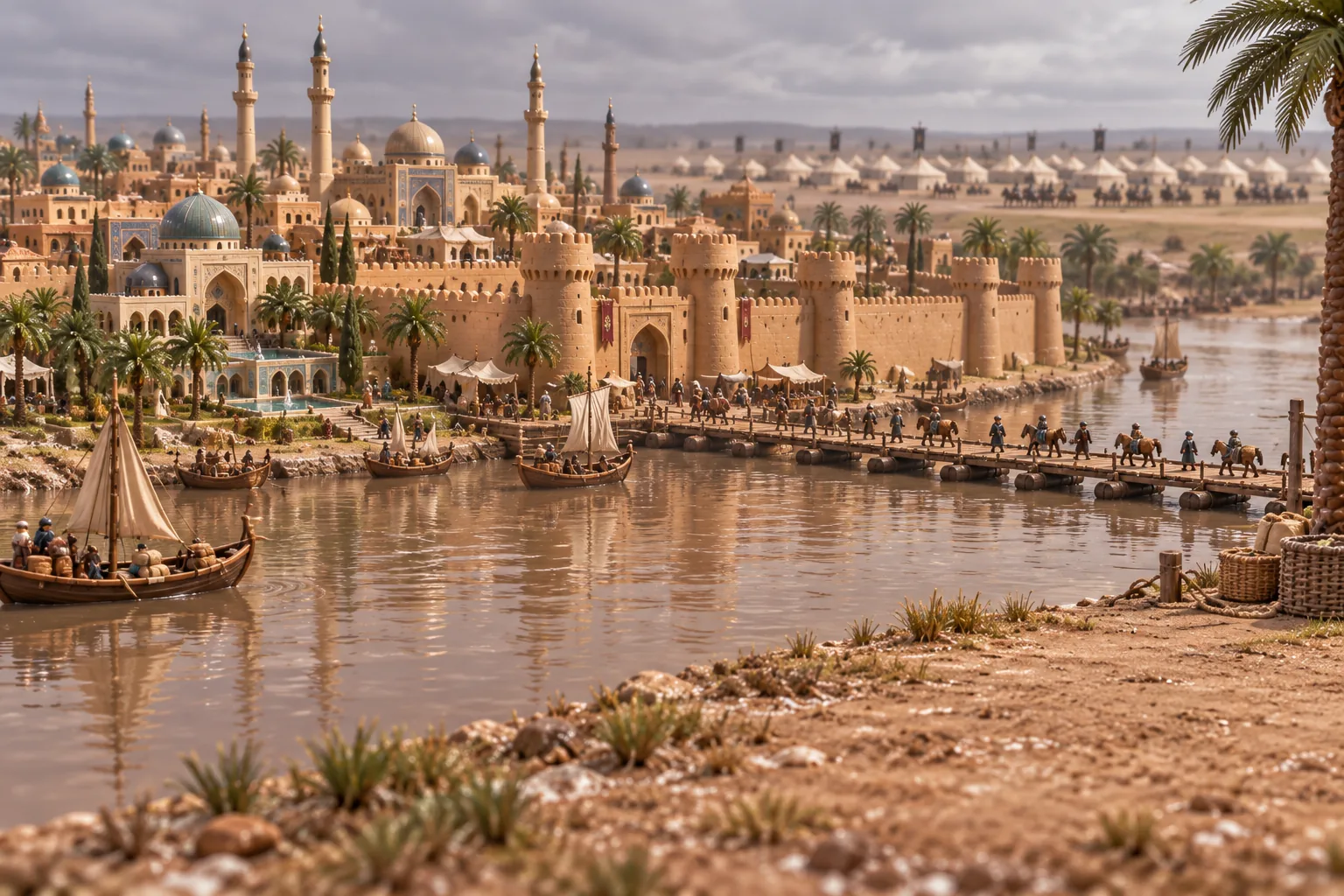
Baghdad had been one of the greatest cities on Earth for five centuries; it took a Mongol army about two weeks to break its walls.
Baghdad was founded in 762 by al-Mansur, the second Abbasid caliph, and grew into the heart of the Islamic Golden Age, a city of scholars and libraries like the House of Wisdom. By the 13th century the caliphs ruled little beyond the city, but their title still carried great weight. In 1251 Möngke Khan became ruler of the Mongol Empire and sent his brother Hulegu, a grandson of Genghis Khan, west with a huge army. Hulegu crushed the Nizari Ismaili 'Assassins' in 1256, then demanded that the caliph al-Musta'sim submit. The caliph answered with defiance.
Mongol columns closed on Baghdad from several sides. On 17 January 1258 they routed a sortie from the city by flooding its camp, and soon surrounded Baghdad with a palisade and a ditch. The assault on the walls began on 29 or 30 January; siege engines opened breaches, and by 4 February the Mongols held the eastern wall. Al-Musta'sim surrendered on 10 February. Three days later the looting began, and many thousands of people were killed; nobody knows how many, and Hulegu's own claim of two million is thought to be inflated.
On 20 February Hulegu executed the caliph and his family, ending the Abbasid Caliphate after five centuries. Hulegu then ordered Baghdad rebuilt and its bazaars reopened, and it became a city of his new Ilkhanate, though Tabriz was now the capital. A 16th-century writer claimed so many books were thrown into the Tigris that the river ran black, yet historians note that big libraries reopened within two years.
Read more on Wikipedia