Early modern · war
Seven Years' War
Prussia was down to 60,000 men and Berlin was about to be besieged when the Russian empress suddenly died, and her pro-Prussian successor switched sides.
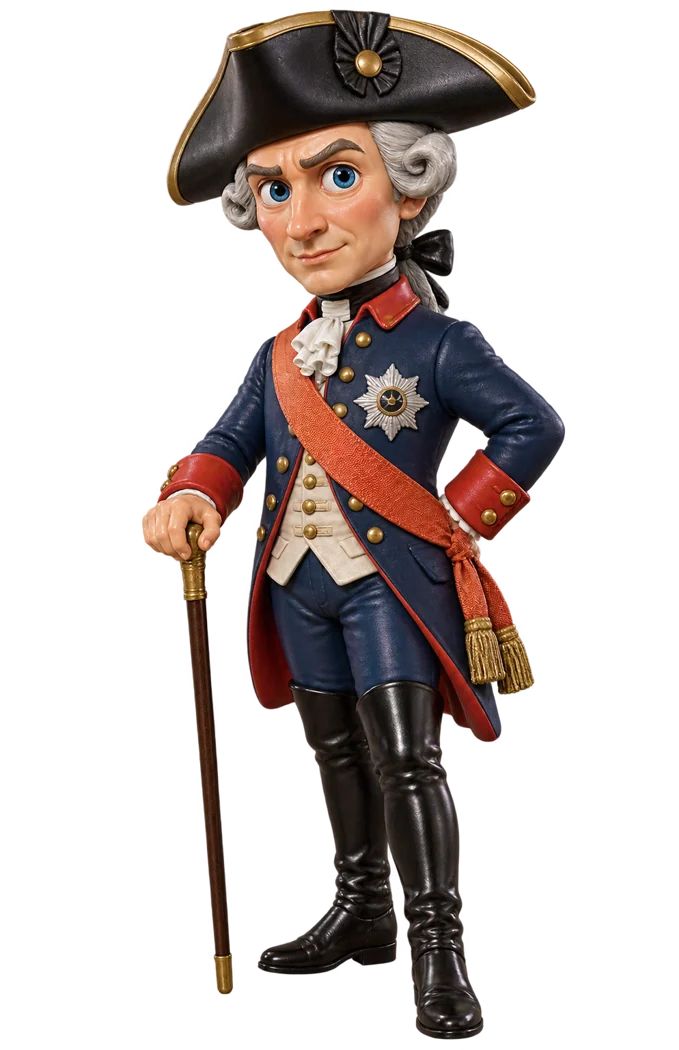
The War of the Austrian Succession ended in 1748 with a peace nobody liked. Austria wanted back the rich province of Silesia, taken by Prussia, and in a 'Diplomatic Revolution' the old enemies Austria and France became allies, while Britain joined Prussia. Russia, Sweden and later Spain joined the anti-Prussian side. On 29 August 1756 Frederick II of Prussia struck first, marching into Saxony.
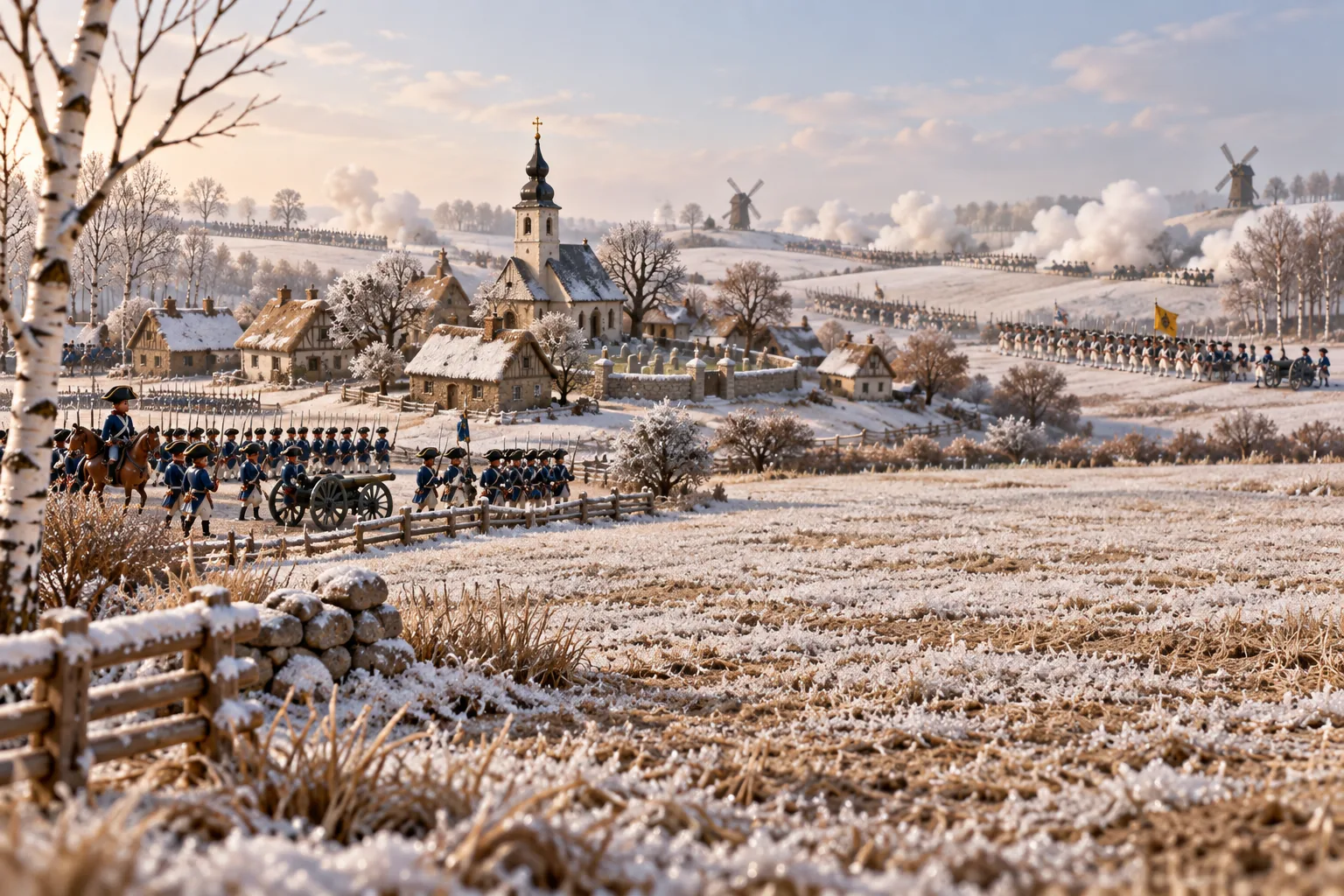
In Europe the war was a fight for Prussia's survival. In November and December 1757 Frederick crushed a French and imperial army at Rossbach and a much larger Austrian army at Leuthen, which he always called his greatest victory. But in 1759 he lost half his army at Kunersdorf, the worst defeat of his career, and was driven to the brink of abdication. Overseas, Britain won almost everywhere: Robert Clive's victory at Plassey in 1757 opened Bengal, and in 1759, the 'year of miracles', Britain took Quebec and beat the French navy at Lagos and Quiberon Bay.
Then on 5 January 1762 Empress Elizabeth of Russia died. Her successor, Peter III, made peace with Frederick and even lent him troops. The Treaty of Paris of 10 February 1763 gave Britain Canada and the lead in India, and the Treaty of Hubertusburg left Silesia to Prussia, now a great power.
Read more on Wikipedia


