Antiquity · politics
Second Triumvirate
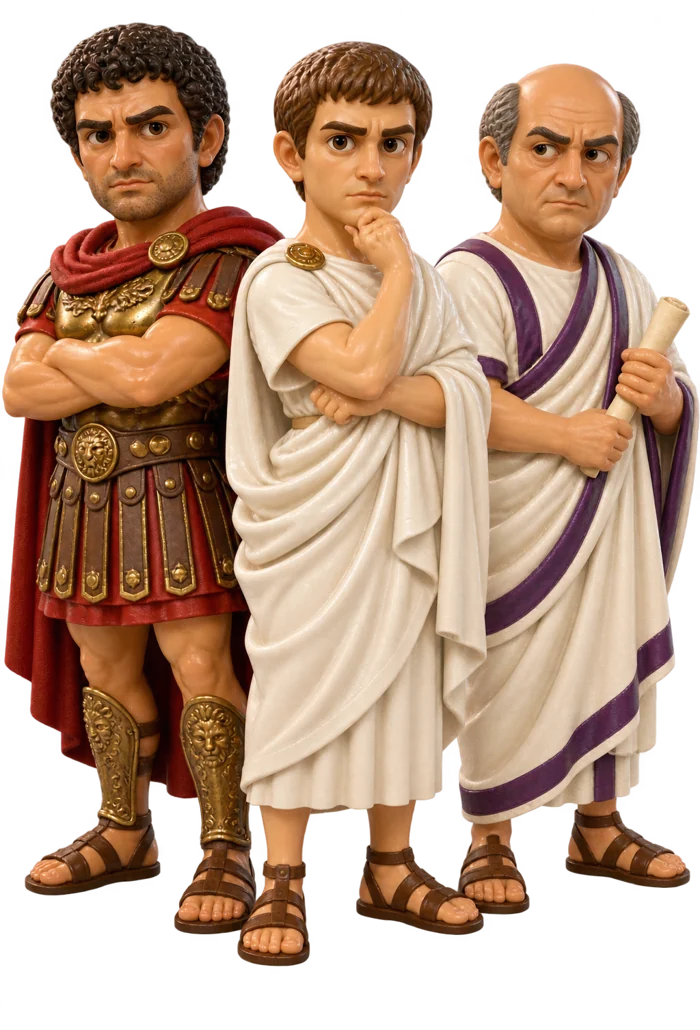
Three rivals who had been at war months earlier sat down together, divided the Roman world, and then traded the lives of their own friends and relatives.
After Julius Caesar was murdered on 15 March 44 BC, his followers fell out. The consul Mark Antony fought the Senate, and Caesar's 19-year-old heir, Octavian, raised a private army against him. In August 43 BC Octavian marched on Rome and made himself consul, then went north to meet Antony under the protection of the general Marcus Aemilius Lepidus. Urged on by their soldiers, the rivals made peace. On 27 November 43 BC a law, the lex Titia, made the three 'triumvirs for restoring the Republic' for five years, with power to make laws, punish without appeal and appoint all officials. They split the western provinces between them.
They began with lists of the proscribed, men who could be killed by anyone for a reward and whose property was seized. Ancient writers count them differently, from 130 senators plus many rich equestrians to 300 men in all. The great orator Cicero, who had attacked Antony in his speeches, was among them. In October 42 BC Antony and Octavian defeated Caesar's assassins Brutus and Cassius at Philippi in Greece, and both killers took their own lives.
Antony then took the east and Octavian the west. Renewed in 37 BC, the pact slowly fell apart. Octavian's admiral Agrippa beat Sextus Pompey at Naulochus in 36 BC, and Octavian pushed Lepidus out. Antony allied with Cleopatra, and their defeat at Actium in 31 BC left Octavian, the future Augustus, sole master of Rome.
Read more on Wikipedia


