Industrial age · state
Second French Empire
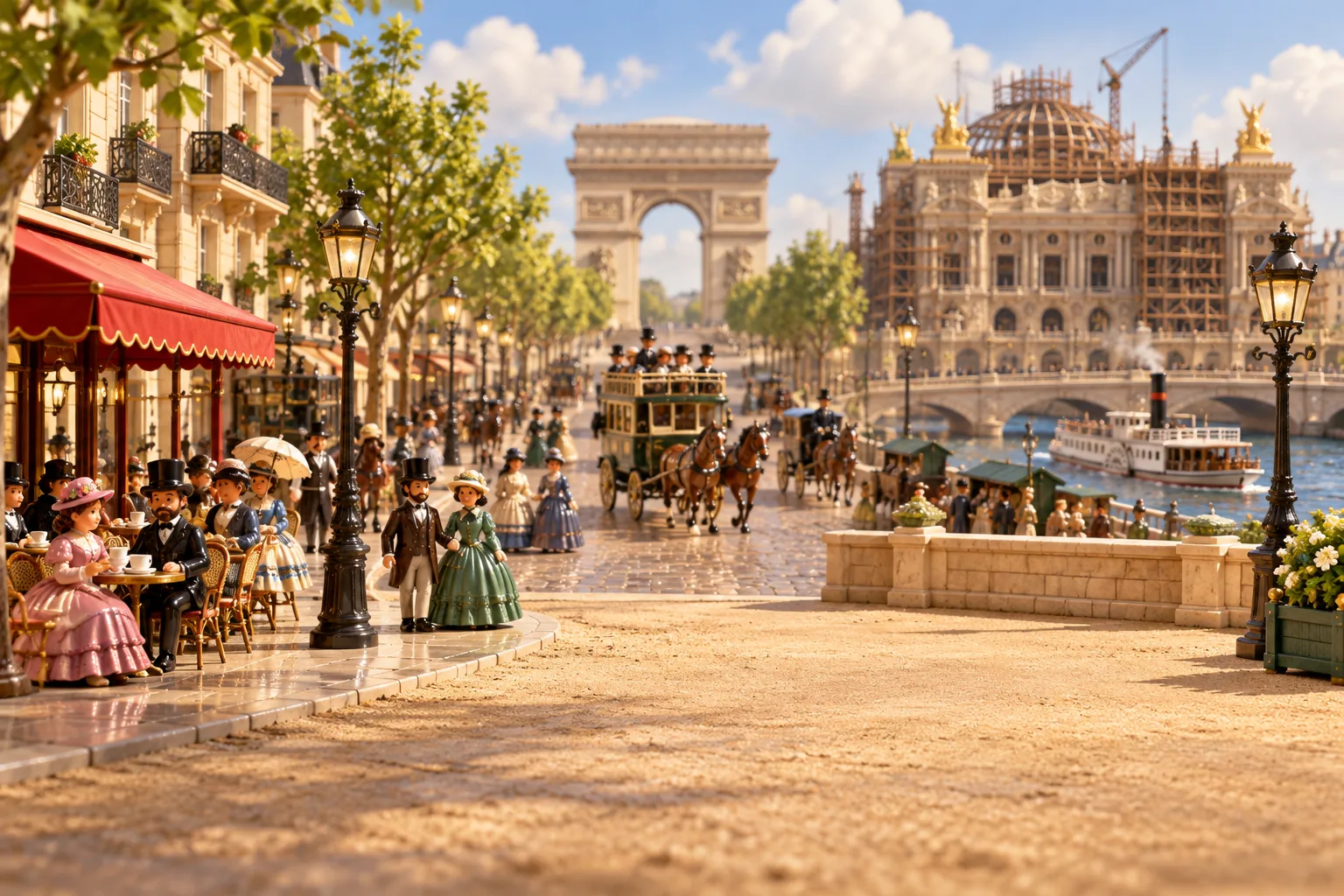
Napoleon III had Haussmann rebuild Paris with wide boulevards, then was taken prisoner by the Prussians at Sedan in 1870.
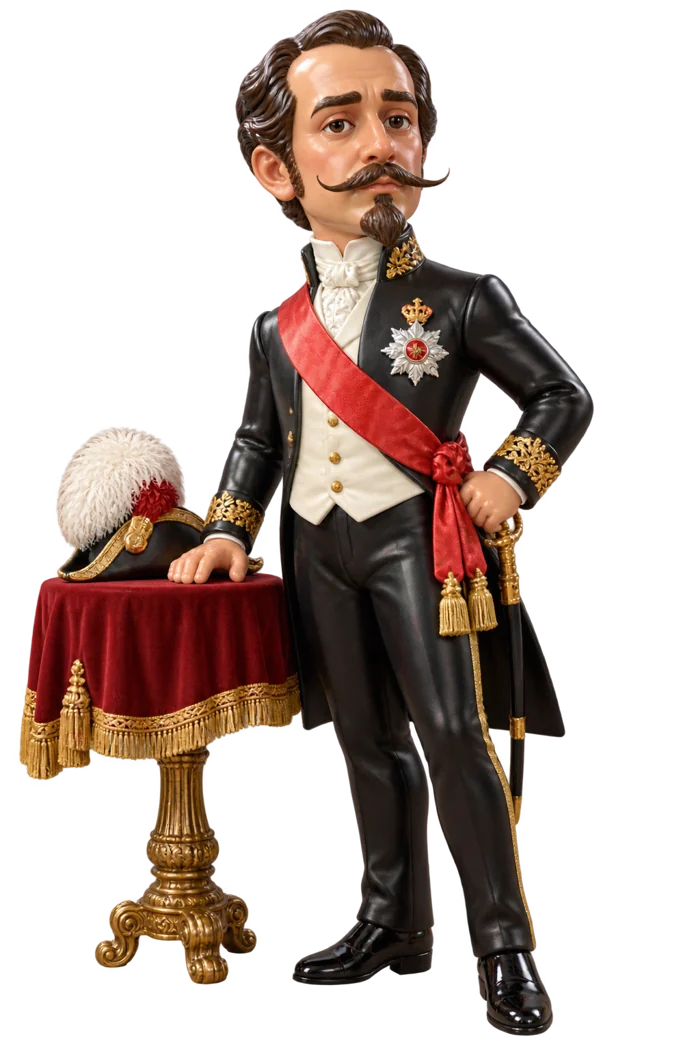
Louis-Napoléon Bonaparte, nephew of Napoleon I, was elected president of the French Second Republic in 1848. On 2 December 1851 he staged a coup and dissolved the National Assembly, and a referendum later that month backed him with 92 percent. After a second referendum passed with 97 percent, he proclaimed himself Emperor of the French as Napoleon III on 2 December 1852.
Ruling at first with dictatorial powers, he made railways a priority, and by 1870 France had an excellent network. With Georges-Eugène Haussmann he spent lavishly to rebuild Paris into its modern form, with broad boulevards. He won the Crimean War, which ended in 1856, and a war in Italy that brought France Savoy and Nice. He doubled the overseas empire, taking New Caledonia and Cochinchina and making Cambodia a protectorate in 1863, but his attempt to set up an empire in Mexico ended in a fiasco. From 1859 the regime slowly became a liberal and then a parliamentary empire.
Bismarck turned a diplomatic quarrel so that France declared war on Prussia on 15 July 1870. The French army was surrounded at Sedan and forced to surrender, and the emperor was taken prisoner. In Paris the Third Republic was proclaimed on 4 September 1870, and Napoleon and the Empress Eugénie went into exile in England.
Read more on Wikipedia
