Industrial age · war
Second Boer War
When the besieged town of Mafeking was relieved, London celebrated so wildly that the English language gained a new word: "mafficking".
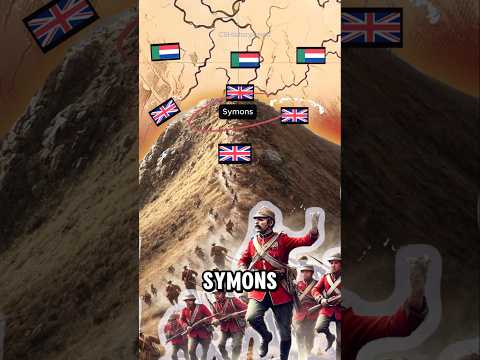
The Boers, descendants of Dutch settlers, ran two independent republics in southern Africa, the South African Republic, or Transvaal, and the Orange Free State. They had beaten the British once, in the First Boer War of 1880–1881. Then gold was found on the Witwatersrand, and thousands of foreigners, mostly British, poured into the Transvaal. They could vote only after 14 years' residence and protested to the British in the Cape. Talks at Bloemfontein failed in June 1899, and war was declared on 11 October.
The Boers struck first, besieging British garrisons at Ladysmith, Mafeking and Kimberley. In Black Week, 10–15 December 1899, the British lost three battles, and in January 1900 they were beaten again at Spion Kop. Then Lord Roberts and Lord Kitchener took command, relieved the besieged towns and invaded the republics with 180,000 men. Pretoria fell in June 1900, and Britain annexed both republics.
The Boers fought on for two more years as guerrillas. The British answered with scorched earth: they burned farms and forced more than 100,000 Boer civilians into concentration camps, where 26,000 died of starvation and disease; there were separate camps for black Africans too. Emily Hobhouse exposed the conditions to the British public. Most Boer commanders accepted the Treaty of Vereeniging and surrendered in May 1902.
Read more on Wikipedia