Ancient world · state
Scythians
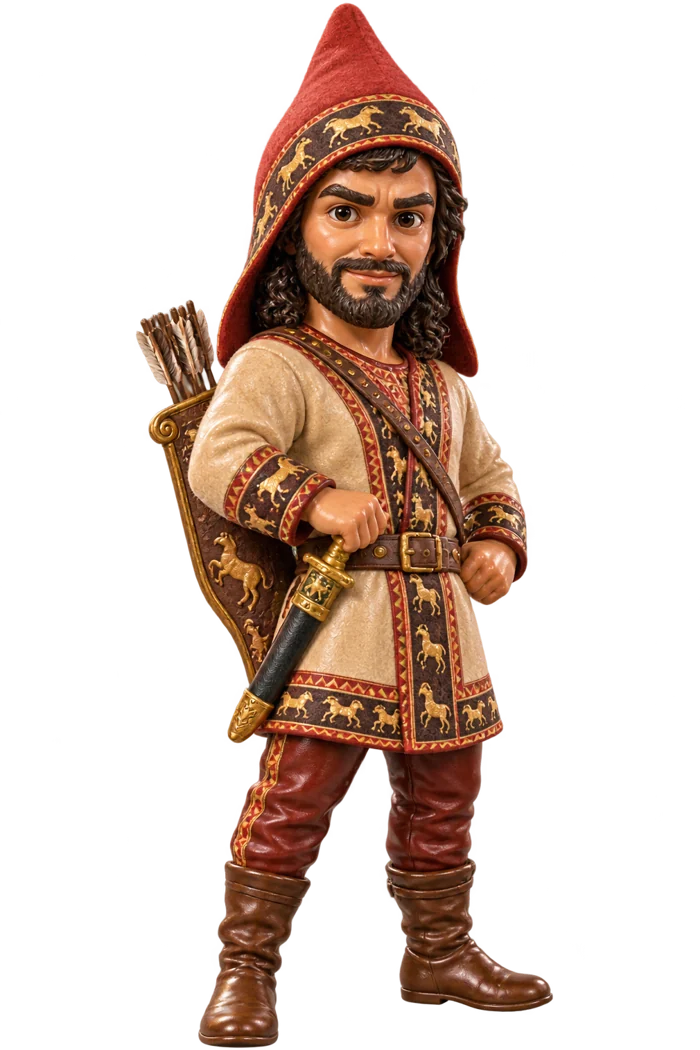
Their very name meant archers, and for a generation these steppe horsemen were the masters of the Middle East.
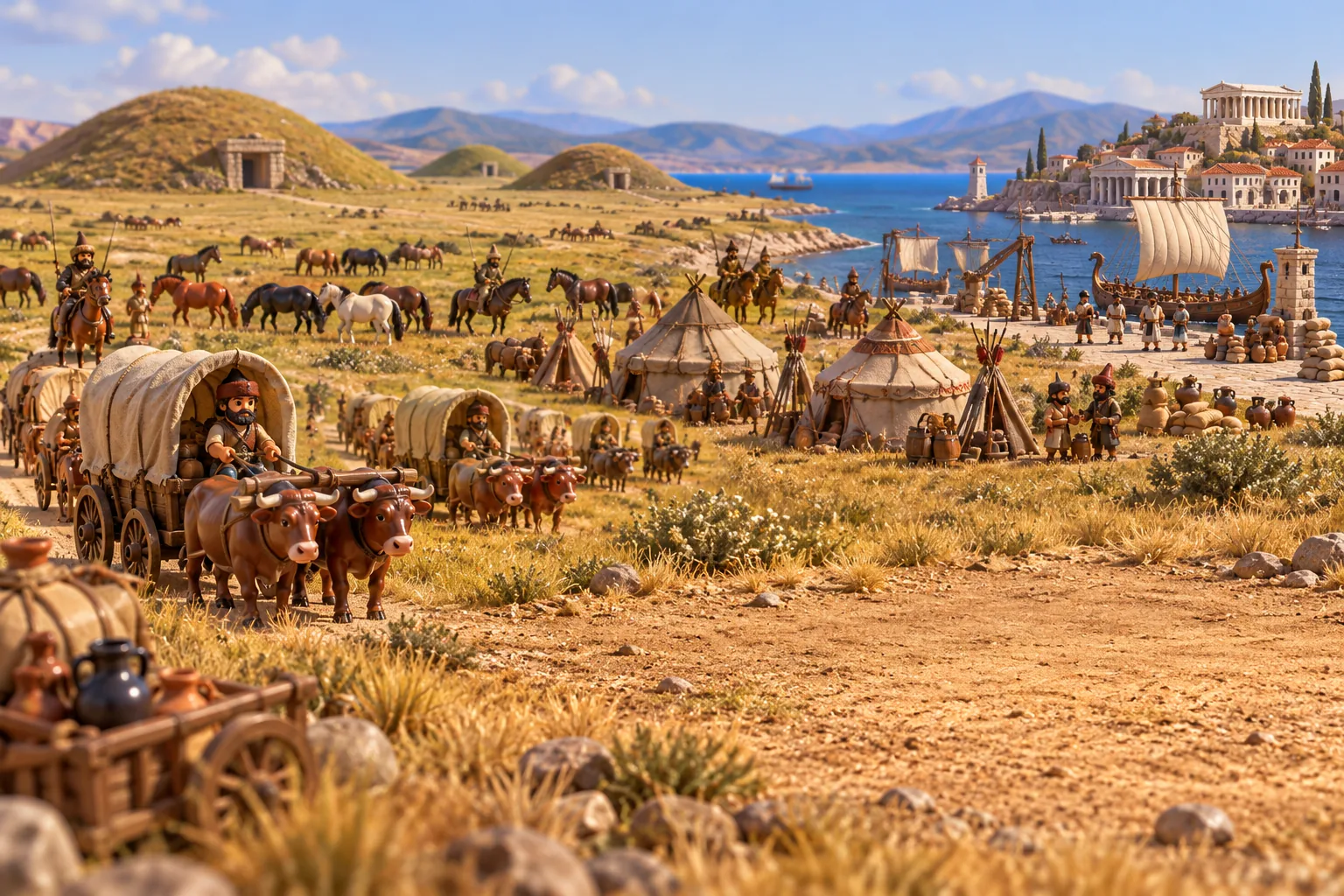
The Scythians were Iranic nomads who rode west from Central Asia in the ninth and eighth centuries BC and settled on the Pontic steppe north of the Black Sea. Skilled in mounted warfare, they pushed aside the Cimmerians, and in the seventh century BC they crossed the Caucasus and raided West Asia. Their king Bartatua asked to marry a daughter of the Assyrian king Esarhaddon around 672 BC.
Under Madyes, Bartatua's son by the Assyrian princess, the Scythians imposed their rule on Media, conquered Urartu and beat the Cimmerians, and their power stretched from the Halys river in Anatolia to the Caspian. A raid reached the borders of Egypt, where the pharaoh Psamtik I turned them back with gifts. They helped the Medes and Babylonians take Nineveh in 612 BC, but the Medes later drove them out of West Asia. In 513 BC the Persian king Darius I invaded their steppe kingdom, with unclear results.
The fourth century BC was a golden age centred on the capital Kamianka, but the most famous king, Ateas, was killed fighting Philip II of Macedon in 339 BC. In the early third century BC competition from Ptolemaic Egypt's grain, a changing climate, overgrazed pastures and the arrival of the Sarmatians, who seized the Scythian pastures, brought the kingdom down, and Kamianka was abandoned.
Read more on Wikipedia
Sources: en.wikipedia.org/wiki/Scythians