Industrial age · culture
Scopes Trial
A few men in a small-town drugstore cooked up a trial to put their town on the map, and a willing young teacher agreed to be the defendant.
In March 1925 Tennessee passed the Butler Act, which banned teaching human evolution in public schools. The American Civil Liberties Union offered to defend anyone charged under it. In Robinson's Drug Store in Dayton, local businessmen saw a chance for publicity and persuaded John T. Scopes, a 24-year-old teacher, to be the test case. He was not even sure he had ever taught evolution, but the state's own textbook, George William Hunter's Civic Biology, described it, so he agreed to be charged.
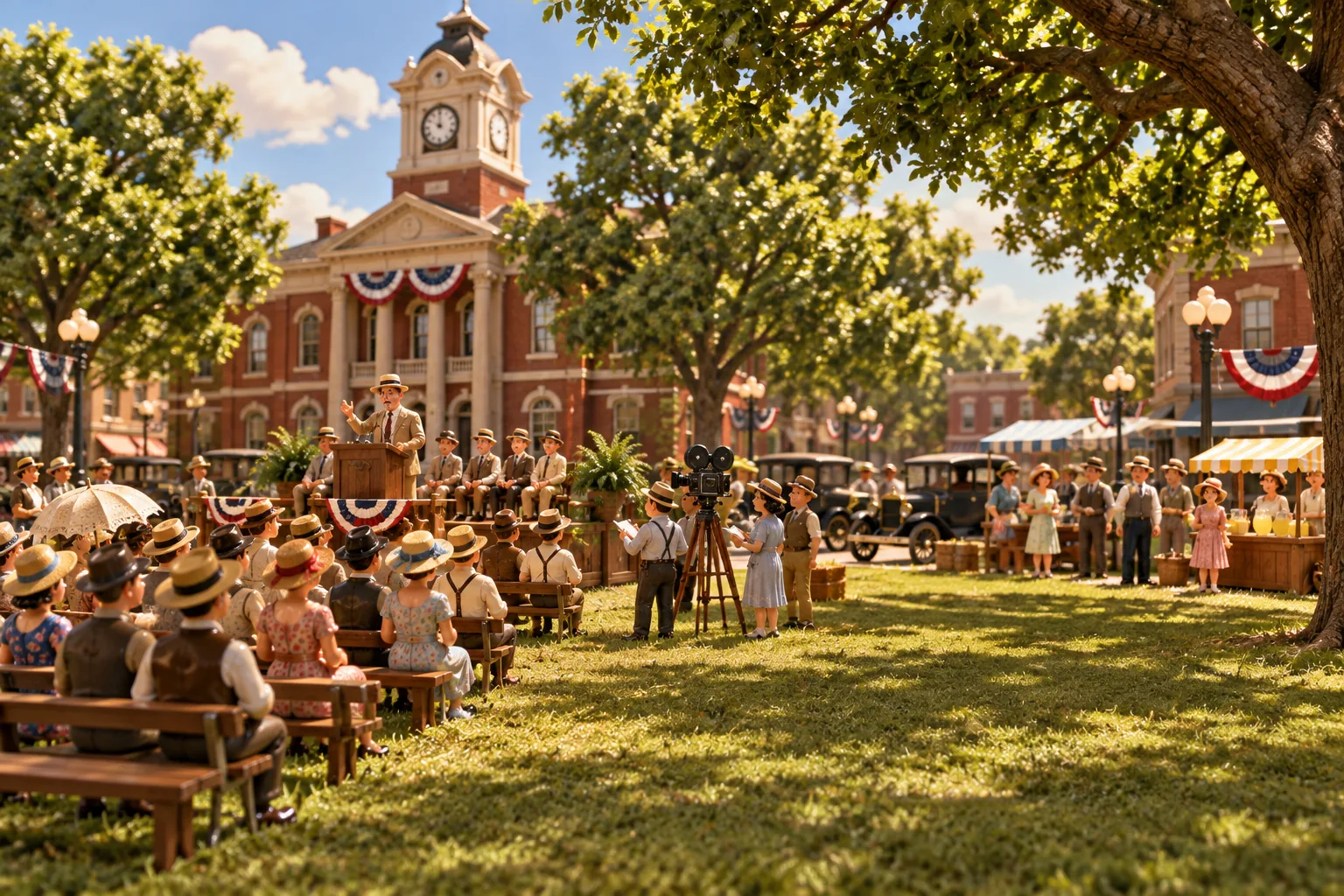
The trial opened on 10 July. The three-time presidential candidate William Jennings Bryan joined the prosecution; the famous defence lawyer Clarence Darrow led the defence. Reporters filled the town, and it was the first American trial broadcast nationally on radio. Judge John Raulston would not let the defence's scientists testify before the jury. So on the seventh day, on a stand on the courthouse lawn, moved outside because of the crowds and stifling heat, Darrow called Bryan himself as a witness on the Bible and questioned him about its stories.
The judge struck the exchange from the record. On 21 July the jury took nine minutes to find Scopes guilty, and he was fined $100. Bryan died suddenly five days after the trial ended. On appeal the Tennessee Supreme Court upheld the law but set aside the conviction on a technicality: the jury, not the judge, should have set the fine. The Butler Act stayed on the books until 1967.
Read more on Wikipedia
Sources: en.wikipedia.org/wiki/Scopes trial
