Antiquity · state
Satavahana dynasty
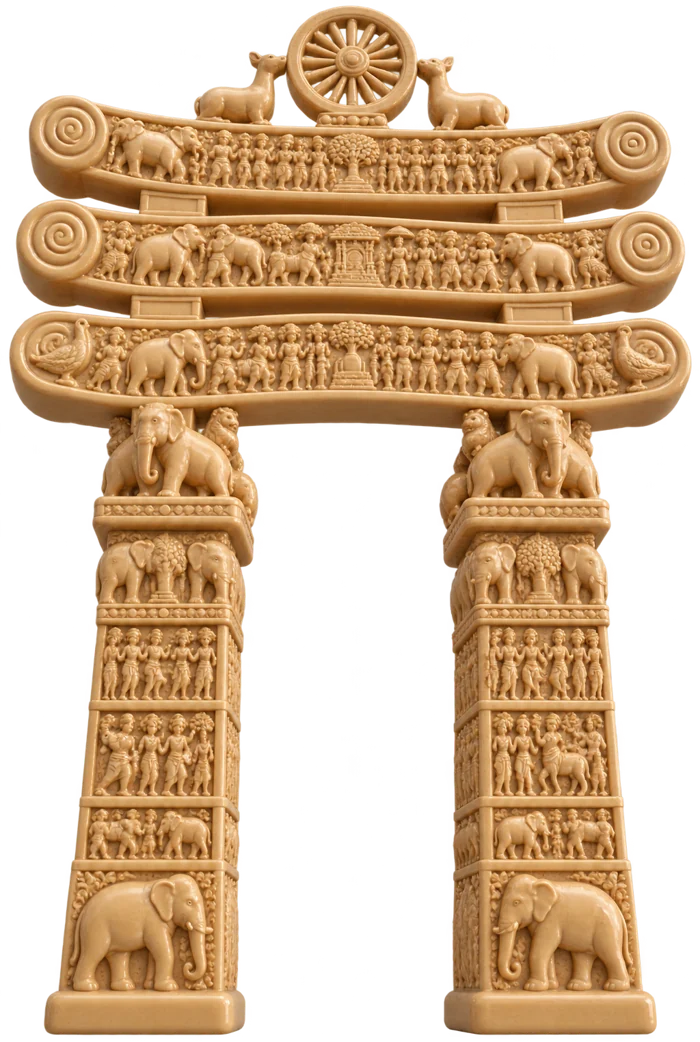
They ruled the Deccan for centuries, struck coins with their kings' portraits and are credited with the carved gateways at Sanchi.
The Satavahanas, called the Andhras in the Puranas, were an ancient Indian dynasty whose kingdom mainly covered present-day Andhra Pradesh, Telangana and Maharashtra. Most scholars date their rule from the late 2nd century BC to the early 3rd century AD. The Puranas say the first king ruled for 23 years, and coins naming a Chimuka Satavahana, often identified with the founder Simuka, have been found at Kotilingala in Telangana. Their capitals at different times included Pratishthana, today's Paithan, and Amaravati.
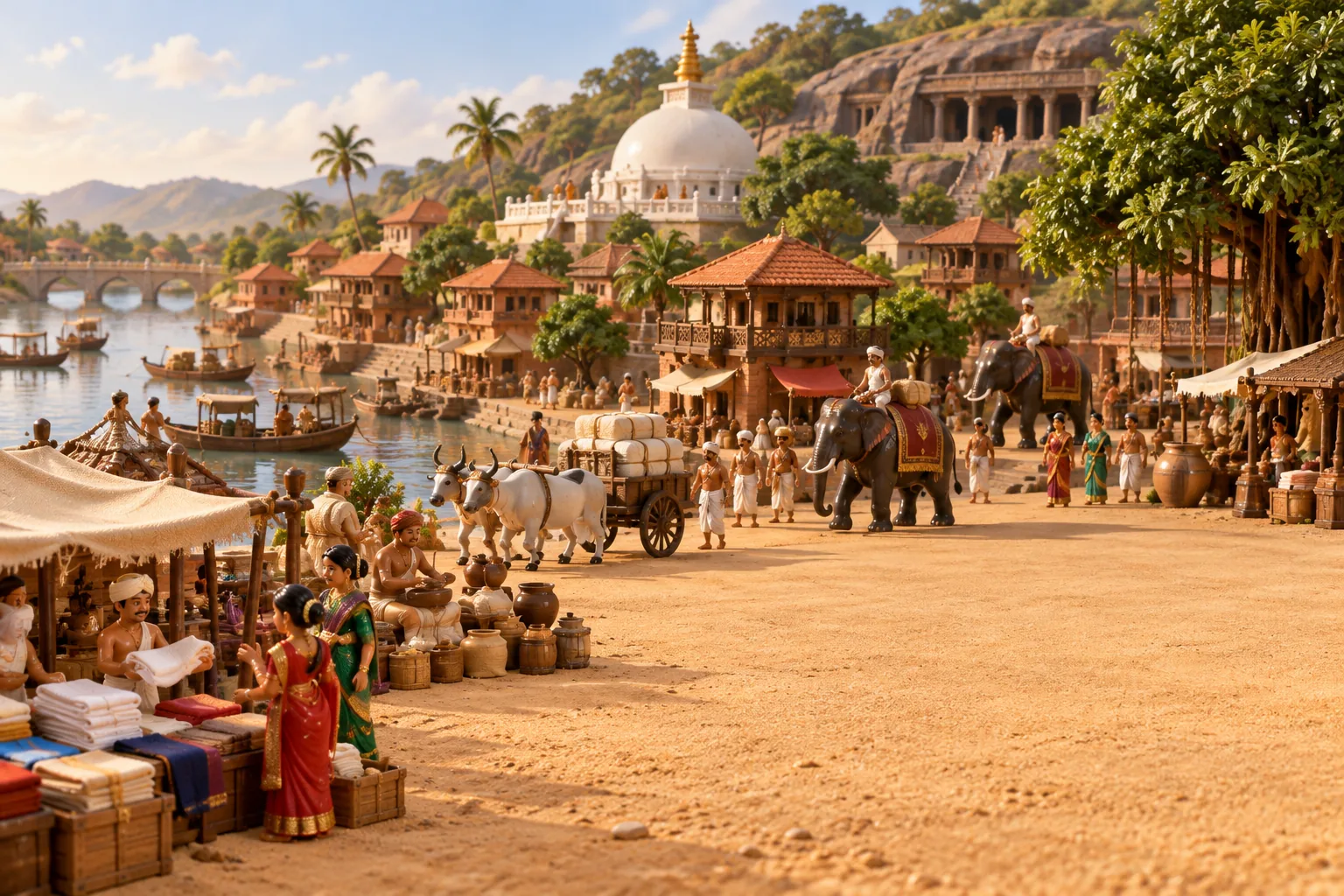
The Satavahanas formed a cultural bridge between the Ganges plain and the far south of India, and grew rich on trade: coins showing ships with two masts have been found on the Coromandel Coast. One early king performed Vedic sacrifices such as the horse sacrifice. Satakarni II, known from an inscription at Sanchi, is credited with its decorated gateways, and a later king, Hāla, is said to have composed the Gaha Sattasai, poems in Maharashtri Prakrit.
Their long struggle with the Western Satraps turned under Gautamiputra Satakarni, whose mother's inscription at Nashik praises him for rooting out the family of Nahapana and restoring the glory of his race. The dynasty peaked under him and his successor Vasisthiputra Pulamavi. Later the Saka ruler Rudradaman I boasted that he had twice defeated a Satakarni, lord of the Deccan. By the early 3rd century the kingdom had broken into smaller states.
Read more on Wikipedia


