Prehistory · people
Sapiens in Europe
When our species walked into Europe, the continent already belonged to the Neanderthals. Within a few thousand years, only one kind of human was left there.
Around 45,000 years ago, groups of Homo sapiens, probably spreading from western Asia, began to settle in Europe, a continent Neanderthals had held for hundreds of thousands of years. The newcomers are often called Cro-Magnons, after a rock shelter at Les Eyzies in France where road workers building a road to a new railway station dug up human skeletons in 1868.
Ancient DNA shows the arrival was not one clean wave. The earliest pioneers, such as people found at Bacho Kiro in Bulgaria and Peștera cu Oase in Romania, belonged to lineages that left little or no trace in today's Europeans. Other groups, present by about 38,000 years ago, became the ancestors of Europe's later hunter-gatherers. Along the way the two kinds of human met and had children: a man from Oase who lived about 40,000 years ago had a Neanderthal ancestor only four to six generations back. The Neanderthals themselves died out between 40,000 and 35,000 years ago.
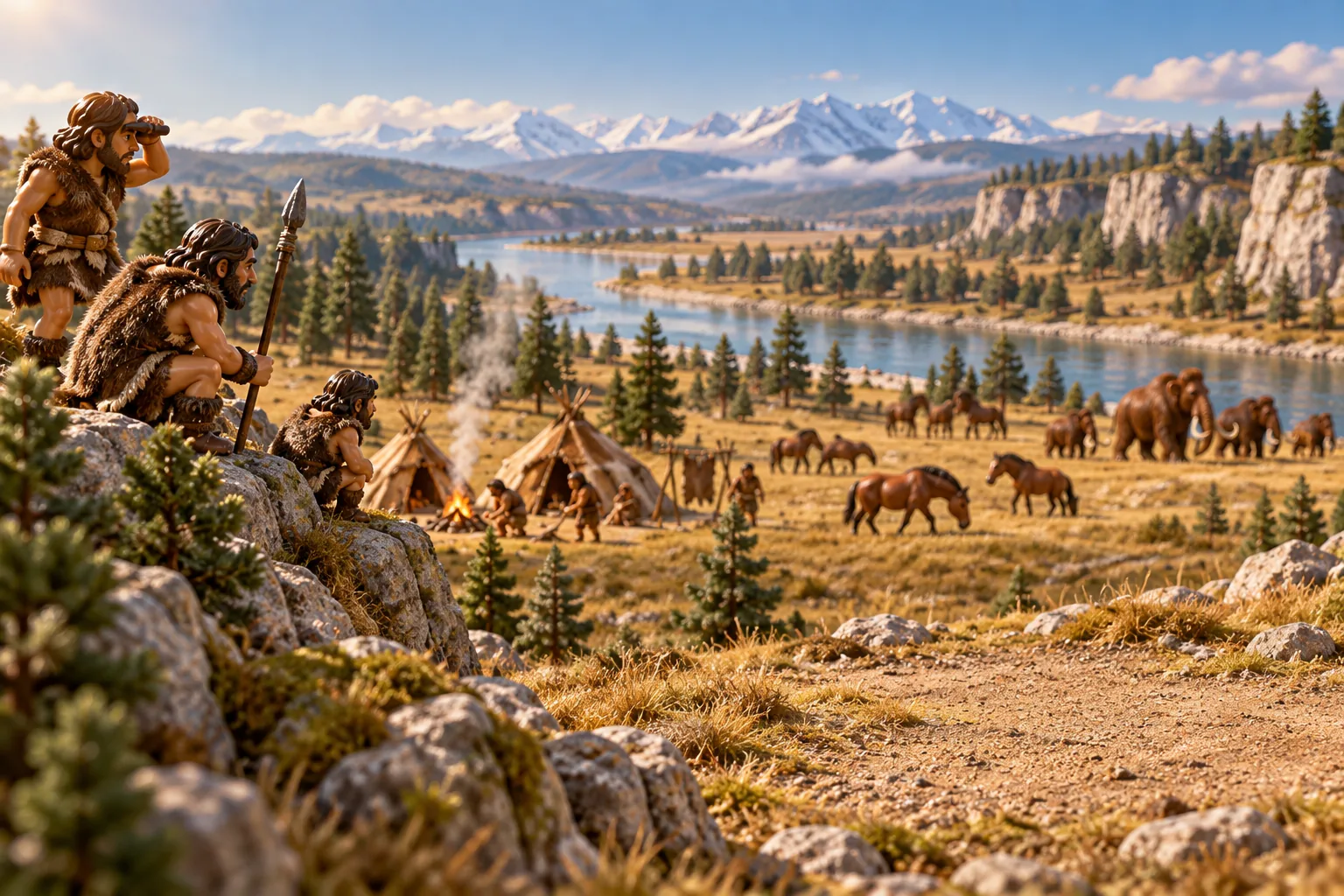
Cro-Magnons were tall and robust, with larger brains, broader faces and bigger teeth than most people today. They hunted big game with spears and spear-throwers, made bone flutes, painted caves, carved Venus figurines and moved goods along trade routes up to 900 km long. Their first major culture, the Aurignacian, gave way to the Gravettian by 30,000 years ago, and after the coldest part of the Ice Age the Magdalenian peoples spread back across the continent.
Read more on Wikipedia
Sources: en.wikipedia.org/wiki/Cro-Magnon


