Early modern · state
San Marino
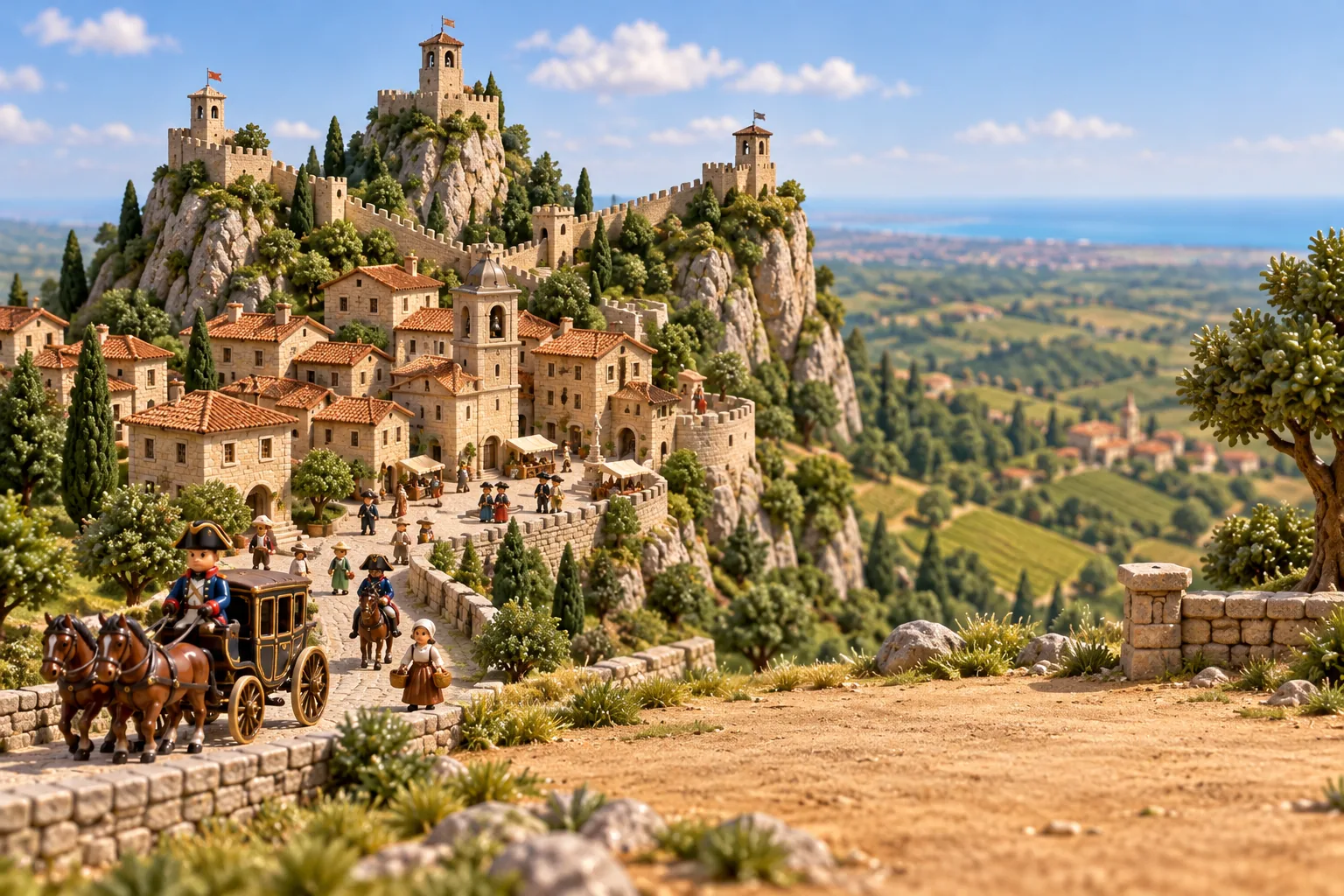
In 1797 Napoleon offered to enlarge the world's oldest surviving republic, and its regents politely said no.
By tradition San Marino was founded in 301 by Marinus, a stonemason from the island of Rab who fled the persecution of Emperor Diocletian and built a small church on Monte Titano. The stories of his life were written down only centuries later. The community on the mountain was first governed by the Arengo, an assembly of the heads of families, and in 1243 its council named the first two Captains Regent, who still share the office of head of state for six months at a time.
The little republic survived among stronger neighbours. Cesare Borgia occupied it for six months in 1503 until Pope Julius II restored its independence, and in 1543 an attacking army got lost in thick fog, which the Sammarinesi credited to Saint Quirinus. Its Statutes of 1600 are still the core of its constitution. After Cardinal Giulio Alberoni occupied it in 1739, Pope Clement XII gave back its independence the next year.
In 1797 Napoleon's army swept through Italy. The regent Antonio Onofri won Napoleon's friendship, and Napoleon promised to protect the republic and even offered it more land. The regents declined, fearing revenge from their neighbours later. During Italian unification San Marino sheltered Giuseppe Garibaldi and his wife Anita, and Garibaldi let it stay independent.
Read more on Wikipedia
Sources: en.wikipedia.org/wiki/San Marino, en.wikipedia.org/wiki/History of San Marino