Early modern · politics
Sakoku
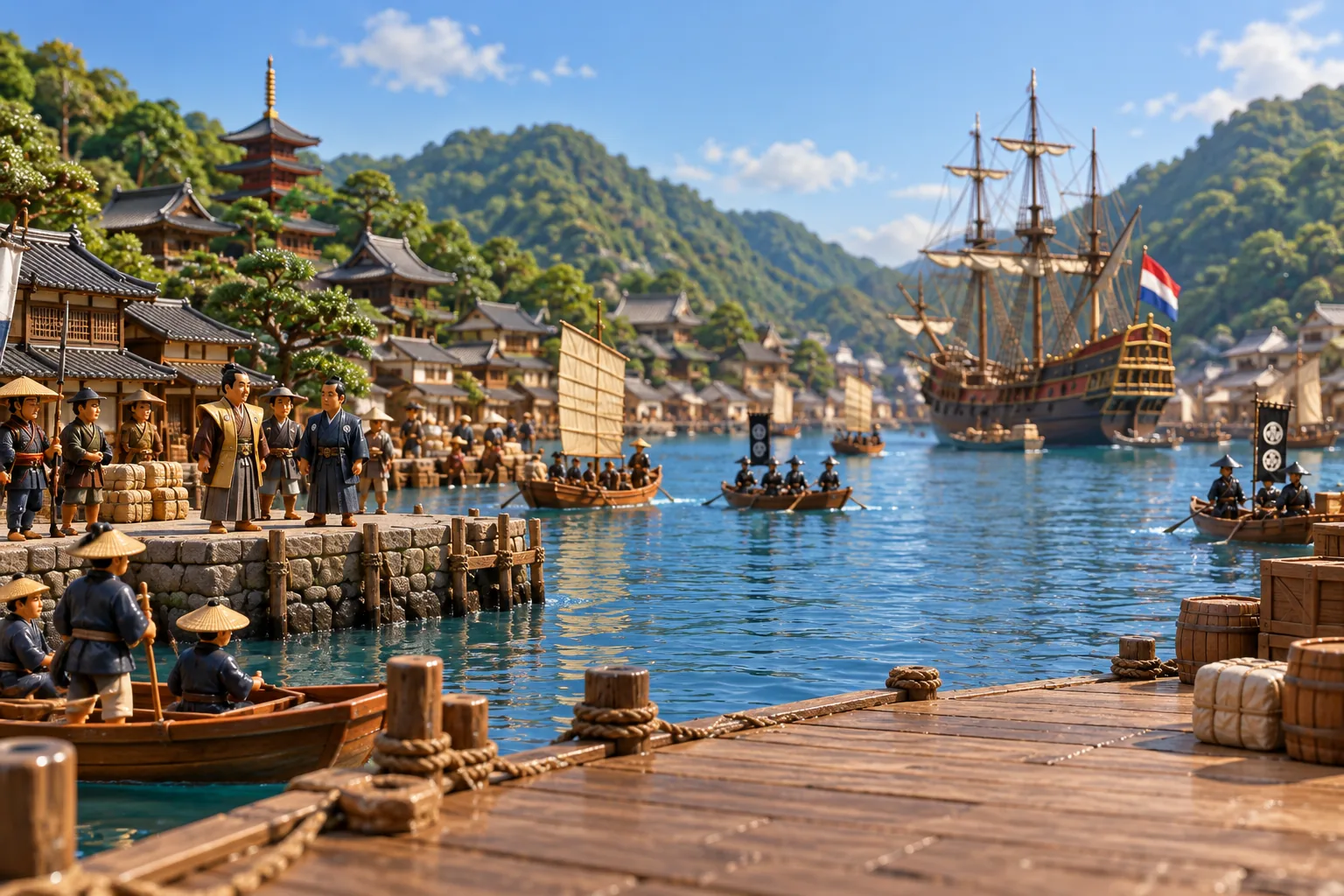
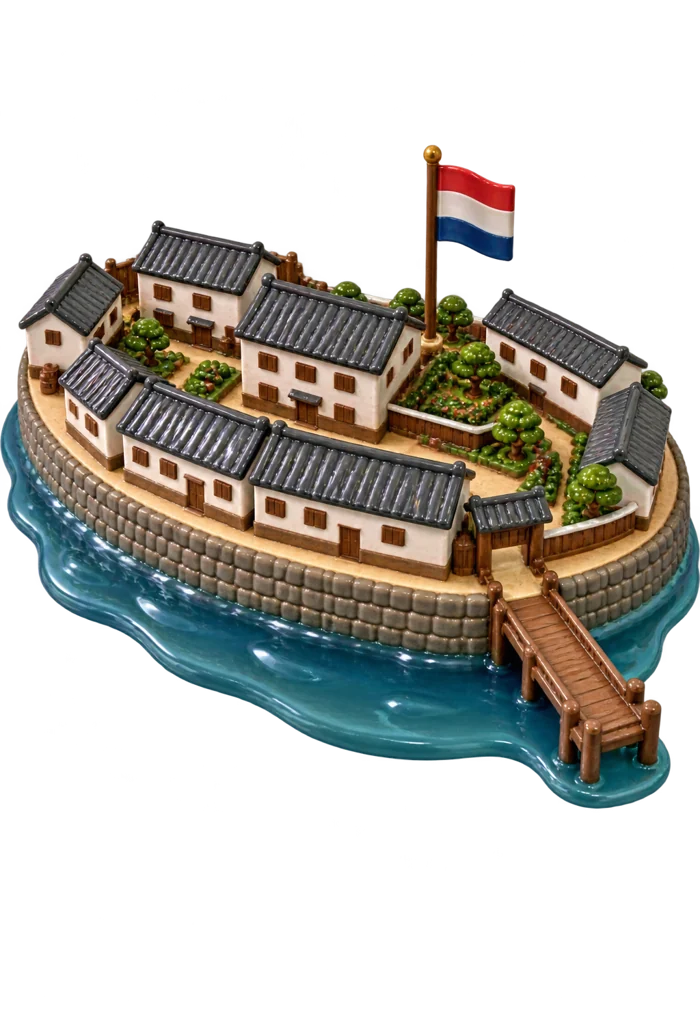
For two hundred years the only Europeans allowed in Japan lived on a small fan-shaped island in Nagasaki harbour, watched by guards on its one bridge.
Between 1633 and 1639 the third Tokugawa shogun, Iemitsu, issued a series of edicts that sealed Japan off. Almost all foreigners were banned from entering the country, and ordinary Japanese were kept from leaving it. The shogunate feared the Catholic missionaries of Spain and Portugal and the many converts they had made in Kyushu, and the Shimabara Rebellion of 1637–38, a rising of about 40,000 mostly Christian peasants, is said to have been the direct trigger. The rules also stopped powerful lords from getting rich and strong on foreign trade.
Japan was never completely shut. Chinese merchants traded at Nagasaki, and the only Europeans left were the Dutch, confined to Dejima, a small artificial island linked to the city by one guarded bridge. Korea traded through the Tsushima domain, the Ryukyu Kingdom through Satsuma, and the Ainu through Matsumae in Hokkaido. Through Dutch books, Japanese scholars of "Dutch learning" followed Western medicine and science.
In 1640 a Portuguese embassy from Macau asked for trade to resume and was turned away, and in 1647 Portuguese warships off Nagasaki were blockaded by nearly 900 Japanese vessels. In 1825 the shogunate ordered foreign ships to be driven away, relaxing the order in 1842 after China's defeat in the Opium War. In 1853 Commodore Matthew Perry arrived with American warships, and on 31 March 1854 the Convention of Kanagawa opened Japan.
Read more on Wikipedia
Sources: en.wikipedia.org/wiki/Sakoku
