
Antiquity · person
Saint Lucy
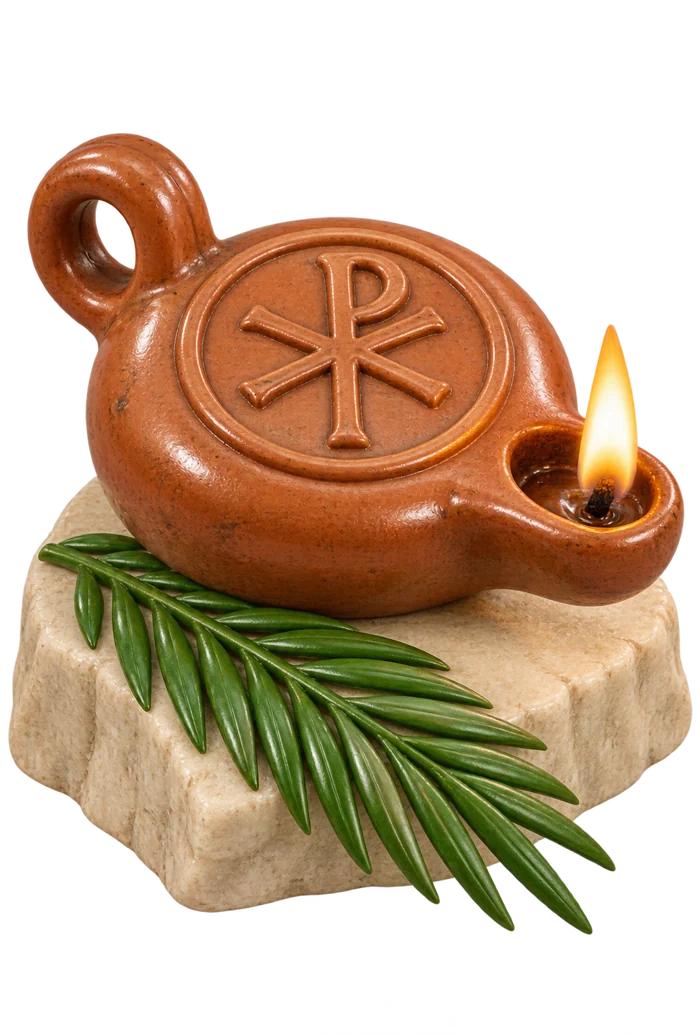
Her name comes from lux, light, and every 13 December, in the dark of winter, a young woman of Syracuse who died in 304 is honoured as a bearer of light.
Very little about Lucy is certain. The one fact on which all accounts agree is that a disappointed suitor accused her of being a Christian and that she was executed in Syracuse, Sicily, in 304, during the persecution of Christians under Emperor Diocletian. The traditional story adds the rest. Born in 283 to rich and noble parents, she lost her father, a man of Roman origin, at the age of five. Her mother, Eutychia, seems to have been of Greek background. Lucy secretly vowed her life to God and hoped to give her dowry to the poor, while her mother, ill with a bleeding disorder, arranged for her to marry a young man of a wealthy pagan family.
Mother and daughter made a pilgrimage to the shrine of Saint Agatha at Catania, less than 50 miles away. There, the story goes, Agatha appeared to Lucy in a dream, her mother was cured, and Lucy persuaded her to let her give away much of her fortune. The rejected bridegroom denounced her to the governor Paschasius. Legend says guards could not move her even with a team of oxen, and that the fire heaped around her would not burn.
Her cult spread to Rome and by the sixth century to the whole Church. She appears among the virgin saints in the mosaics of Sant'Apollinare Nuovo in Ravenna, and she is one of eight women named in the Catholic Canon of the Mass. Her feast is 13 December.
Read more on Wikipedia
Sources: en.wikipedia.org/wiki/Saint Lucy

