
Our time · person
Ruth Bader Ginsburg
Turned away for a clerkship in 1960 because she was a woman, she spent the 1970s winning equal-protection cases for women and men before the Supreme Court, and in 1993 she joined it.
Joan Ruth Bader was born on 15 March 1933 in Brooklyn, New York, the second daughter of Nathan Bader, a Jewish emigrant from Odesa, and Celia Bader, who died the day before Ruth's high school graduation. At Cornell University she met Martin D. Ginsburg, whom she married, and in 1956 she entered Harvard Law School as one of only 9 women in a class of about 500. She moved to Columbia, served on both the Harvard and Columbia law reviews and in 1959 graduated tied for first in her class.
Even so, in 1960 Justice Felix Frankfurter refused her a clerkship because she was a woman. She taught at Rutgers from 1963, co-founded the Women's Rights Law Reporter in 1970 and in 1972 became Columbia Law School's first tenured woman. That year she co-founded the Women's Rights Project of the American Civil Liberties Union. She wrote the brief in Reed v. Reed (1971) and argued cases such as Frontiero v. Richardson (1973) and Weinberger v. Wiesenfeld (1975), in which she represented a widower denied benefits that widows received.
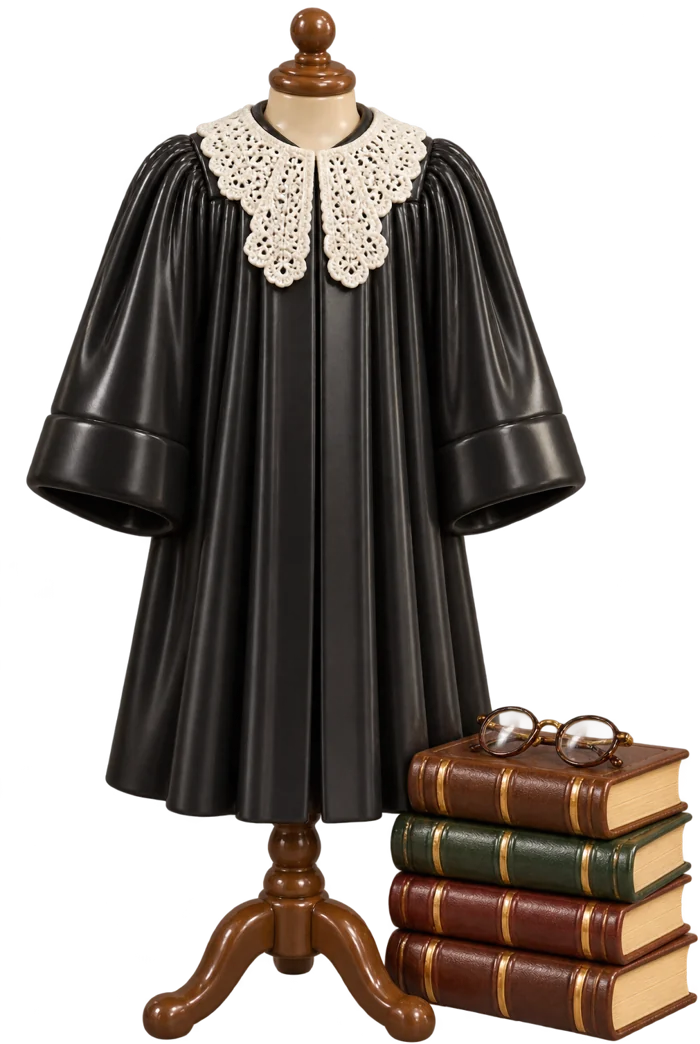
In 1980 Jimmy Carter put her on the federal appeals court in Washington. Bill Clinton named her to the Supreme Court, the Senate confirmed her 96–3, and on 10 August 1993 she took the judicial oath, the second woman and first Jewish woman on the Court. She wrote the 1996 opinion opening the Virginia Military Institute to women, and her dissents, from Ledbetter v. Goodyear in 2007 to Shelby County v. Holder in 2013, made her the "Notorious R.B.G.".
Read more on Wikipedia
Sources: en.wikipedia.org/wiki/Ruth Bader Ginsburg, en.wikipedia.org/wiki/United States v. Virginia

