Industrial age · politics
Russian Revolution
It began with women marching for bread on International Women's Day, and within eight months the tsar was gone and Lenin was in power.
By early 1917 Russia was losing the First World War. German armies were winning on the Eastern Front, prices were soaring and bread was short in the capital, Petrograd. On International Women's Day, women workers marched for bread and brought more than 50,000 factory workers out on strike with them. Within days almost every factory in the city had stopped. When Tsar Nicholas II ordered the army to crush the protests, soldiers refused, and many joined the crowds. On 15 March he abdicated. His brother declined the crown the next day.
Russia now had two governments at once: a Provisional Government of liberals, and the Soviets, councils of workers and soldiers. The new government kept fighting the war, which was hugely unpopular. In April the Bolshevik leader Vladimir Lenin returned from exile in Switzerland, promising 'peace, land and bread' and 'all power to the Soviets'. A failed offensive in June and street clashes in July, the July Days, turned soldiers and workers against the government of Alexander Kerensky. Bolshevik membership rose from 24,000 in February to 200,000 by September.
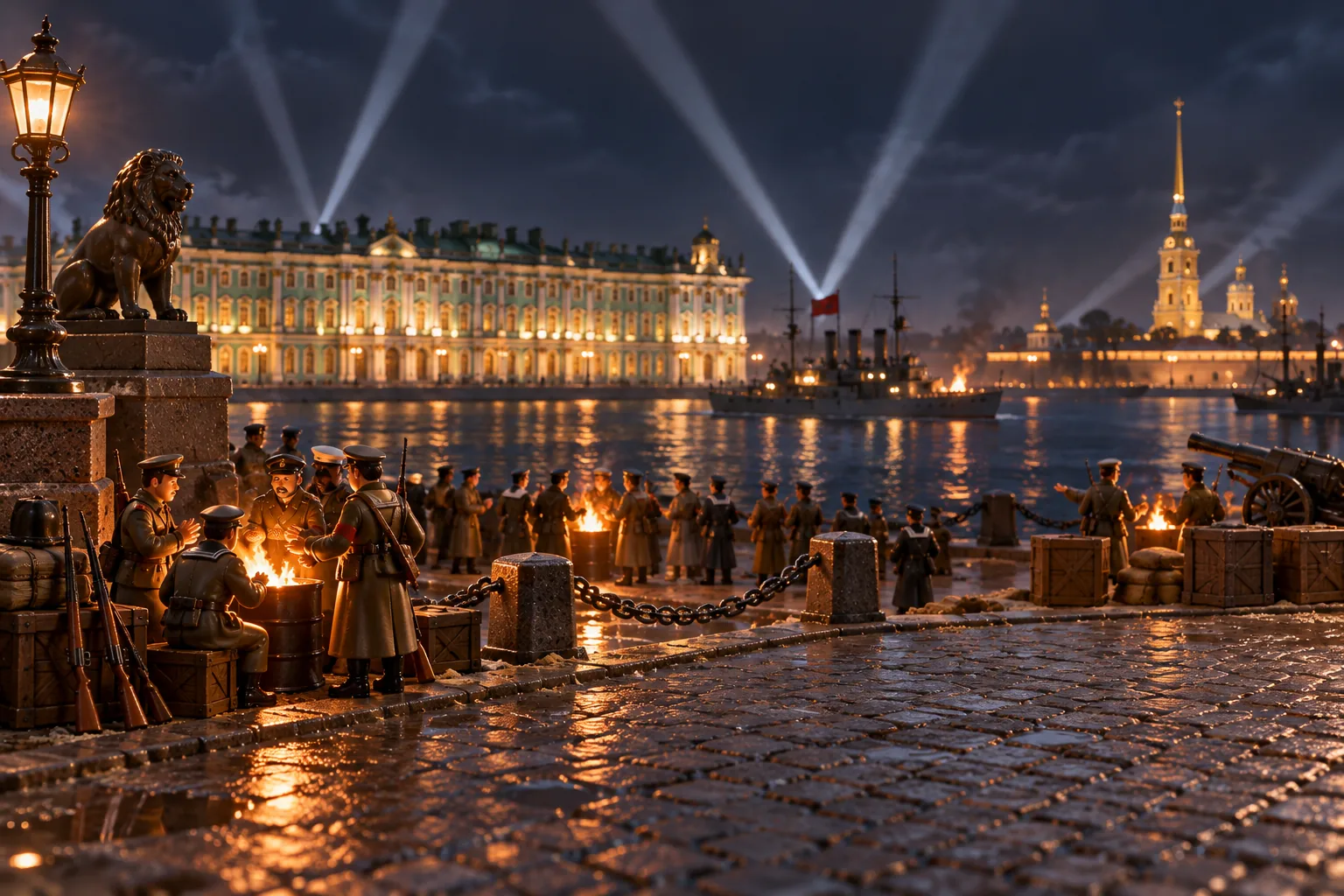
On 7 November Bolshevik Red Guards, organised by Leon Trotsky's Revolutionary Military Committee, took over Petrograd, at first with almost no bloodshed, and overthrew the Provisional Government. The new regime pulled Russia out of the war in March 1918, set up the Cheka secret police and fought a brutal civil war against the Whites. In July 1918 the former tsar and his family were shot. Out of the wreckage came the Soviet Union.
Read more on Wikipedia