Industrial age · state
Russian Republic
Proclaimed by Kerensky in September 1917, the Russian Republic lasted barely two months before the Bolsheviks seized power.
After the February Revolution of 1917, Emperor Nicholas II abdicated on 15 March and a Provisional Government took over under Prince Georgy Lvov. Within weeks it brought in universal adult suffrage, freedom of the press and of speech, and the end of capital punishment, and it removed all legal restrictions of religion, class and race. But real power was shared with the soviets, councils of workers and soldiers, above all the Petrograd Soviet.
In July Lvov resigned in favour of his war minister, Alexander Kerensky, a lawyer from Simbirsk on the Volga. The government's grip on the army was weak: Baltic Fleet sailors held far-left views, while many officers leaned to the right. After General Lavr Kornilov's failed coup, Kerensky and the justice minister Alexander Zarudny signed the decree proclaiming Russia a republic on 14 September 1917, and a Provisional Council was set up to sit until a Constituent Assembly could be elected.
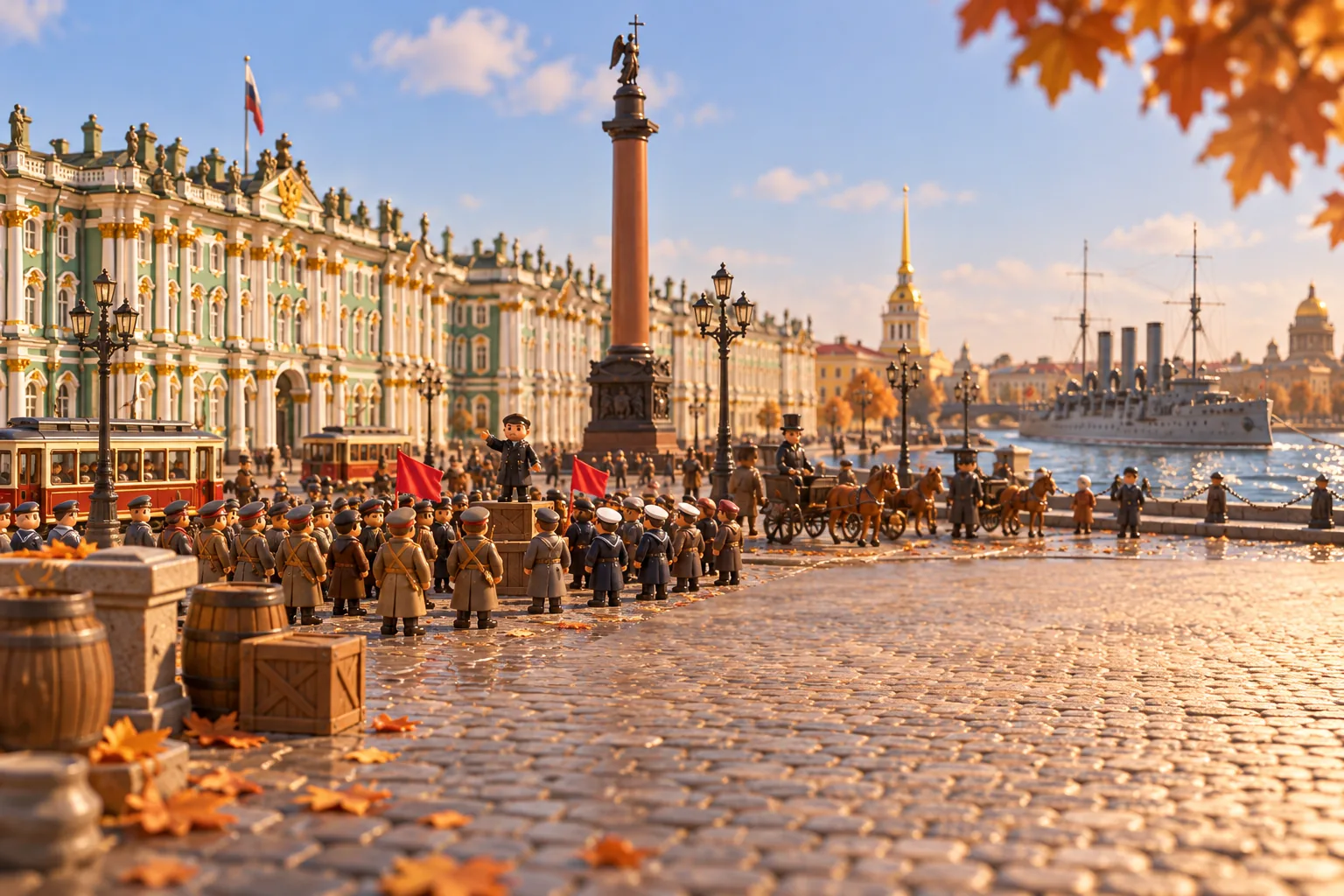
On 7 November the Bolsheviks seized government buildings in Petrograd, and on 8 November the Winter Palace, the last refuge of the ministers on the Neva, was captured. Kerensky escaped to Pskov but failed to retake the capital. Elections to the Constituent Assembly still went ahead later in November. On 18 January 1918 the assembly declared a Russian Democratic Federative Republic, and the next day the Bolsheviks dissolved it.
Read more on Wikipedia
Sources: en.wikipedia.org/wiki/Russian Republic, en.wikipedia.org/wiki/Alexander Kerensky, en.wikipedia.org/wiki/Russian Provisional Government