Our time · person
Rosalind Franklin
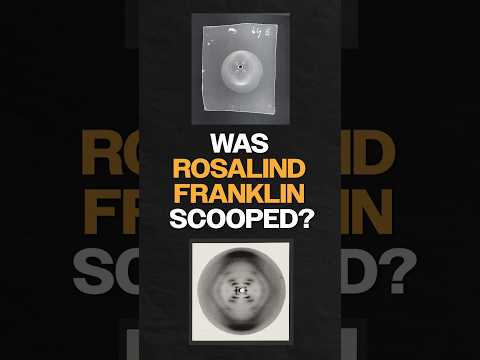
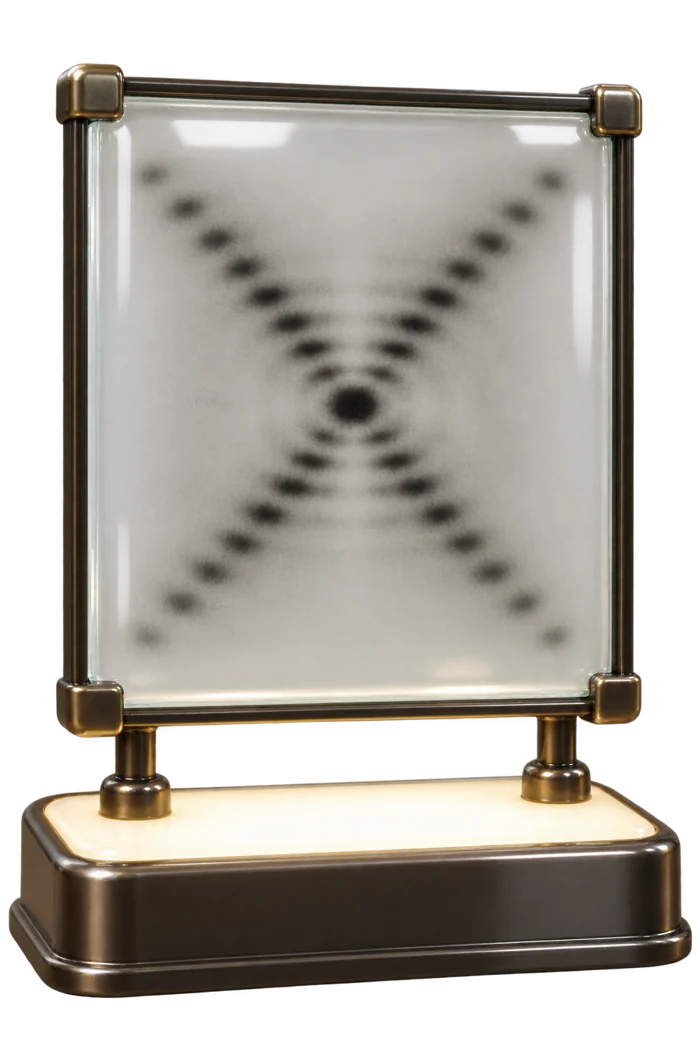
In 1952 her lab at King's College London produced an X-ray picture of DNA so clear that a rival saw the shape of the double helix in it, after it was shown to him without her knowledge.
Rosalind Elsie Franklin was born on 25 July 1920 at 50 Chepstow Villas, Notting Hill, into an affluent British Jewish family. At 11 she went to St Paul's Girls' School, one of the few London girls' schools that taught physics and chemistry, and in 1938 entered Newnham College, Cambridge, to read chemistry. During the war she studied coal for the British Coal Utilisation Research Association, work that earned her a Cambridge PhD in 1945. In Paris from 1947, under Jacques Mering, she became an accomplished X-ray crystallographer.
In 1951 she joined King's College London to work on DNA with the graduate student Raymond Gosling. She found that DNA takes two forms, A and B, and in 1952 Gosling took Photo 51, an image of the B form that J. D. Bernal called among the most beautiful X-ray photographs of any substance ever taken. Her colleague Maurice Wilkins showed it to James Watson without her permission, and it helped Watson and Francis Crick build their double helix, published in Nature on 25 April 1953 beside a paper by Franklin and Gosling.
After clashes with Wilkins and the director John Randall she moved to Birkbeck College in 1953, where she led pioneering work on the structure of viruses with Aaron Klug. She died of ovarian cancer in Chelsea on 16 April 1958, aged 37. Watson, Crick and Wilkins shared the Nobel Prize in 1962; Klug, who carried on her research, won the Nobel Prize in Chemistry in 1982.
Read more on Wikipedia