Antiquity · state
Roman Empire
One man took power in 27 BC while pretending the Republic still ruled, and his empire lasted five hundred years in the west and a thousand more in the east.
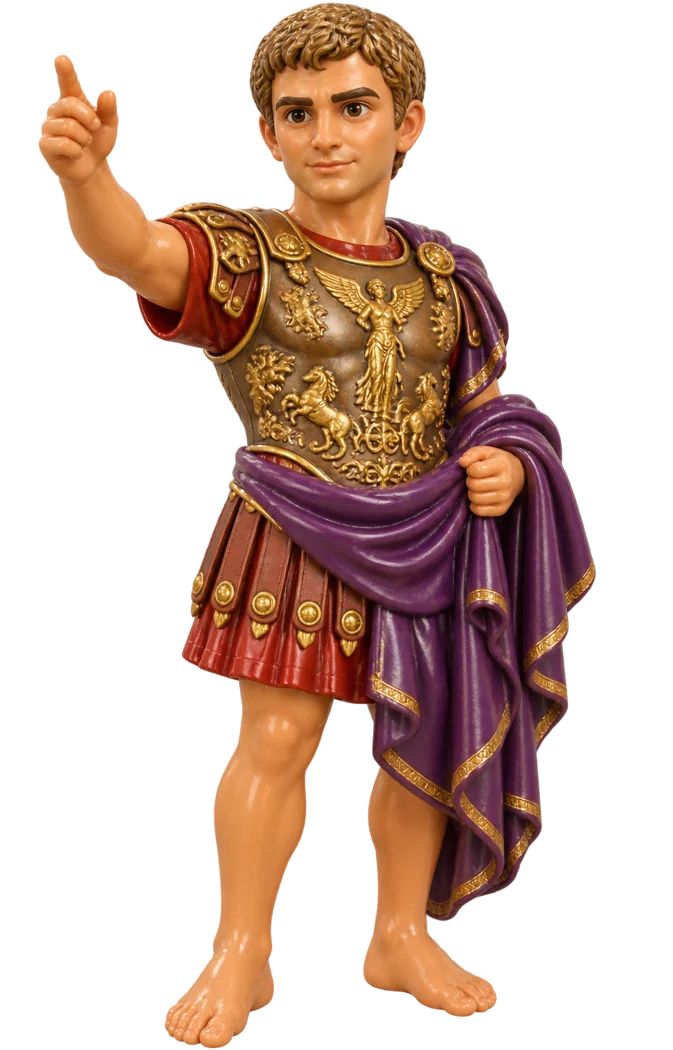
In 27 BC the Senate gave Octavian, the adopted heir of Julius Caesar, the name Augustus. He kept the old offices of the Republic, the consuls and the Senate, but the army, the provinces and the money answered to him. He called himself only the first citizen. The long peace that began with him, the Pax Romana, lasted about two hundred years.
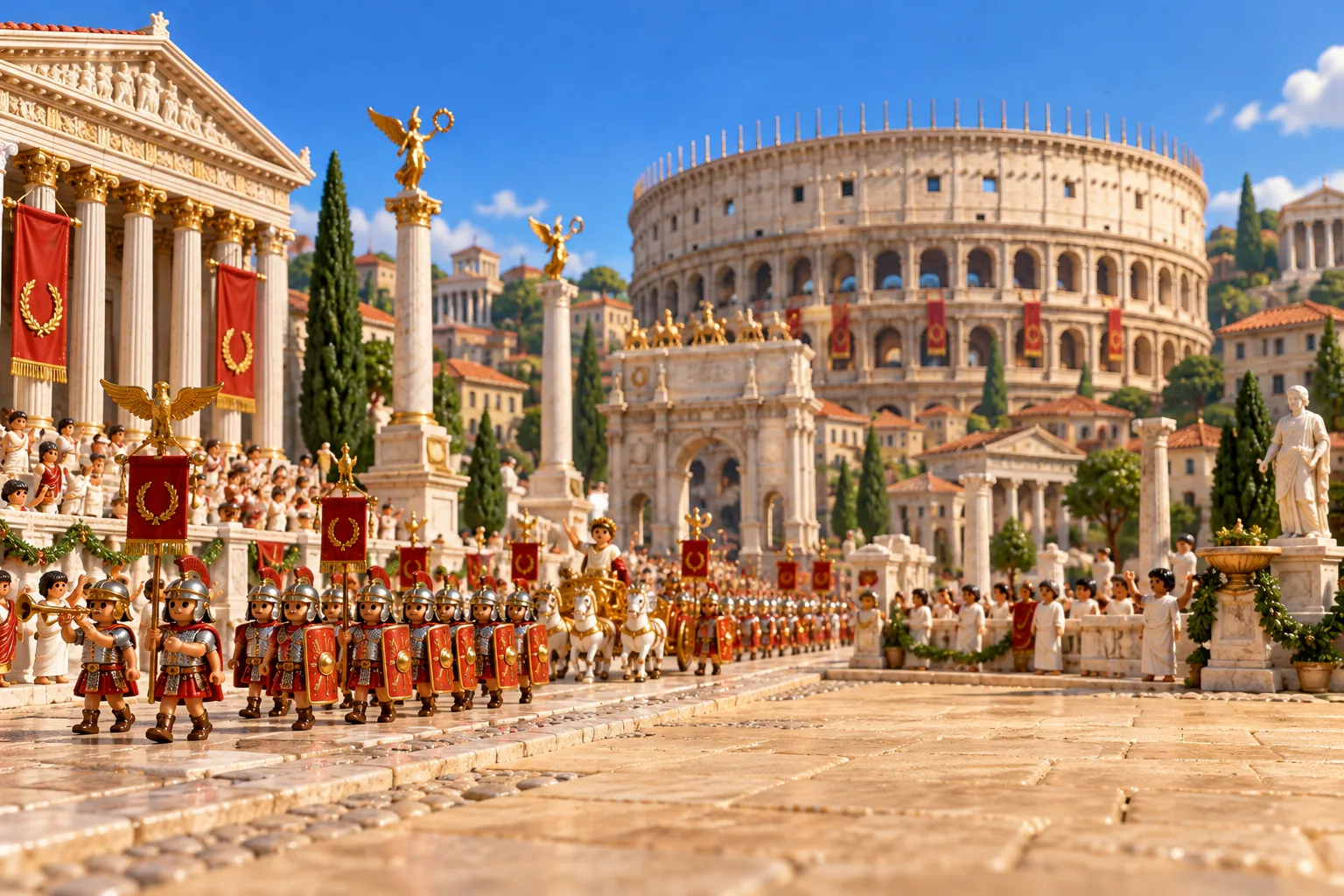
Under the emperor Trajan, in AD 117, the empire reached its greatest size: from the north of Britain to the Persian Gulf, around the whole Mediterranean, which Romans simply called our sea. Paved roads, aqueducts, Latin law and one currency tied it together, and cities from Spain to Syria built forums, baths and amphitheatres in the Roman style.
In the third century civil wars, plague and invasions nearly broke it. Diocletian split the work of ruling between several emperors, and Constantine the Great backed Christianity and founded a new capital, Constantinople, in 330. After 395 the eastern and western halves were ruled apart for good. The west weakened: the Visigoths sacked Rome in 410, and in 476 the general Odoacer deposed the last western emperor, the boy Romulus Augustulus. The eastern half lived on as what we call the Byzantine Empire.
Read more on Wikipedia
Sources: en.wikipedia.org/wiki/Roman Empire, en.wikipedia.org/wiki/Augustus, en.wikipedia.org/wiki/Pantheon, Rome


