Antiquity · politics
Roman Britain
Roman soldiers were so afraid of sailing beyond the edge of the known world that the invasion of Britain began with a mutiny.
Julius Caesar had landed in Britain in 55 and 54 BC but did not stay. In AD 43 Emperor Claudius sent an army under Aulus Plautius, delayed at first by a mutiny of troops afraid to cross the Ocean. It probably landed at Richborough in Kent, beat the Catuvellauni on the Medway and the Thames, and Claudius himself arrived with elephants for the march on their capital. In 60 or 61 the Iceni queen Boudica rose in revolt and destroyed London and St Albans before the governor Suetonius Paulinus crushed her army.
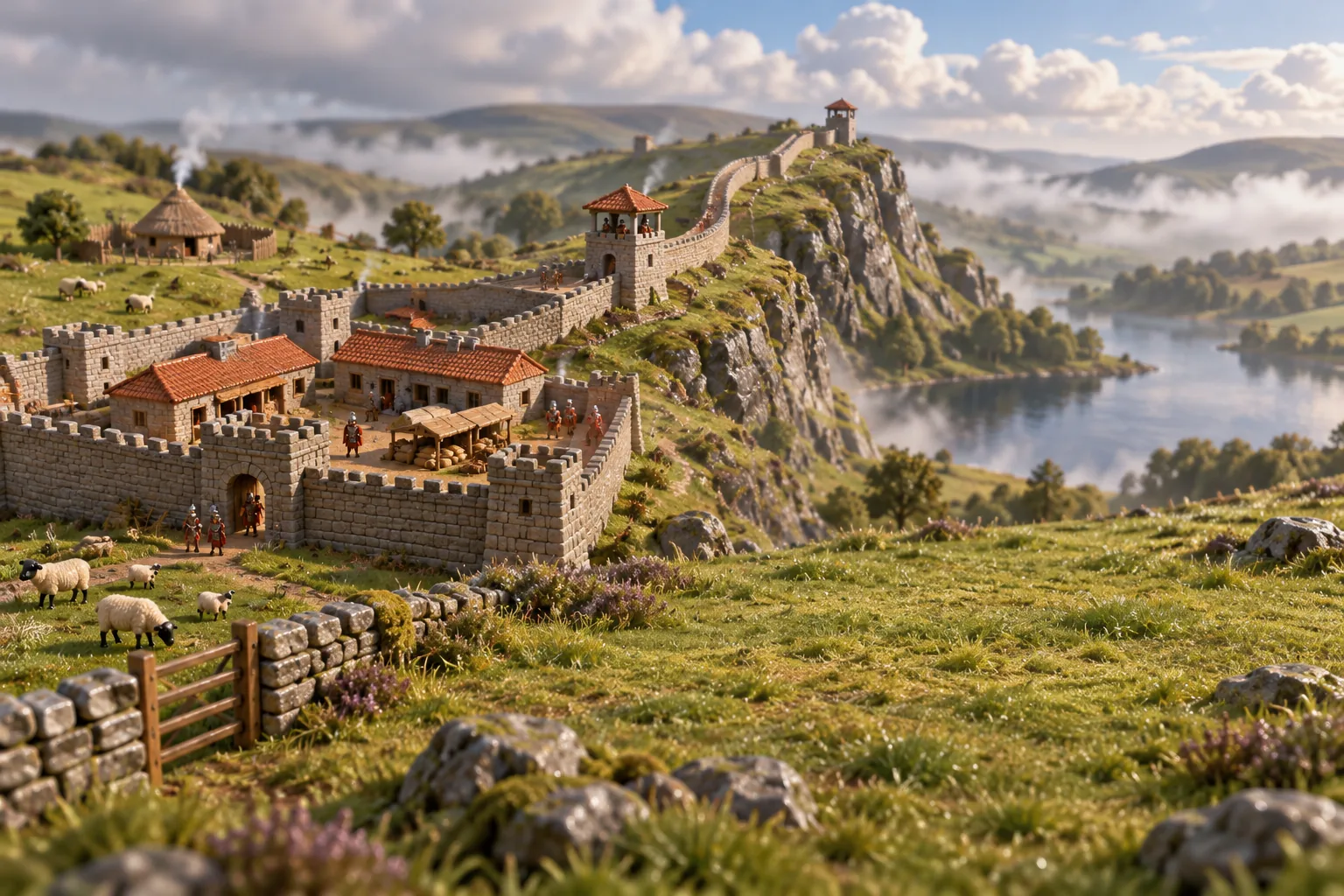
The governor Agricola pushed far into Caledonia and won at Mons Graupius in 84, the high point of Roman conquest on the island. Around 120 Emperor Hadrian ordered a wall across the north of England, and his successor Antoninus Pius later built a second, mostly of turf, further north. Roman Britain grew to some 3 million people by the end of the 2nd century. London, the largest town, had about 60,000 inhabitants, among them people from continental Europe, the Middle East and North Africa.
In the 4th century the province suffered raids from outside and repeated usurpers who took troops to fight for the imperial throne. Around 410 Roman rule came to an end, and Britain broke up into native kingdoms.
Read more on Wikipedia
Sources: en.wikipedia.org/wiki/Roman Britain