Industrial age · person
Robert Falcon Scott
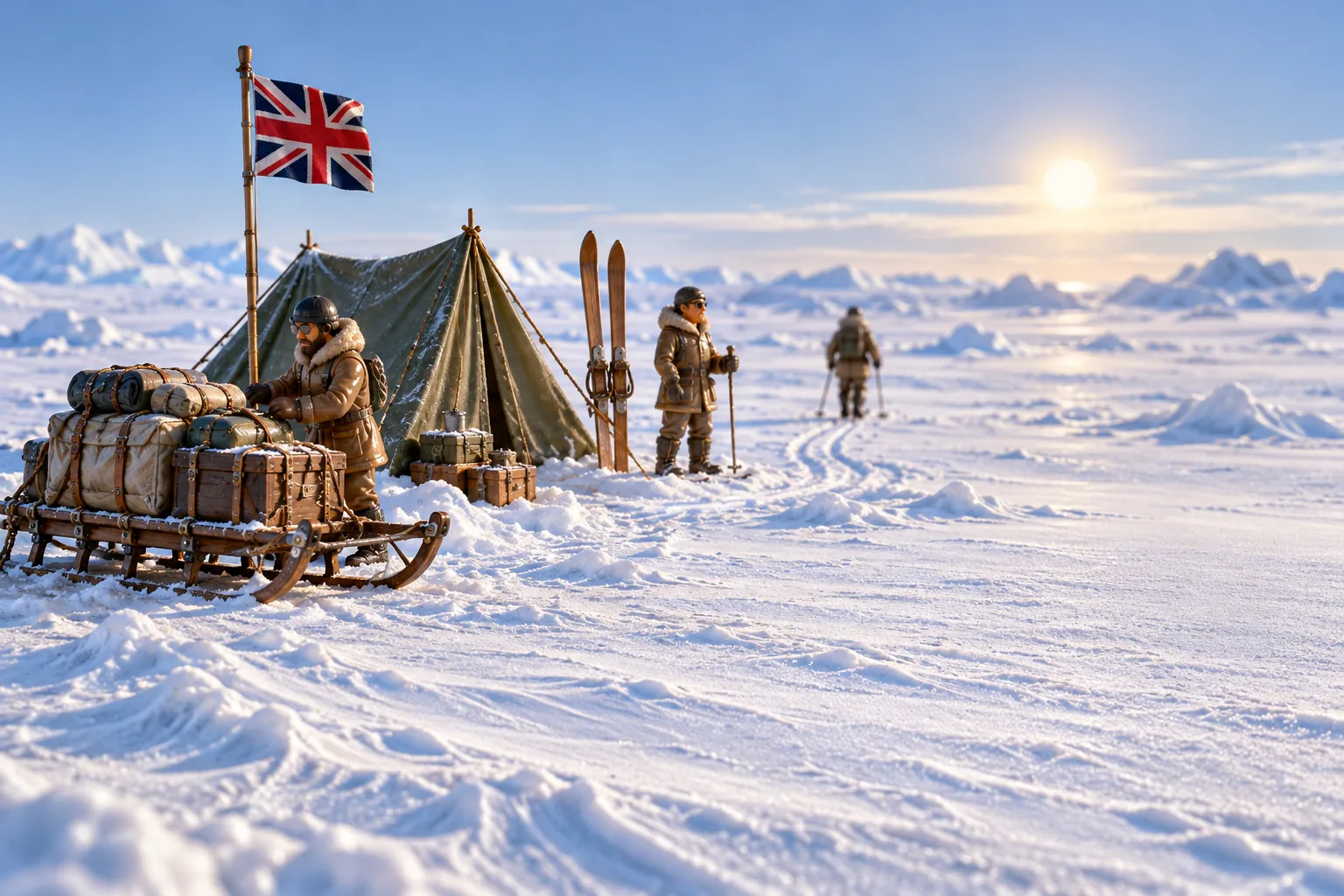
On 17 January 1912 his party of five reached the South Pole and found a tent left by Roald Amundsen, who had beaten them by five weeks. "Great God! This is an awful place," Scott wrote.
Robert Falcon Scott was born on 6 June 1868 at Stoke Damerel, near Devonport, the elder son of a brewer and magistrate, in a family with naval and army traditions. He joined the Royal Navy in 1881 as a 13-year-old cadet. In 1899 a chance meeting with Sir Clements Markham, president of the Royal Geographical Society, told him of a planned Antarctic expedition, and he volunteered to lead it. On the Discovery Expedition of 1901–1904 he set a new southern record of 82°S and discovered the Antarctic Plateau, on which the Pole lies.
In 1908 he married the sculptor Kathleen Bruce, and their son Peter was born in 1909. His Terra Nova Expedition reached Antarctica in 1911, and the march south began on 1 November 1911 with motor sledges, ponies and dogs. On 4 January 1912 Scott chose the final party: himself, Edward Wilson, Henry Bowers, Lawrence Oates and Edgar Evans. On 16 January they saw Amundsen's black flag, and on 17 January they reached the Pole.
On the 862-mile return journey all five died. Scott's last diary entry, on 29 March 1912, ends: "For God's sake look after our people". A search party found the tent on 12 November 1912, about 12.5 miles from the next depot. With the bodies lay the first Antarctic fossils ever found, from the Glossopteris tree, showing that Antarctica was once forested.
Read more on Wikipedia
Sources: en.wikipedia.org/wiki/Robert Falcon Scott, en.wikipedia.org/wiki/Terra Nova Expedition

