Antiquity · state
Rhodes
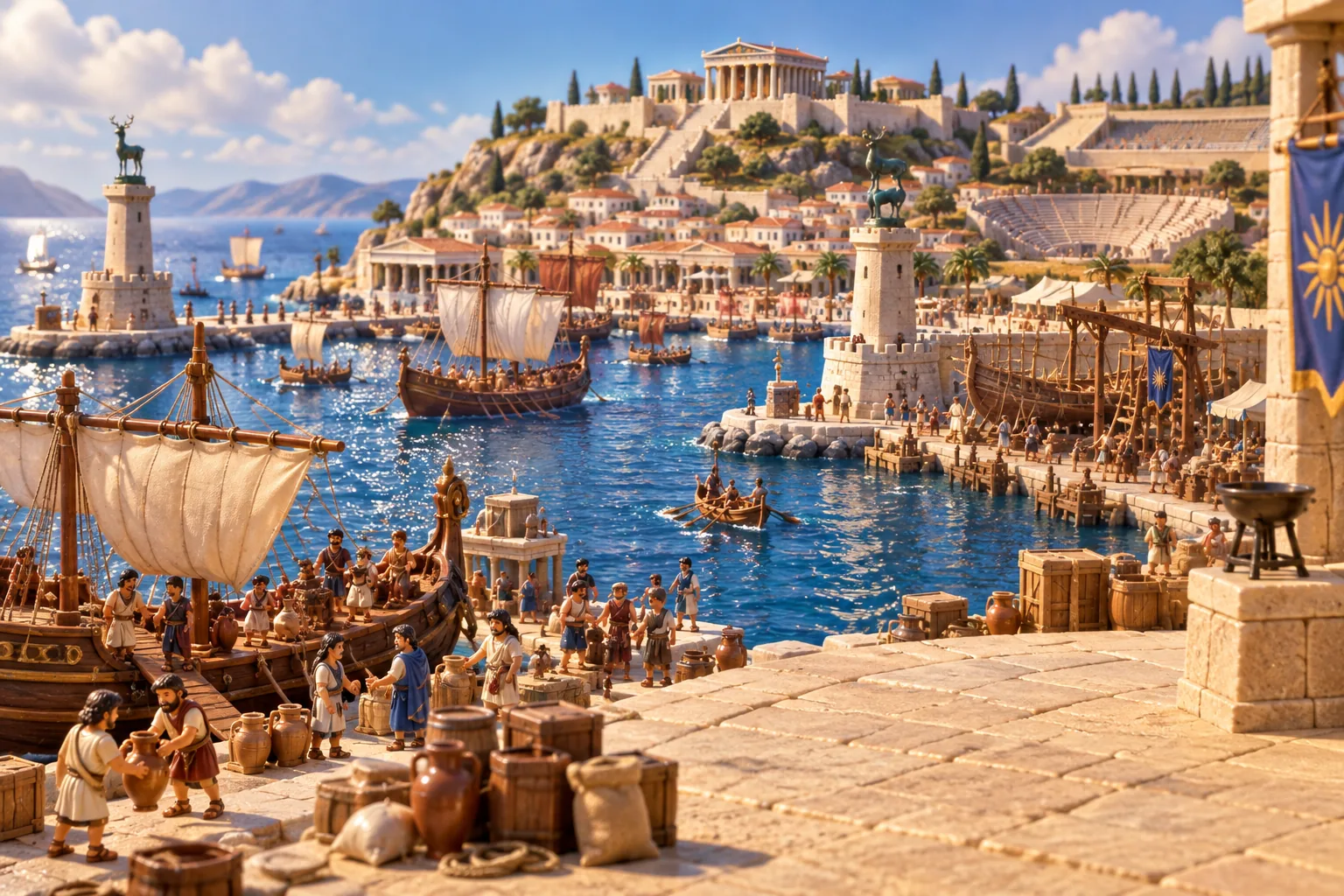
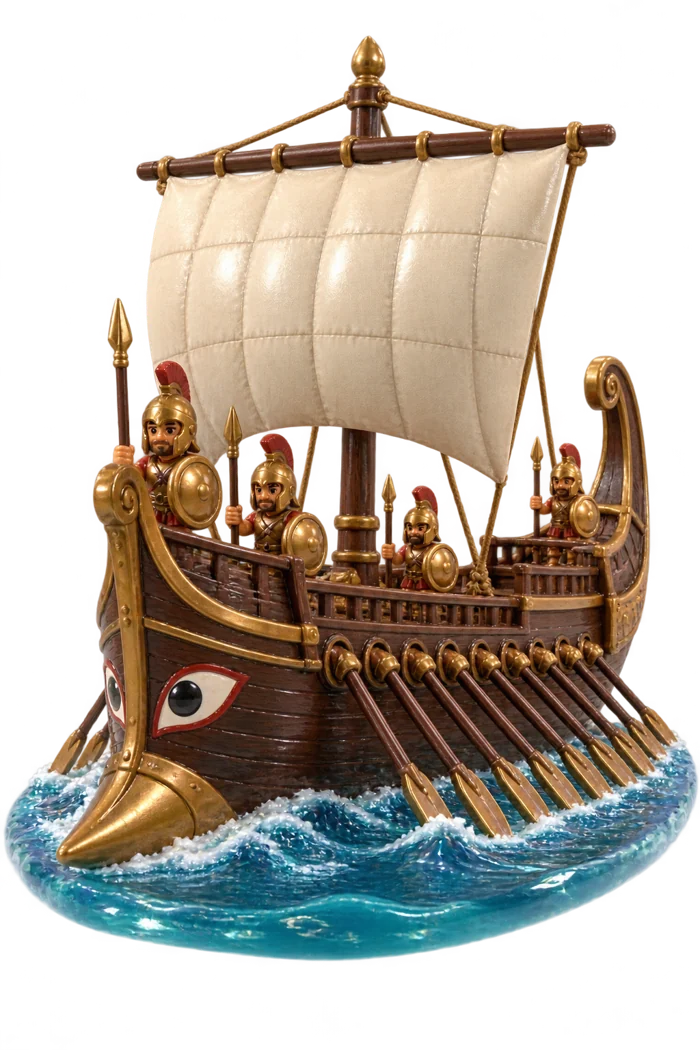
Rhodes grew rich on sea trade, and its sailors were so good that people said: if we have ten Rhodians, we have ten ships.
In 408 BC the three old cities of the island, Lindos, Ialysos and Kamiros, united into one state. After the death of Alexander the Great, Rhodes formed close trade and cultural ties with the Ptolemies of Egypt. In 305 BC Antigonus sent his son Demetrius Poliorcetes to break that alliance. Demetrius brought a battering ram 55 metres long and a siege tower called the Helepolis, but in 304 BC, after a year, he made peace and left.
The Rhodians sold the war machines he left behind and used the money to raise a giant statue of their sun god Helios, the Colossus, one of the Seven Wonders of the World, until an earthquake threw it down in 226 BC. Rhodian coins circulated across the Mediterranean, the city all but controlled the grain trade of the east, and it ruled a strip of the Carian coast opposite, the Rhodian Peraia. A democracy, it kept a balance between the great Hellenistic kingdoms.
Rhodes sided with Rome against Philip V of Macedon and Antiochus III, and the Treaty of Apamea in 188 BC rewarded it with land. But during the war against Perseus some senators found it too friendly to the king, and in 164 BC Rhodes had to accept a formal alliance that limited its freedom. In 43 BC Cassius sacked the city. Rhodian sculptors went on to carve the Laocoön group.
Read more on Wikipedia
Sources: en.wikipedia.org/wiki/Rhodes
