Our time · politics
Revolutions of 1989
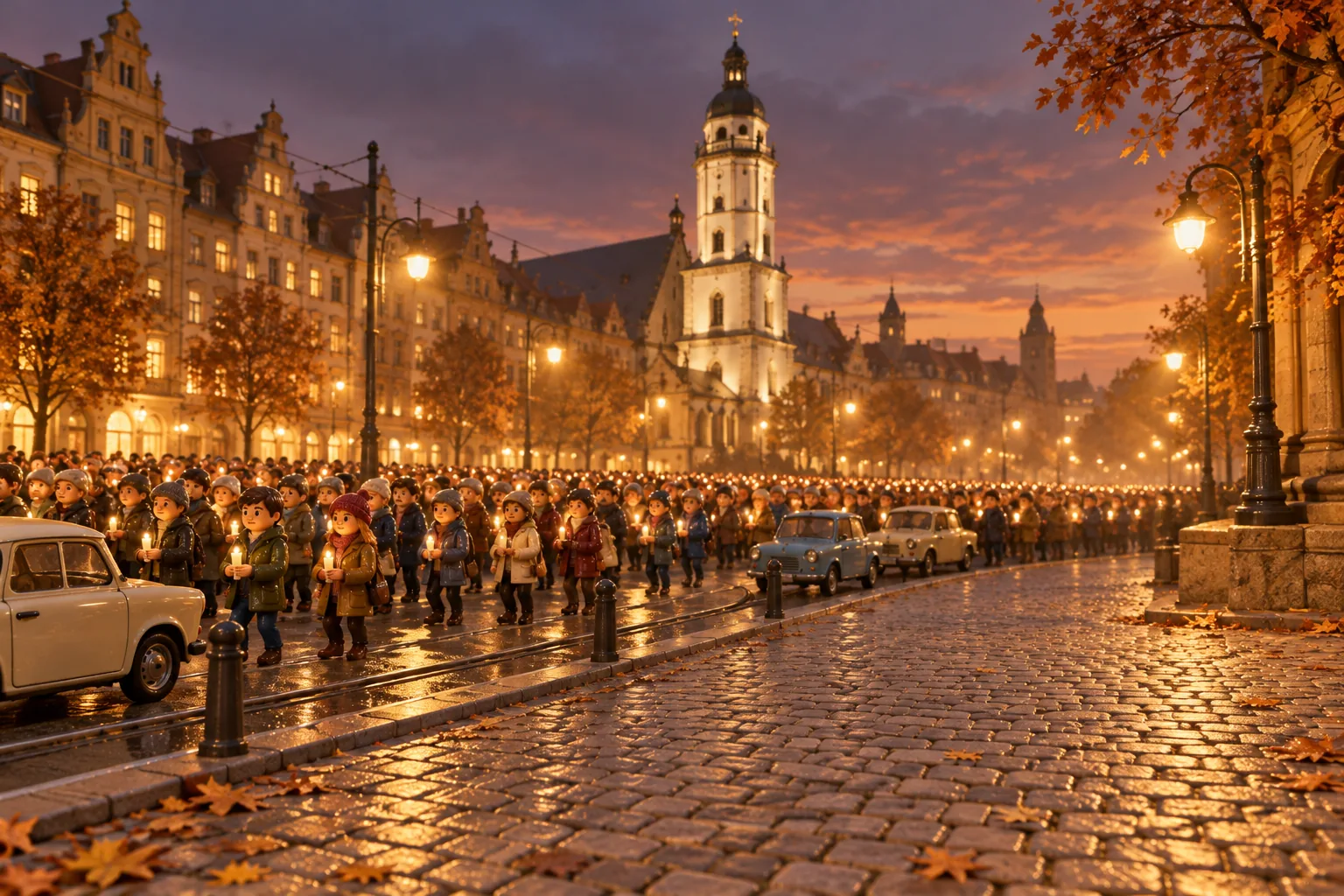
On 9 October 1989, amid rumours that a massacre was planned, 70,000 people marched through Leipzig, and the forces on the streets did not open fire.
Communist rule in Eastern Europe had been challenged before, by Solidarity, the independent trade union born in Poland's strikes of August 1980. After Mikhail Gorbachev took power in Moscow in 1985 and began his reforms, the pressure rose. New strikes in Poland in 1988 forced the government to the Round Table, and on 4 April 1989 it agreed to legalise Solidarity and hold partly free elections. On 4 June Solidarity won overwhelmingly, and on 24 August Tadeusz Mazowiecki became Poland's first non-communist prime minister since the early post-war years.
Hungary began dismantling its barbed-wire border with Austria on 2 May. At the Pan-European Picnic in August East Germans fled across it, the largest escape since the Berlin Wall was built, and tens of thousands followed. In East Germany the Monday demonstrations in Leipzig grew week by week: on 9 October, despite rumours that a massacre was planned, 70,000 people marched and the forces on the ground refused to open fire. On 9 November the Berlin Wall opened.
The next day Bulgaria's leader Todor Zhivkov was ousted. Czechoslovakia's communist government fell in the peaceful Velvet Revolution, and in December Romania became the only country where the regime was overthrown by force. In almost every case the change came through civil resistance. The Soviet Union itself dissolved on 26 December 1991, and the Cold War was over.
Read more on Wikipedia