Industrial age · politics
Revolutions of 1848
In a few spring weeks of 1848 a king fled Paris, the most powerful statesman in Europe was forced out of Vienna, and the King of Prussia pulled his troops out of Berlin.
Europe in the 1840s was ruled by conservative monarchies that had restored order after Napoleon. Industry and cities were growing fast, liberals wanted constitutions and a free press, nationalists wanted states of their own, and workers wanted economic rights. Then the potato blight and an economic crisis brought hunger and unrest. The first rising came in Palermo, in Sicily, in January 1848.
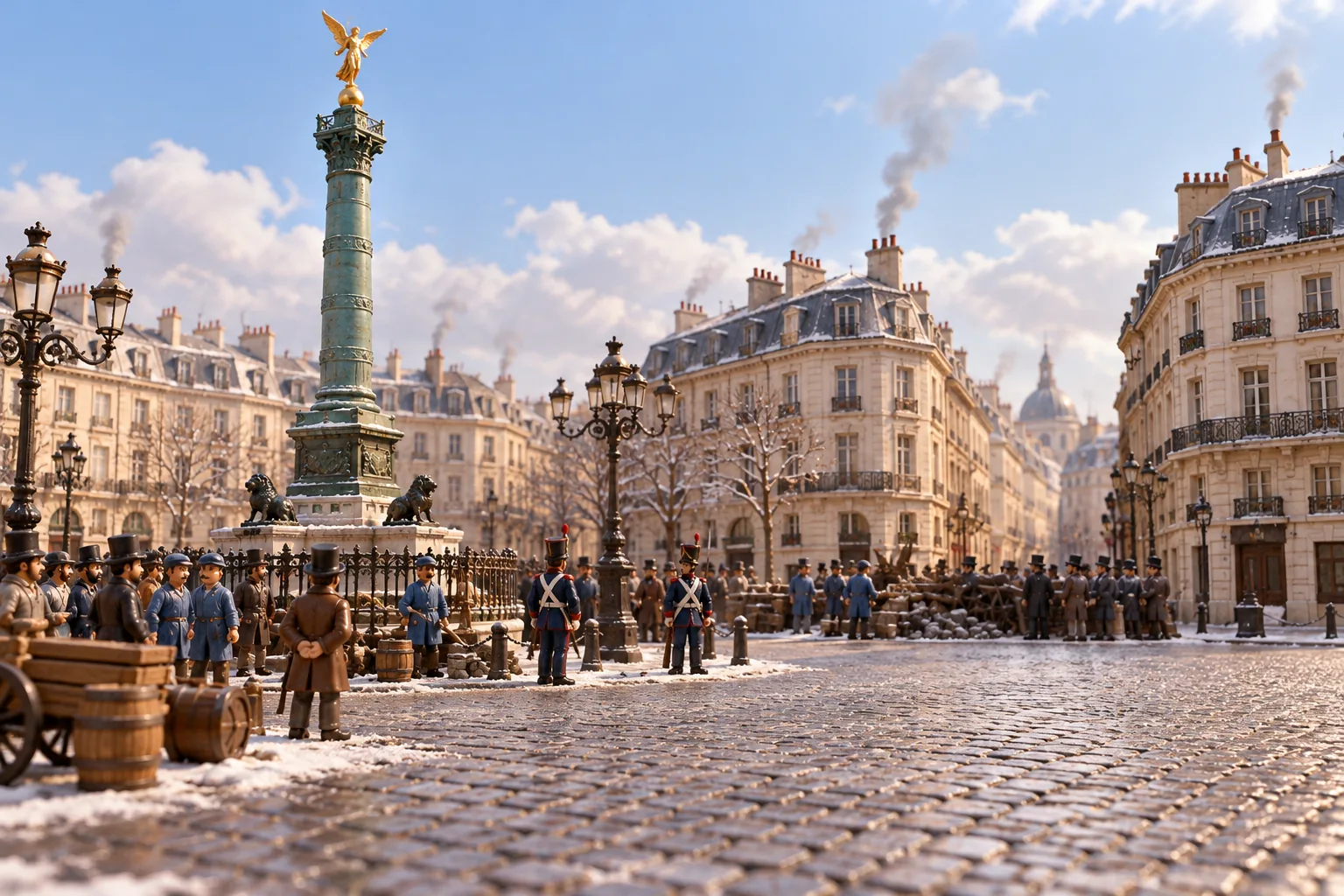
The spark that set the continent alight came from Paris. After street fighting, King Louis Philippe I abdicated on 24 February and fled, and France became a republic. Within a week the news had spread across Europe. In Vienna, after clashes from 13 to 15 March, Chancellor Metternich resigned and went into exile, and Emperor Ferdinand I promised a constitution. In Berlin, after a day of barricade fighting on 18 March, King Frederick William IV withdrew the army and appointed a liberal ministry. Italians rose against Austrian rule, Hungarians under Lajos Kossuth demanded self-government, and a parliament met in Frankfurt to unite Germany. More than fifty countries were affected.
But the coalitions of workers and middle-class reformers soon fell apart. In Paris the closing of the national workshops in June led to the bloody June Days, and in December Louis Napoléon Bonaparte was elected president; he later made himself emperor. Russian troops helped Austria crush Hungary, and by October 1849 the wave was over. Yet some reforms lasted: serfdom was abolished in Austria and Hungary, and absolute monarchy ended in Denmark.
Read more on Wikipedia


