Industrial age · state
Republic of Texas
For nearly ten years Texas was its own country, with a president, a navy and an embassy in London across from St James's Palace.
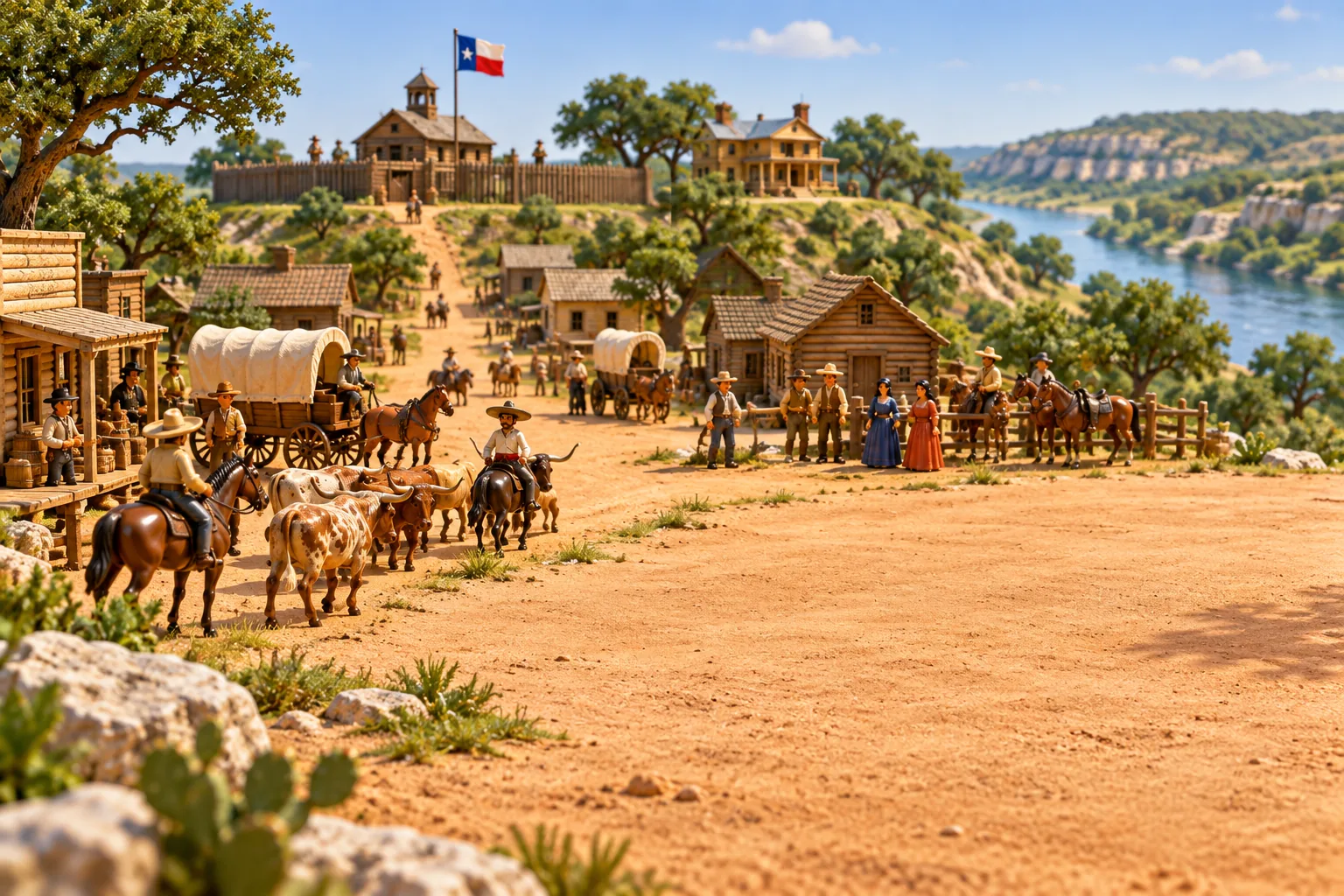
In the 1820s Stephen F. Austin led American settlers into Mexican Texas, and by 1834 they far outnumbered Mexicans there. When President Santa Anna abolished the powers of the Mexican states, fighting broke out at Gonzales on 2 October 1835. On 2 March 1836 a convention declared independence, and after the victory of San Jacinto on 21 April Santa Anna, a prisoner, signed the Treaties of Velasco. Mexico's congress never accepted them.
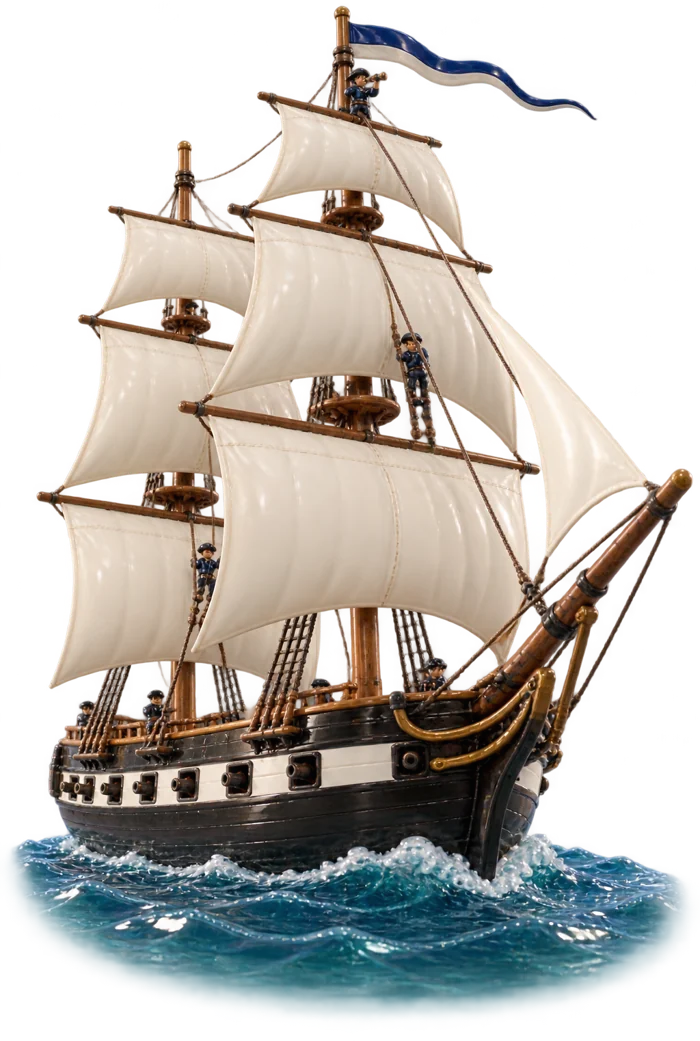
The new republic had five temporary capitals in 1836 before Sam Houston moved the government to Houston in 1837. His successor Mirabeau Lamar moved it in 1839 to the new town of Austin on the Colorado River, the seventh and final capital. Texas had its own Congress, Supreme Court and a navy that fought Mexican steamers off Campeche in 1843. Its people included Anglo Texians and Mexican Tejanos, and slavery was a cornerstone of its cotton economy. Comanche raids, Mexican incursions in 1842 and a weak economy troubled it throughout.
Most Texians wanted to join the United States, but American politics delayed it. In 1845 Congress offered annexation, Texas voters approved, and on 29 December 1845 it became the 28th state, with power formally handed over on 19 February 1846.
Read more on Wikipedia

