Early modern · person
René Descartes
He resolved to doubt everything he could, and found one thing he could not doubt: "Je pense, donc je suis", I think, therefore I am.
René Descartes was born on 31 March 1596 in La Haye en Touraine, a town now named Descartes after him. His mother died when he was one. Sickly as a boy, he entered the Jesuit college of La Flèche late, in 1607, and met mathematics and physics there, then took a law degree at Poitiers to please his father. In 1618 he joined the Dutch army of Maurice of Nassau at Breda, where he met the scientist Isaac Beeckman. On the night of 10 November 1619, shut in a stove-heated room in Germany, he had three dreams that convinced him to apply mathematical method to all of philosophy.
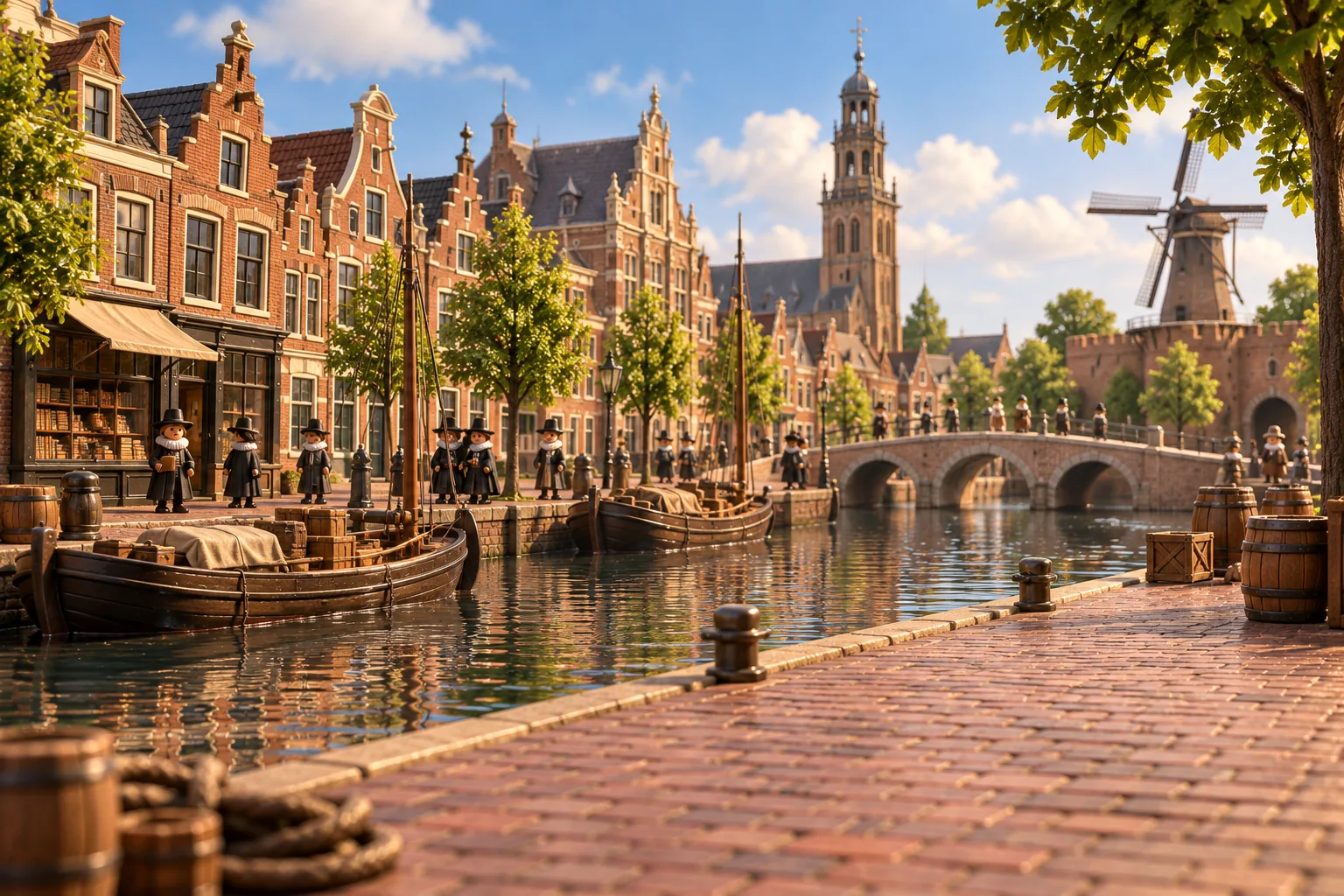
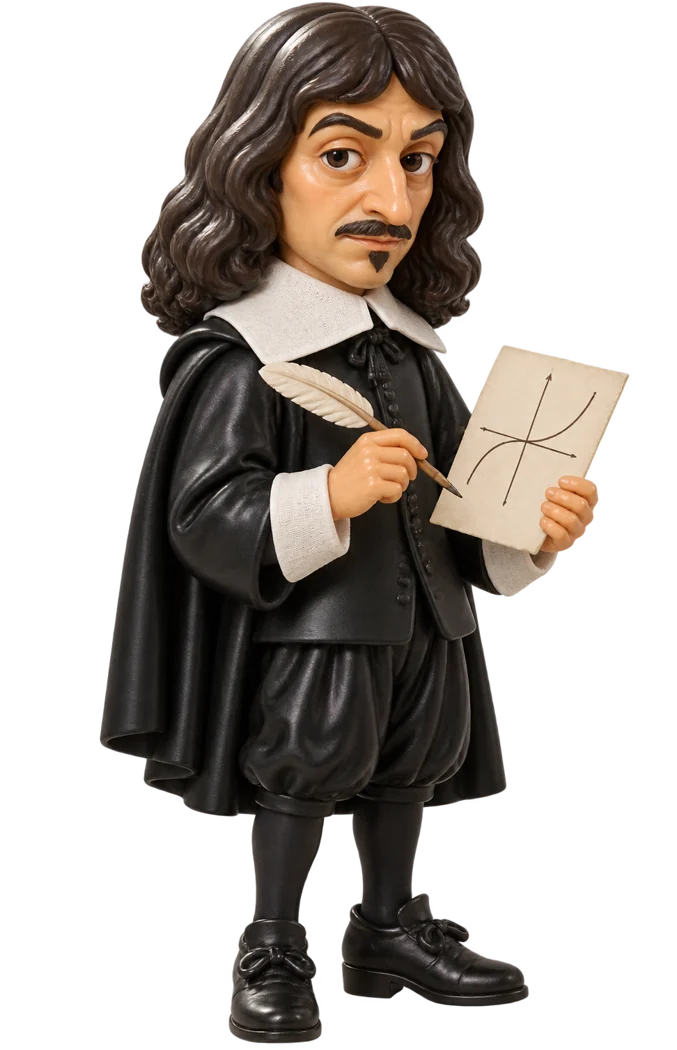
From 1628 he lived in the Dutch Republic, moving often and studying at Leiden, and he wrote all his major works there. When Galileo was condemned in 1633, he shelved his own treatise on the world. In 1637 he published three essays on optics, meteorology and geometry with a preface, the Discourse on the Method, where he set out to doubt everything and reached "I think, therefore I am". His Geometry joined algebra to geometry; the coordinate system is still called Cartesian after him. The Meditations on First Philosophy followed in 1641.
In 1649 Queen Christina of Sweden invited him to Stockholm to teach her, at five in the morning in a cold castle. He caught pneumonia and died on 11 February 1650, aged 53.
Read more on Wikipedia
Sources: en.wikipedia.org/wiki/René Descartes


