Middle Ages · culture
Renaissance
One proposed birthday of the Renaissance is a contest in 1401 for a pair of bronze doors, and the man who lost it went on to build the dome of Florence.
The Renaissance, the "rebirth", was the moment when Europe rediscovered the art, writing and philosophy of ancient Greece and Rome. It grew out of the late Middle Ages and was first centred in the Republic of Florence. Its roots go back to the poet Dante and the painter Giotto. In the 14th century Petrarch and later scholars such as Poggio Bracciolini searched monastery libraries for lost works by Cicero, Lucretius, Livy and Seneca. Their new learning, humanism, put human beings and their abilities at the centre.
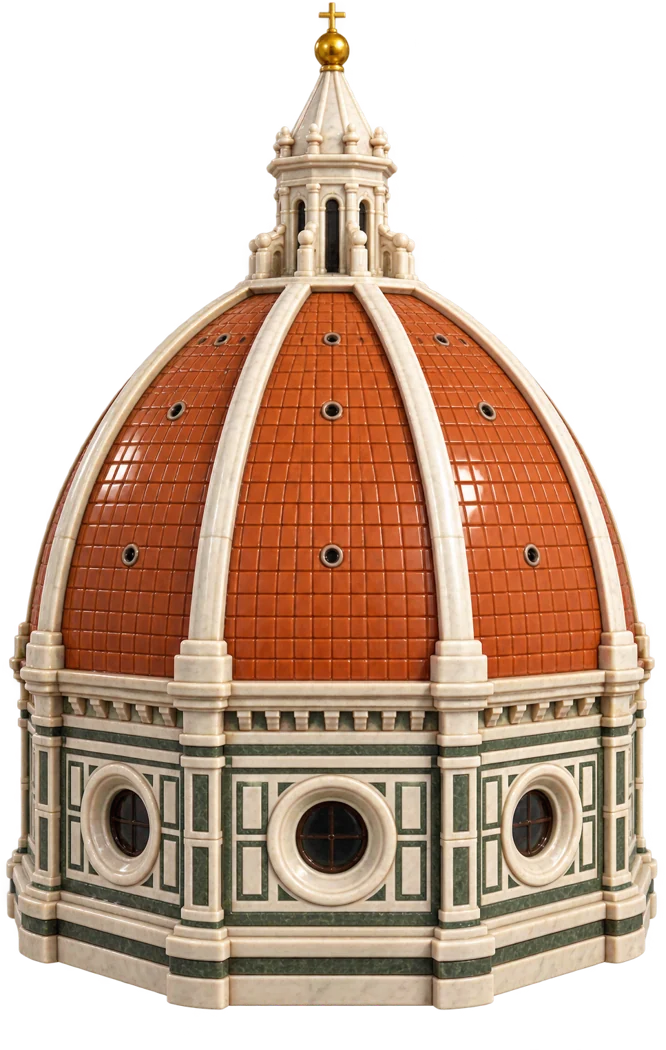
In 1401 Lorenzo Ghiberti and Filippo Brunelleschi competed to make new bronze doors for the Baptistery of Florence; Ghiberti won. Brunelleschi studied the ruins of ancient buildings, crowned Florence Cathedral with its great dome and showed painters how linear perspective works, which Leon Battista Alberti then wrote down. Masaccio painted people as they really look, and sculptors such as Donatello did the same in stone and bronze. The banking family of the Medici paid for much of this, and Lorenzo de' Medici encouraged commissions from Leonardo da Vinci, Botticelli and Michelangelo. After Constantinople fell in 1453, Greek scholars brought precious manuscripts to Italy.
The printing press carried the new ideas far and fast. From Florence the Renaissance spread to Venice, Milan, Rome and Naples, then north of the Alps and into Spain. In Italy it is often said to end with the Sack of Rome by the troops of Emperor Charles V in 1527, though elsewhere it lasted into the 17th century.
Read more on Wikipedia
Sources: en.wikipedia.org/wiki/Renaissance