Industrial age · state
Rattanakosin Kingdom
Its first king founded Bangkok in 1782, and his heirs kept Siam the only country in Southeast Asia never colonized.
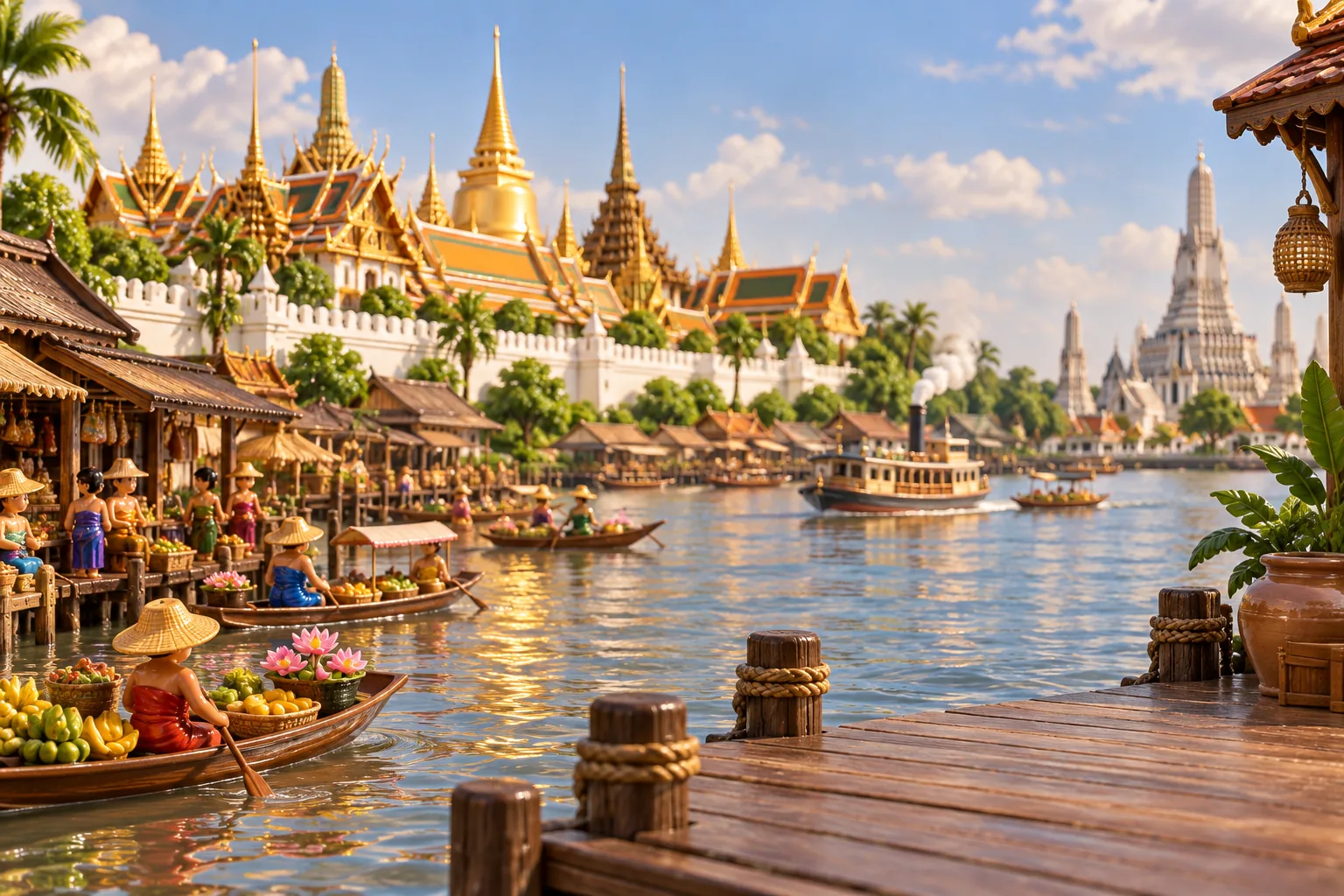
In 1782 Rama I, founder of the Chakri dynasty, moved the capital of Siam from Thonburi across the river to a new city, Bangkok. The Grand Palace and the temple of Wat Phra Kaew were finished in 1784, and the Emerald Buddha was installed there. In 1785 the Burmese king Bodawpaya invaded from five directions in the Nine Armies' War, and was beaten back. In the following decades Siam fought Burma and Vietnam for supremacy and took tribute from Lanna, the Lao kingdoms and Malay sultanates.
King Mongkut, who had been a Buddhist monk for 27 years before he took the throne in 1851, signed the Bowring Treaty with Britain in April 1855. It cut tariffs to three per cent and opened Siam to world trade, and similar treaties with other Western nations followed. His son Chulalongkorn, taught as a boy by Anna Leonowens, travelled to Singapore, Java and India, began the gradual abolition of slavery in 1874 and centralised the government.
In 1893 French gunboats came up the river to Bangkok and Siam had to give up the Lao lands east of the Mekong. Siam lost more borderlands, but it remained the only Southeast Asian state to keep its independence. In 1932, deep in the Depression, a revolution ended absolute monarchy and gave the country a constitution.
Read more on Wikipedia
Sources: en.wikipedia.org/wiki/Rattanakosin Kingdom (1782–1932), en.wikipedia.org/wiki/Paknam incident