Middle Ages · state
Rashtrakuta dynasty
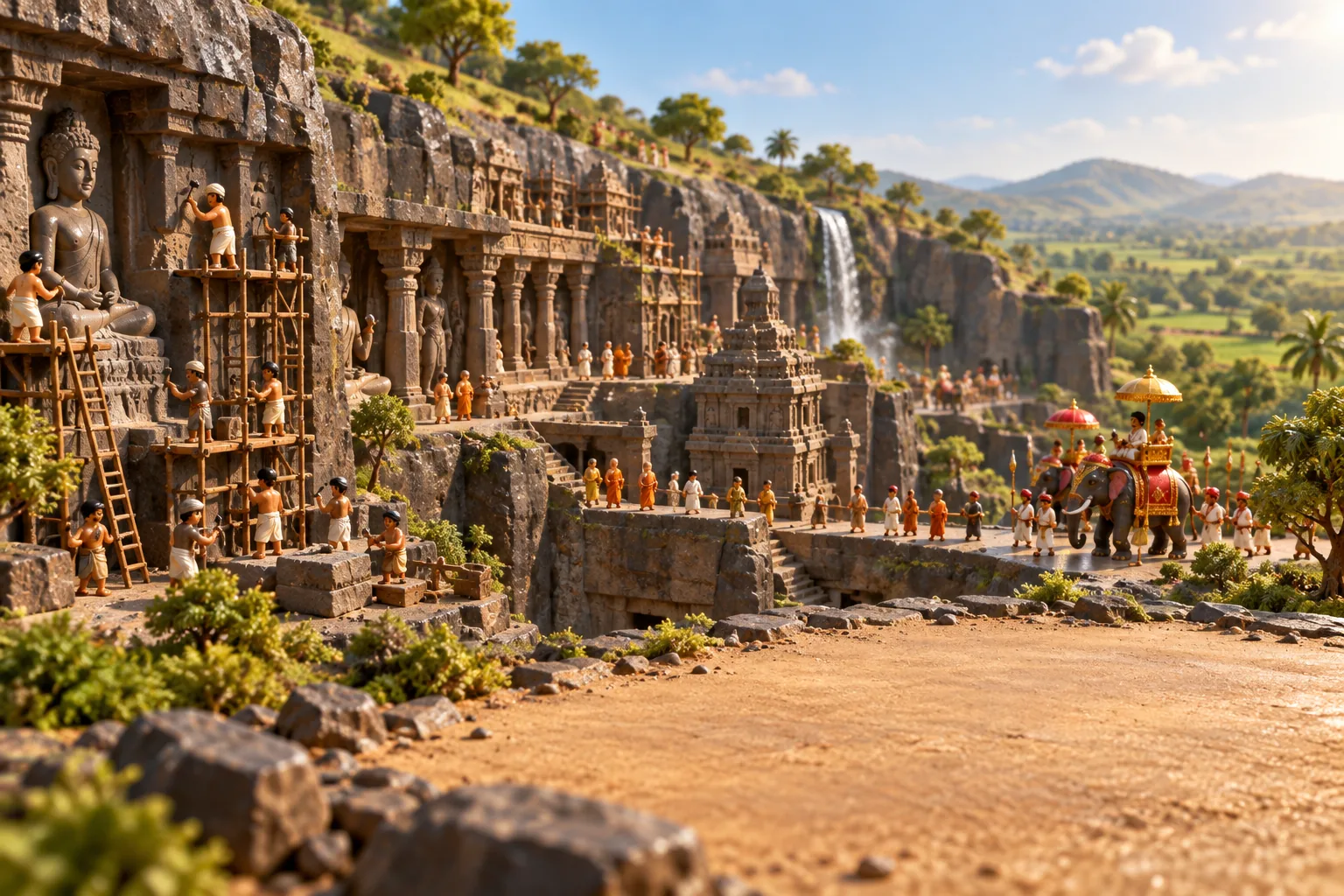
Its king had a whole temple carved downward out of a single hillside of rock, and Arab travellers counted his empire among the four greatest in the world.
The Rashtrakutas began as vassals of the Chalukyas of Badami. In 753 their chief Dantidurga overthrew the Chalukya king Kirtivarman II and built a kingdom in the Deccan. His successor Krishna I took most of Karnataka and the Konkan, and Dhruva Dharavarsha, from 780, led armies all the way to Kannauj, the prize of northern India, where he beat both the Pratiharas and the Palas of Bengal.
His son Govinda III went further. An inscription boasts that his horses drank from icy Himalayan streams and his elephants tasted the waters of the Ganges, and even the king of Ceylon sent him statues as a sign of submission. Amoghavarsha I, who came to the throne in 814, made Manyakheta his capital and preferred peace and marriage alliances to war. A scholar in Kannada and Sanskrit, he wrote the Kavirajamarga, the earliest surviving book on Kannada poetics.
The dynasty is best remembered for Ellora, where it carved Hindu and Jain cave temples into the basalt cliff, above all the Kailasa temple begun under Krishna I. Its power broke suddenly: in 972 the Paramara king Siyaka of Malwa plundered Manyakheta, and the feudatory Tailapa II declared himself independent. The last emperor, Indra IV, fasted to death as a Jain monk.
Read more on Wikipedia
Sources: en.wikipedia.org/wiki/Rashtrakuta Empire, en.wikipedia.org/wiki/Kailasa temple, Ellora


