Industrial age · person
Rani Lakshmibai
When the British took her husband's kingdom by a legal rule, she fought them with lawyers and letters, and when that failed, on horseback.
Manikarnika Tambe, known as Manu, was born in Varanasi; British sources put her birth around 1827, Indian sources in 1835. Her father served the family of the deposed Maratha peshwa Baji Rao II, and she grew up at his court at Bithur, where, legend says, she learned to read and to ride. In 1842 she was married to Gangadhar Rao, the raja of Jhansi, and took the name Lakshmibai. Their only son died in infancy in 1851, and on his deathbed in November 1853 the raja adopted a five-year-old relative, Damodar Rao, as his heir.
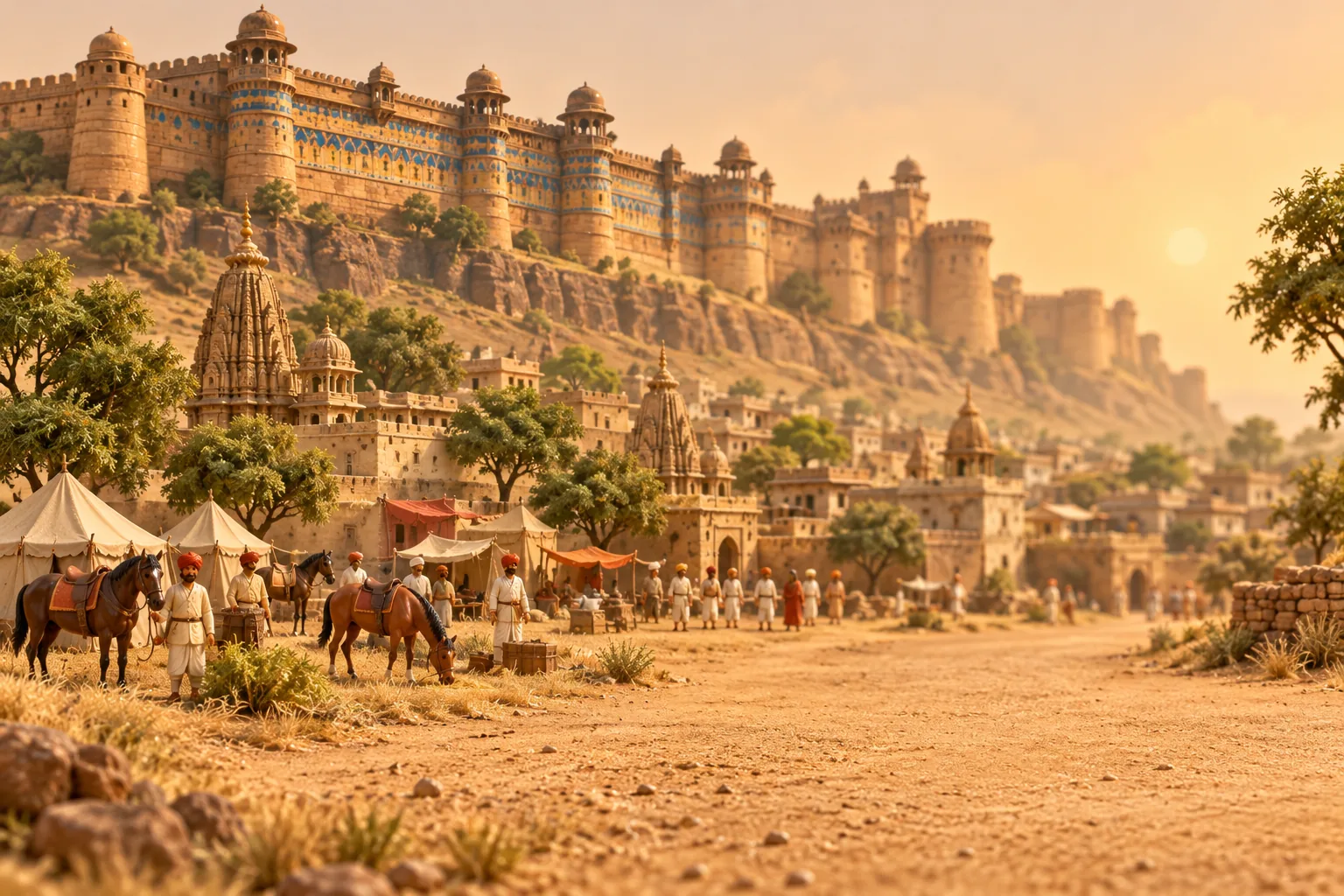
Governor-General Lord Dalhousie refused to accept the adoption and annexed Jhansi under the doctrine of lapse. The Rani hired the Australian lawyer John Lang and sent appeal after appeal, citing treaties of 1803, 1817 and 1842, but in May 1854 Jhansi passed to the East India Company. When Indian troops at Jhansi mutinied in 1857 she took over the state, though her role in the killings of British residents remains disputed. In March 1858 Major General Hugh Rose besieged Jhansi; on the night of 3 to 4 April she escaped from the fort with her adopted son and about 300 soldiers and reached Kalpi, more than 100 miles away. She joined Tatya Tope, and the rebels took Gwalior Fort.
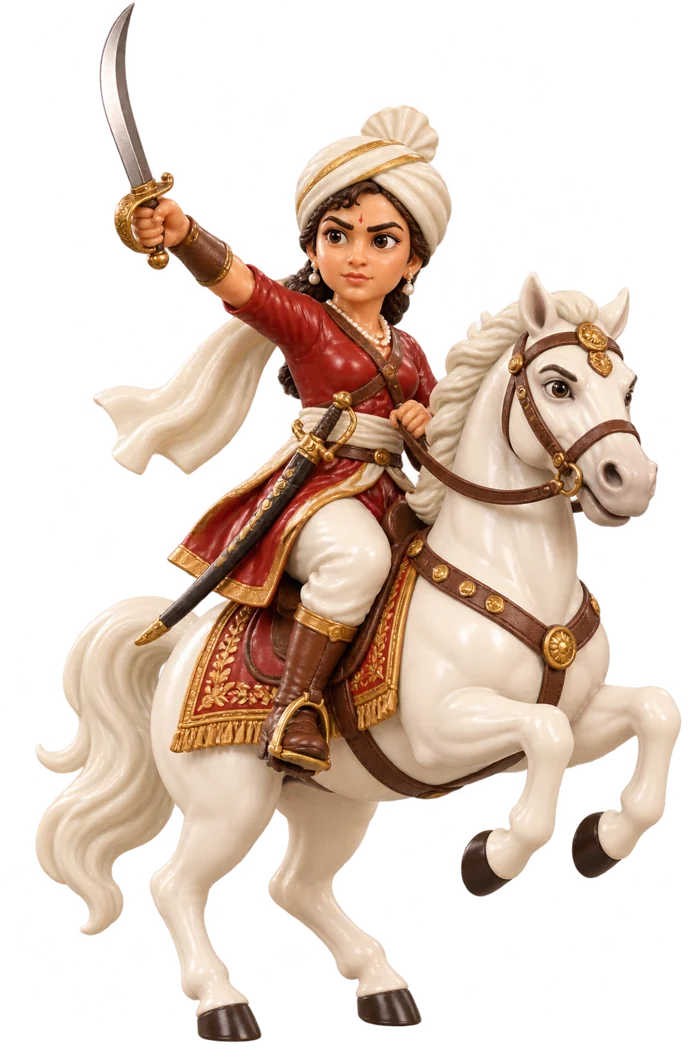
On 18 June 1858, near Gwalior, she rode against a charge of British hussars and was killed. Rose himself called her the "best and bravest of the rebels". She became a heroine of the Indian independence movement.
Read more on Wikipedia
Sources: en.wikipedia.org/wiki/Lakshmibai, Rani of Jhansi, en.wikipedia.org/wiki/Indian Rebellion of 1857


