Industrial age · person
Ramakrishna
A village priest at a riverside temple near Calcutta tried path after path, Tantra, Vedanta, Islam and Christianity, and concluded that the world's religions are "so many paths to reach one and the same goal".
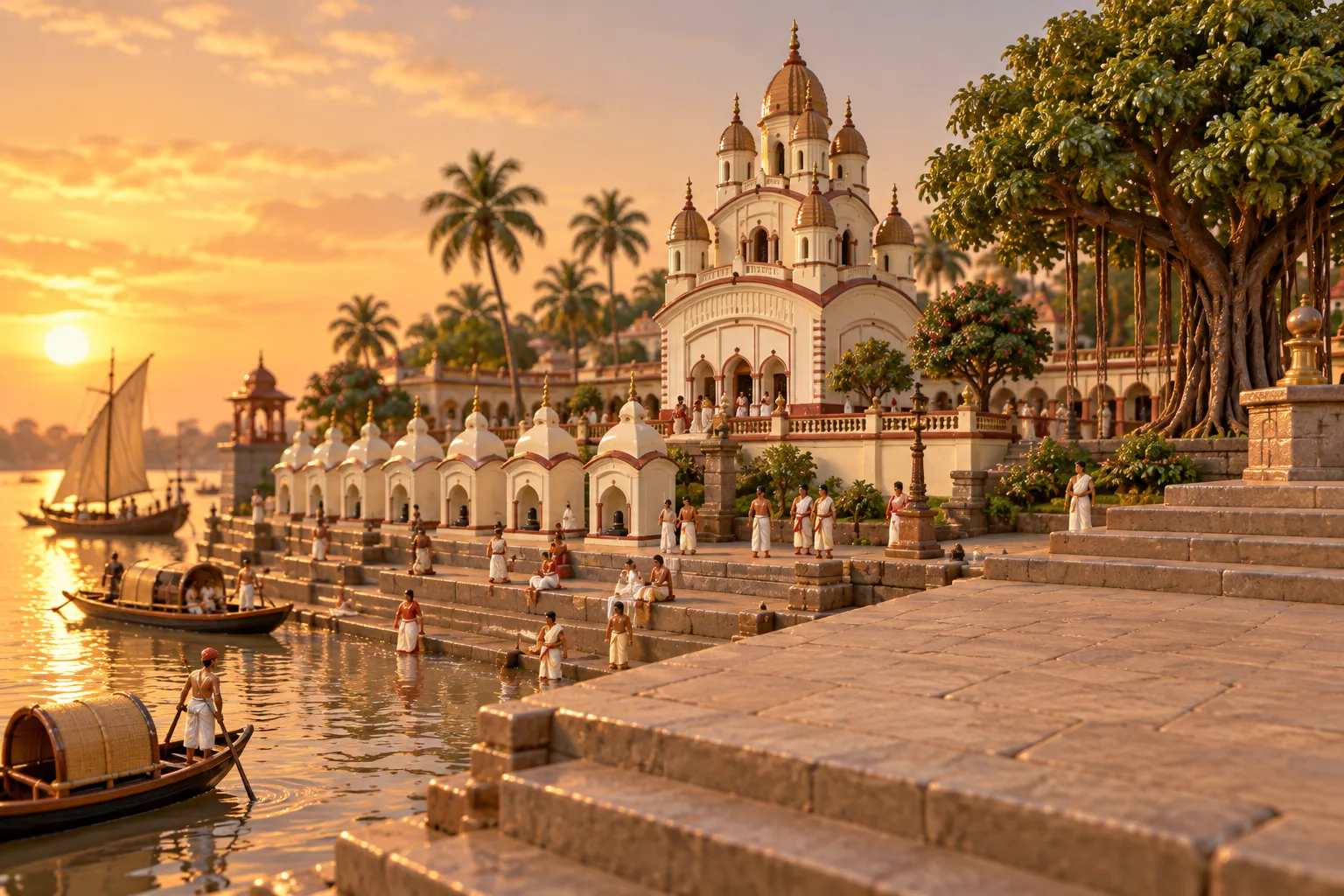
Ramakrishna, born Ramakrishna Chattopadhyay and nicknamed Gadadhar as a child, was born on 18 February 1836 in the village of Kamarpukur in Bengal, the youngest of four children of a poor and pious Brahmin family. He spoke Bengali, and as a boy he already described religious experiences. On 31 May 1855 his elder brother Ramkumar officiated at the dedication of the new Kali temple at Dakshineswar on the Hooghly, built by Rani Rashmoni, and Ramakrishna soon became a priest there, dressing the image of the goddess.
In 1859, as was the custom, he was married to Sarada Devi; the marriage was never consummated. Wandering teachers who visited the temple guided him through many disciplines: from 1861 the ascetic Bhairavi Brahmani led him through Tantra, and in 1865 the monk Tota Puri initiated him into sannyasa and Advaita Vedanta. In 1866 Govinda Roy, a Hindu who practised Sufism, initiated him into Islam, and in 1873 he had the Bible read to him and practised Christianity. Each path, he said, led to God, and his teaching in parables drew visitors who included leading figures of the Bengali Renaissance.
Most of his close disciples, among them the young Narendranath Dutta, later Swami Vivekananda, came between 1879 and 1885. Ill with throat cancer, he was moved to a garden house at Cossipore, where he died in the early hours of 16 August 1886. In 1897 Vivekananda founded the Ramakrishna Math and Mission in his name.
Read more on Wikipedia
Sources: en.wikipedia.org/wiki/Ramakrishna, en.wikipedia.org/wiki/Dakshineswar Kali Temple