Industrial age · person
Raja Ravi Varma
A painter from a Kerala palace set up a printing press in Bombay, and his gods and goddesses went from the walls of maharajas to the walls of ordinary homes.
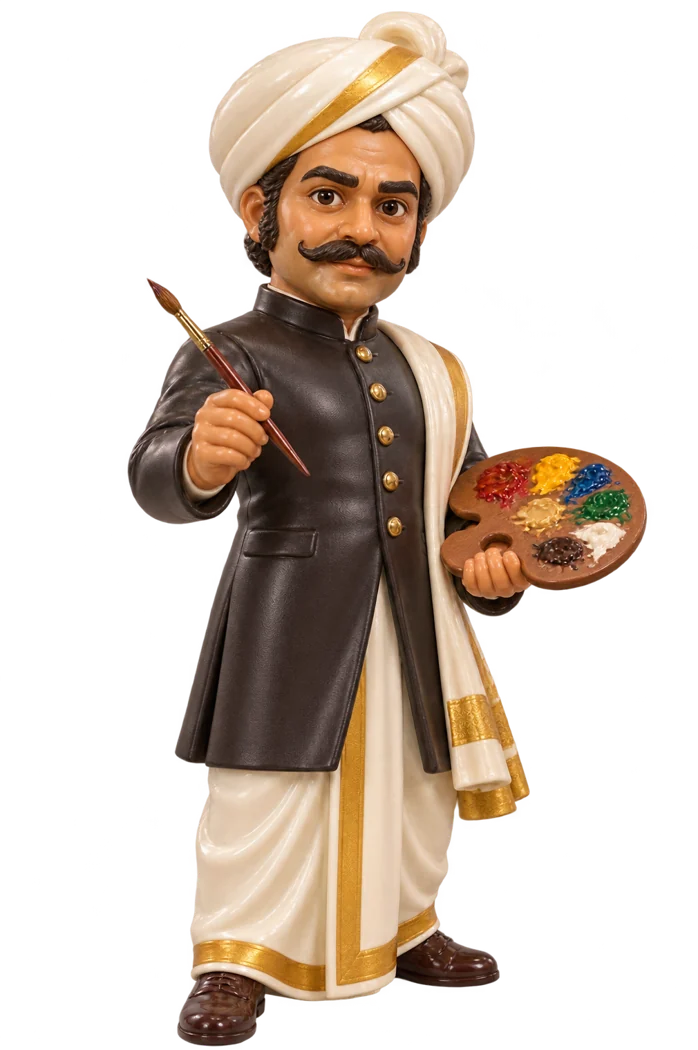
Ravi Varma was born on 29 April 1848 at Kilimanoor Palace in the princely state of Travancore, today's Kerala, into an aristocratic family that for two centuries had supplied husbands for the princesses of the matrilineal Travancore royal house. His mother, Uma Ambabayi, was a poet, and his father a scholar of Sanskrit and Ayurveda. At 18 he married Bhageerthi Bayi of the royal house of Mavelikkara. Under the patronage of Ayilyam Thirunal, Maharaja of Travancore, he learned the basics of painting in Madurai, watercolour from Rama Swami Naidu and, rather reluctantly, oils from the British portraitist Theodore Jenson.
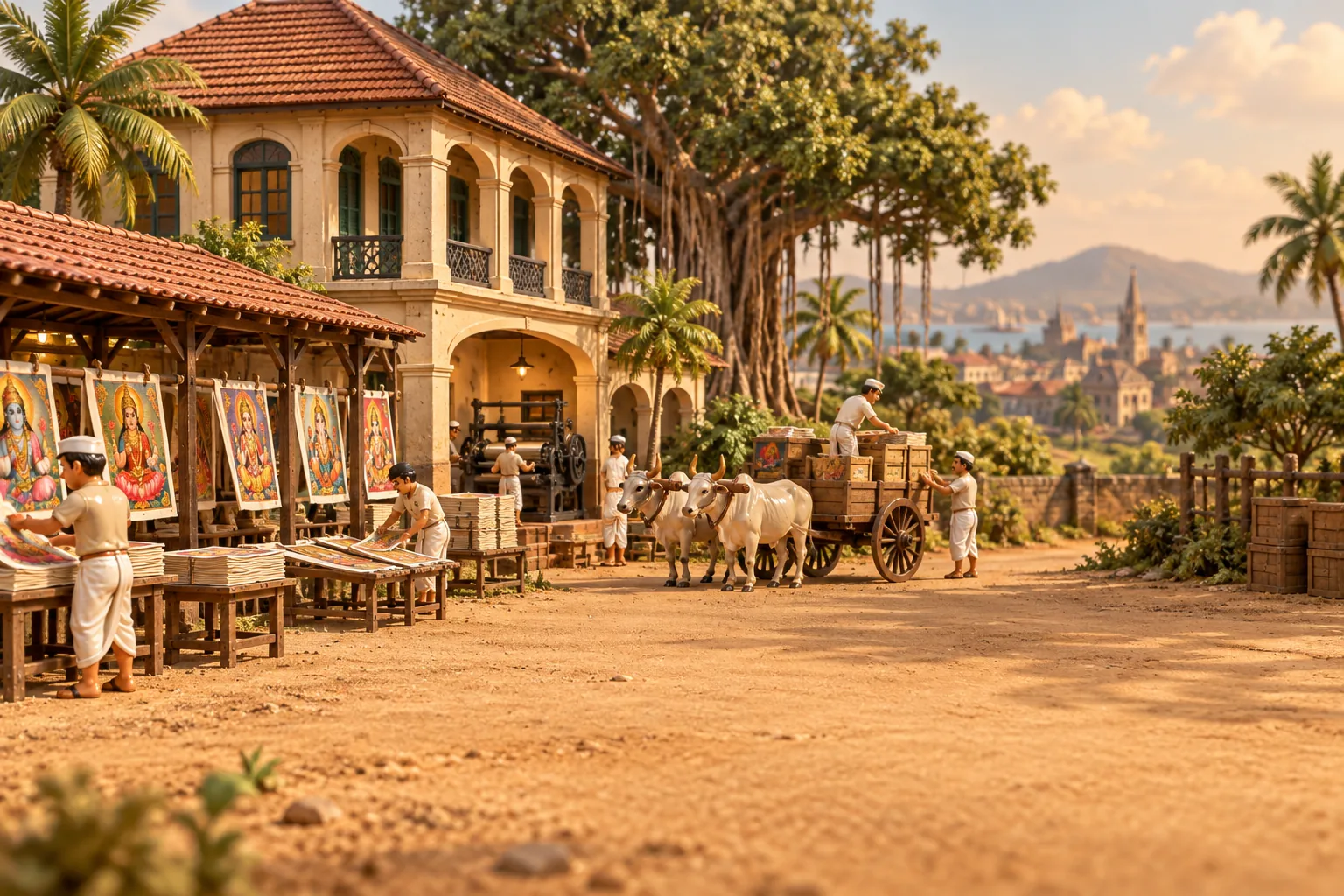
He won an award at an exhibition in Vienna in 1873, and in 1893 his paintings won three gold medals at the World's Columbian Exposition in Chicago. Travelling across India for subjects, he painted scenes from the Mahabharata such as Shakuntala and Dushyanta and Nala and Damayanti, often modelling goddesses on women he found beautiful, and his versions of the epic heroes became part of how India imagines them. In 1894, on the advice of the dewan T. Madhava Rao, he opened a lithographic press at Ghatkopar in Bombay, moving it to Malavli near Lonavala in 1899. Its cheap prints of gods sold in thousands, though the press itself failed and was sold in 1901.
Lord Curzon gave him the Kaisar-i-Hind Gold Medal in 1904. He died on 2 October 1906, aged 58. Some call him the father of modern Indian art; others, kitsch.
Read more on Wikipedia