
Industrial age · person
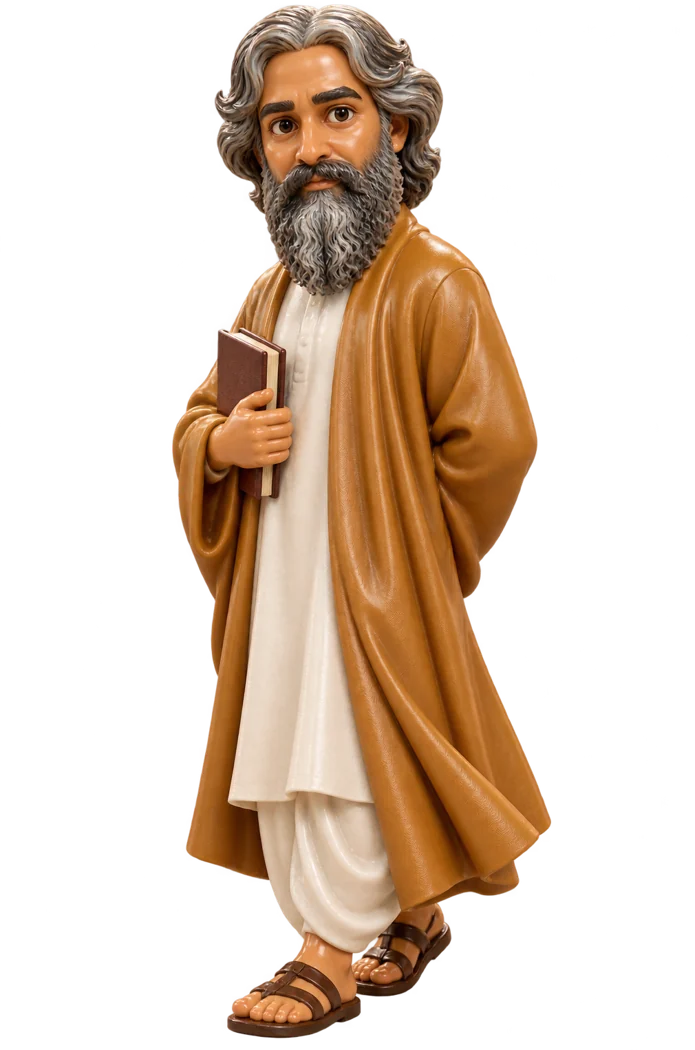
Rabindranath Tagore
A small book of his own English translations, shown to Yeats and Ezra Pound in London, made a Bengali poet the first non-European to win the Nobel Prize in Literature.
Rabindranath Tagore was born on 7 May 1861 in the Jorasanko mansion in Calcutta, the youngest of 13 surviving children of Debendranath Tagore, a leader of the Brahmo religious movement. His mother died when he was small, and he was raised mostly by servants. He wrote poetry at eight. At 16 he published poems under the pen name Bhanusimha, "Sun Lion", and they were hailed as lost old classics. In 1878 his father sent him to school in Brighton, England, to become a barrister, but he came home in 1880 without a degree.
From 1890 he managed the family estates at Shelaidaha, in today's Bangladesh, travelling the Padma river on the family barge and writing poems and short stories. In 1901 he moved to Santiniketan and founded a school there, an open-air experiment that grew into Visva-Bharati University. His wife and two of his children died there. In 1912 he translated his poems Gitanjali, "Song Offerings", into English; W. B. Yeats and Ezra Pound admired them, and in November 1913 he learned that he had won the Nobel Prize in Literature.
Knighted in 1915, he gave up the title in protest after the Jallianwala Bagh massacre of 1919. He travelled to more than thirty countries, took up painting at sixty and wrote some 2,230 songs. India's "Jana Gana Mana" and Bangladesh's "Amar Shonar Bangla" are his. He died in the Jorasanko house where he grew up, on 7 August 1941, aged 80.
Read more on Wikipedia


