Antiquity · war
Punic Wars
Rome began the struggle with no navy at all, and built its first real war fleet by copying a wrecked Carthaginian warship.
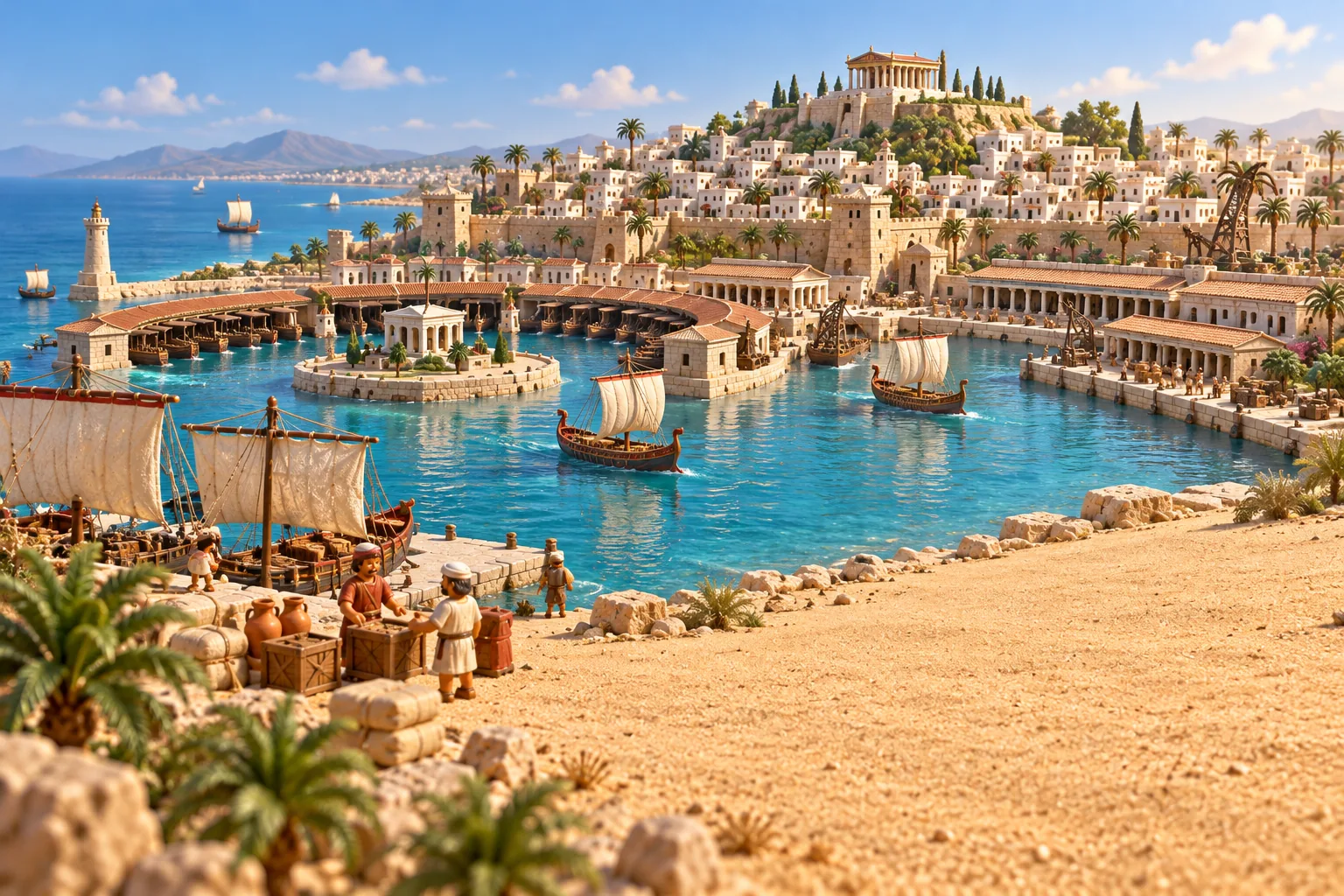
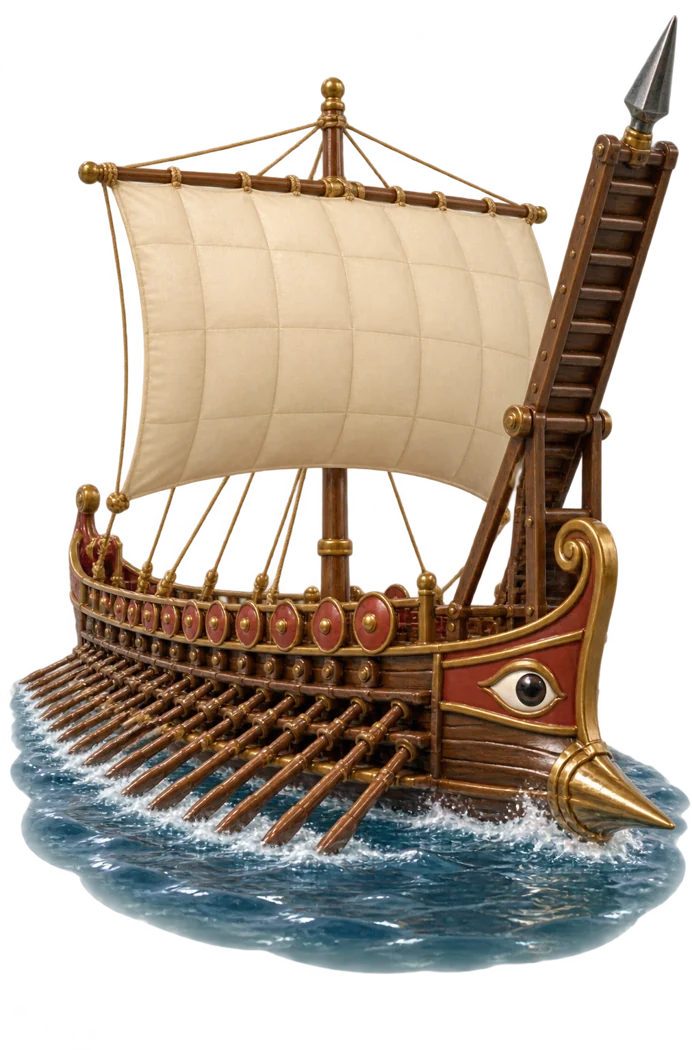
In 264 BC Carthage was the leading power of the western Mediterranean, with a great maritime empire, while Rome was a fast-growing power in Italy with a strong army but no navy. Their ambitions collided on Sicily. In 260 BC the Romans built a fleet, using a shipwrecked Carthaginian quinquereme as a blueprint, and fitted their ships with the corvus, a boarding bridge 11 metres long with a heavy spike that pinned an enemy deck so legionaries could storm across. After twenty-three years a Carthaginian relief fleet was destroyed at the Aegates Islands in 241 BC; Carthage made peace, paid heavy reparations, and Sicily became Rome's first province.
The Second Punic War began in 218 BC when the Carthaginian general Hannibal crossed the Alps and invaded Italy. He destroyed Roman armies at the Trebia, at Lake Trasimene and at Cannae, and campaigned in Italy for fourteen years. But Rome would not give in. A Roman invasion of Africa in 204 BC forced Hannibal home, and in 202 BC he was defeated at Zama. The peace of 201 BC stripped Carthage of its overseas lands and forbade it to wage war without Rome's permission.
In 151 BC Carthage defended itself against Numidian raids, and Rome, urged on by Cato the Elder, used this as a pretext to declare war in 149 BC. In 146 BC the Romans stormed Carthage, slaughtered or enslaved its people and demolished the city. Its lands became the Roman province of Africa.
Read more on Wikipedia
Sources: en.wikipedia.org/wiki/Punic Wars


