Industrial age · state
Portuguese Empire
The first of Europe's sea empires and the last to let go, it once had its capital not in Lisbon but in Rio de Janeiro.
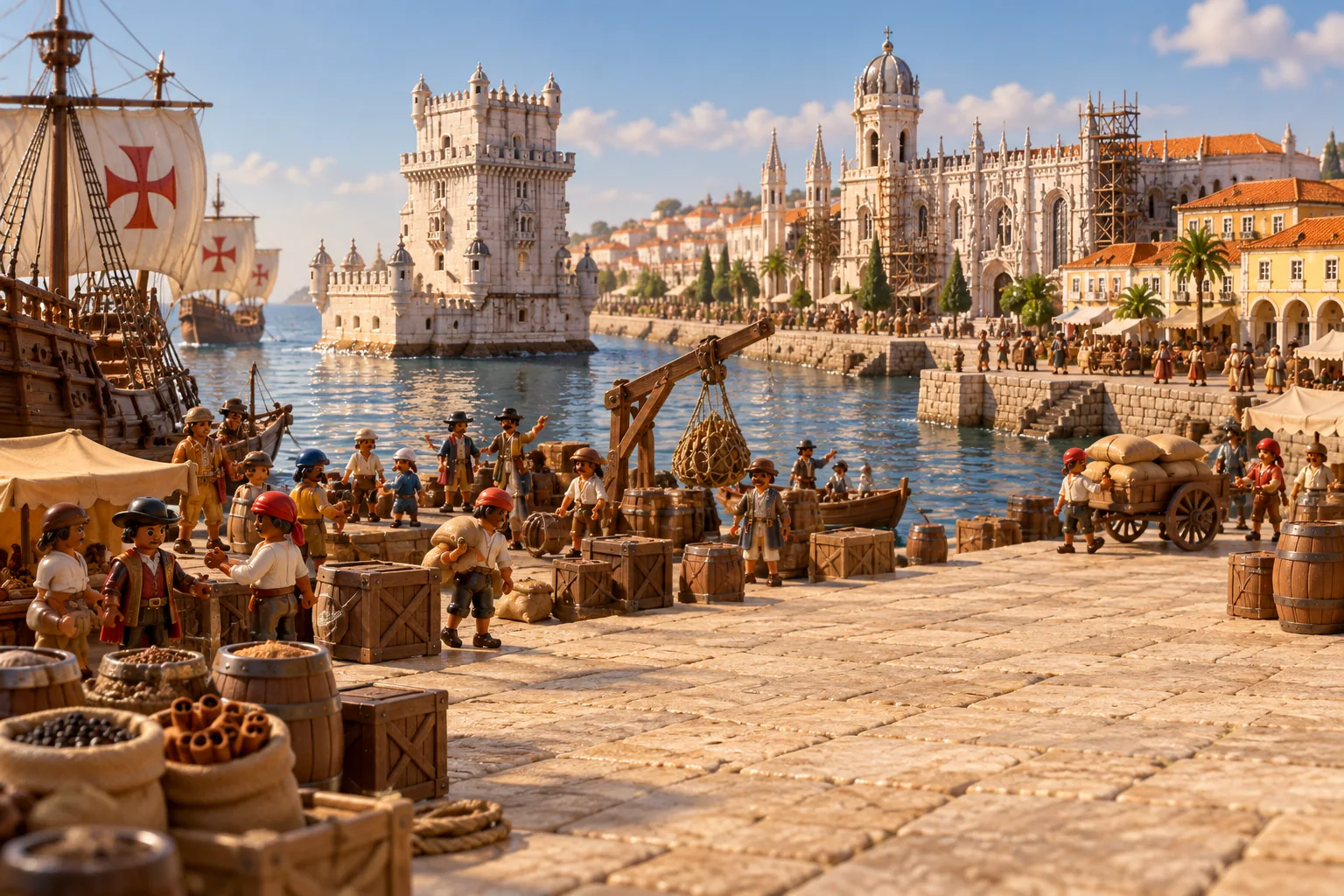
Portugal's empire began in 1415 with an attack on Ceuta, a Muslim port in North Africa. Prince Henry the Navigator, who had fought there, financed voyages down the African coast in new ships called caravels until his death in 1460. In 1488 Bartolomeu Dias rounded the Cape of Good Hope, in 1498 Vasco da Gama reached India, and in 1500 Pedro Álvares Cabral, on his way to India, reached what would become Brazil.
Afonso de Albuquerque became viceroy of the East Indies in 1509 and made Goa its capital, and by 1571 a string of forts and trading posts linked Lisbon with Nagasaki in Japan. Ships brought gold, ivory, pepper, sugar and enslaved Africans to European markets, and the colonial trade made up about a fifth of Portugal's income per head. From 1580 to 1640 Portugal shared its king with Spain, and the Dutch seized Malacca, Ceylon and other ports.
Brazil became the most valuable colony. Fleeing Napoleon, the royal court sailed there in 1808, and from 1815 Rio de Janeiro was the capital, but Brazil declared independence in 1822. India annexed Goa in 1961, the Carnation Revolution of April 1974 ended the wars in Africa, and Portugal handed Macau back to China in 1999.
Read more on Wikipedia

