Early modern · state
Polish–Lithuanian Commonwealth
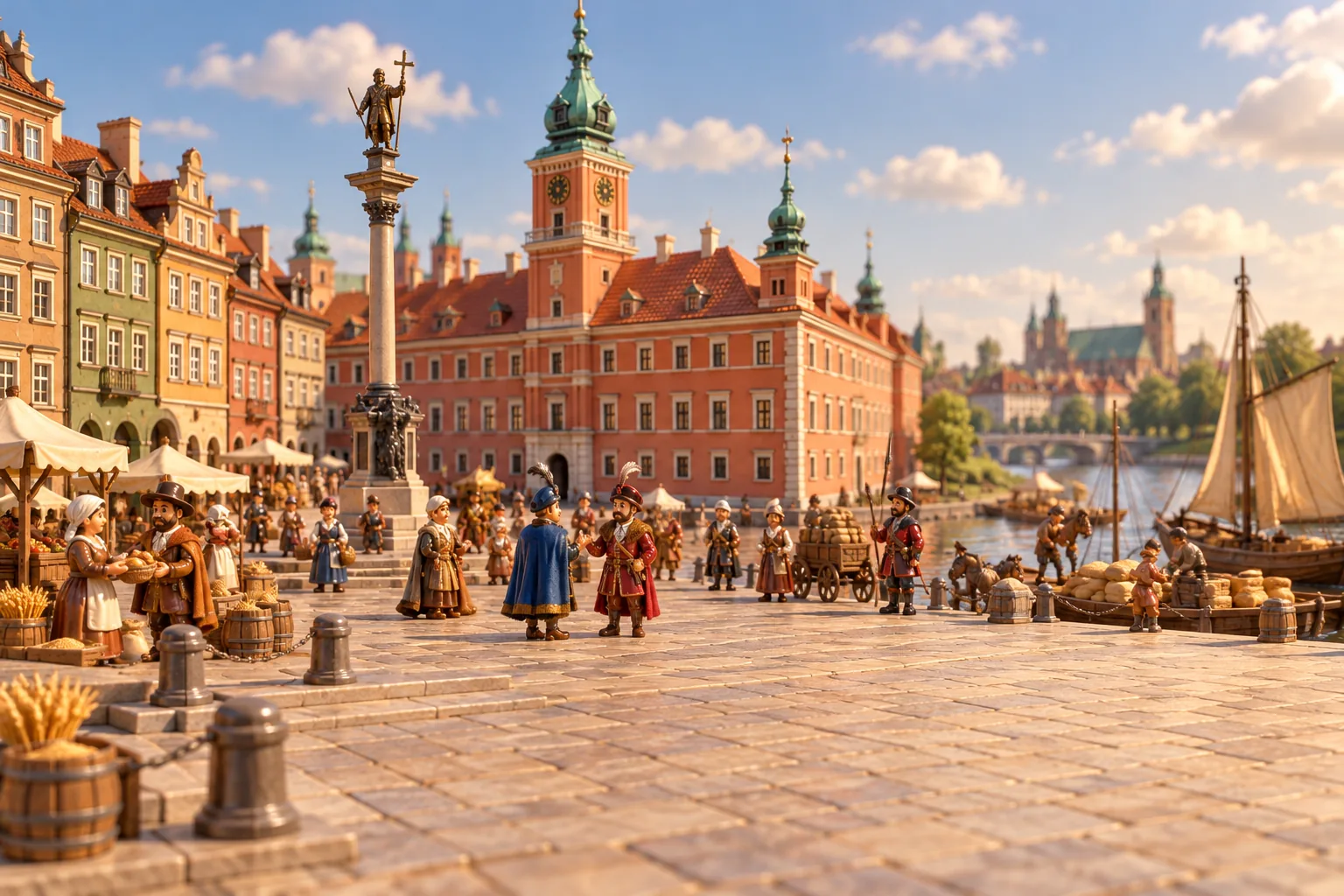
Here the nobles elected their kings, any single deputy could veto a whole parliament, and Europe's first modern written constitution was born.
Poland and Lithuania had shared rulers since the Krewo Agreement of 1385 and the marriage of Queen Jadwiga to the Lithuanian grand duke Jogaila. On 1 July 1569 the Union of Lublin merged them into one state. When the childless Sigismund II Augustus died in 1572, the Jagiellonian line ended and kings were henceforth elected for life by the nobility, the szlachta, about a tenth of the population. The Warsaw Confederation Act of 1573 guaranteed religious freedom.
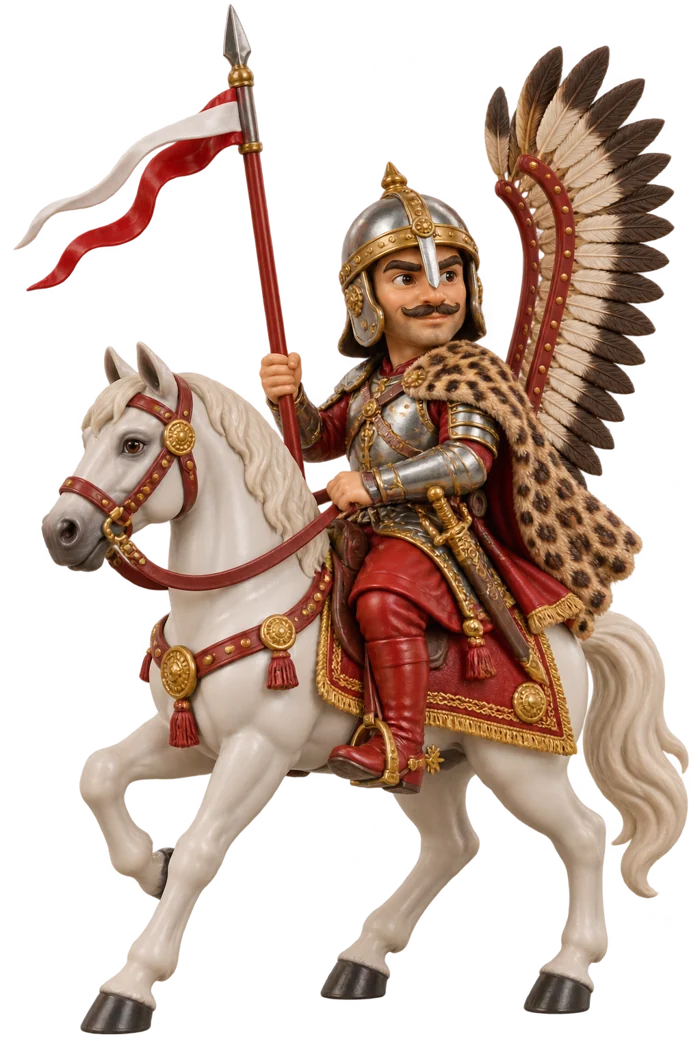
This system, the Golden Liberty, made the Commonwealth one of the largest states in Europe, about 1,000,000 square kilometres with some 12 million people in 1618. King Sigismund III Vasa invaded Russia during its Time of Troubles, and in July 1610 winged hussars won at Klushino, letting the Poles occupy Moscow for two years. In 1683 John III Sobieski helped crush the Ottomans at Vienna.
The Khmelnytsky Uprising of 1648 and the Swedish invasion of 1655, the Deluge, together with famine, cost at least 4 million lives. Bribed deputies used the liberum veto, which let a single member annul a whole session, to block reform. The 3 May Constitution of 1791 abolished it, but Russia, Prussia and Austria partitioned the Commonwealth in 1772, 1793 and 1795, erasing it from the map.
Read more on Wikipedia
Sources: en.wikipedia.org/wiki/Polish–Lithuanian Commonwealth


