Antiquity · person
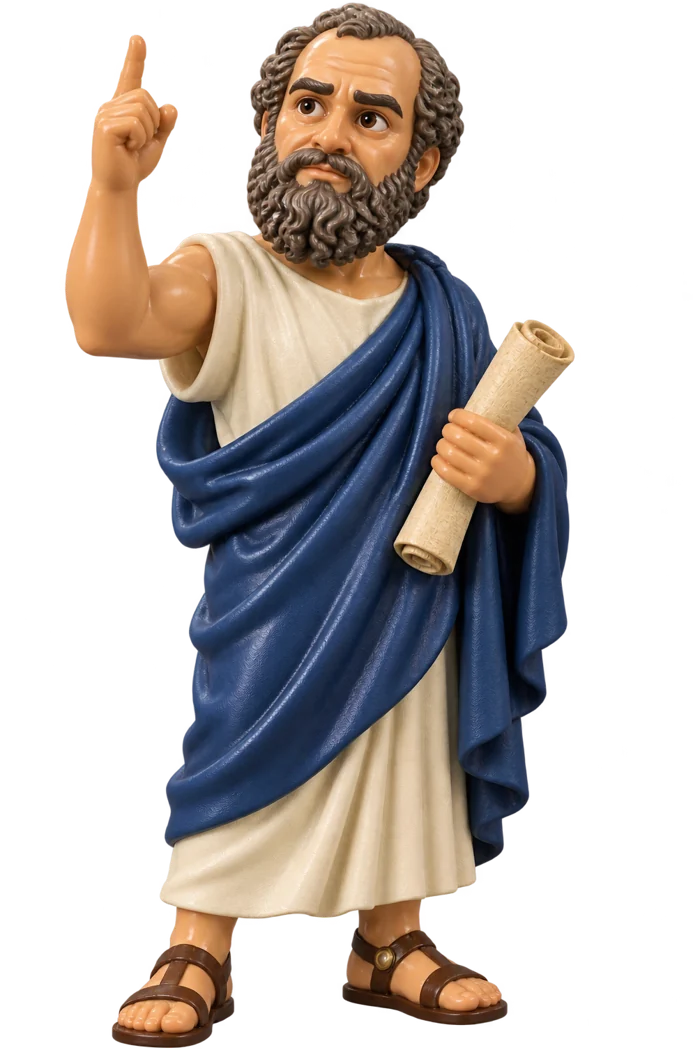
Plato
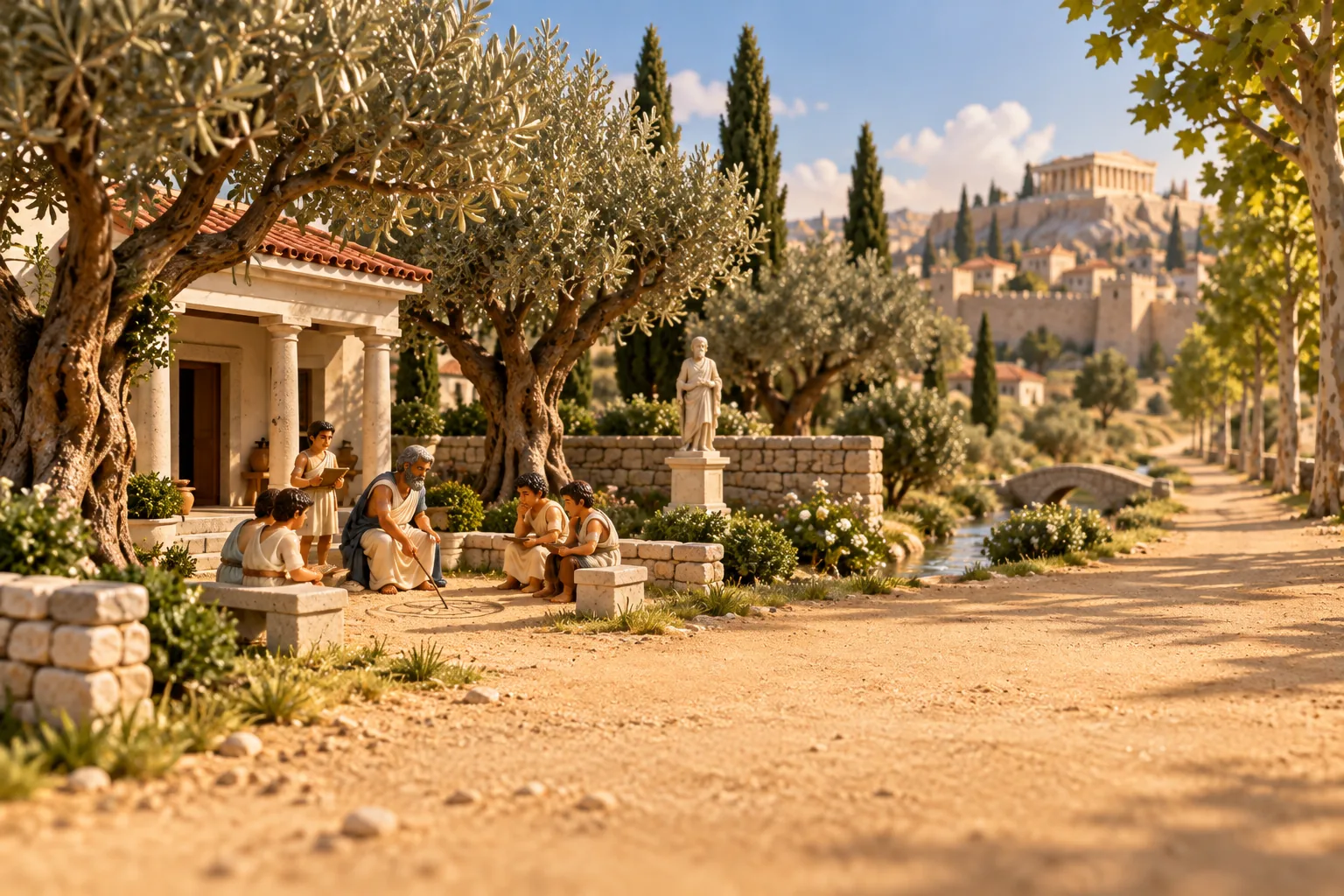
Home from a court where a tyrant had turned against him, he opened a school in a house and garden by a sacred olive grove outside Athens.
Plato was born in Athens between 428 and 423 BC into an aristocratic family; through his mother Perictione he descended from the lawgiver Solon. His brothers Glaucon and Adeimantus later appear in his Republic. As a young man he hoped for a career in public life, but in 404 BC, after Sparta defeated Athens, two of his relatives, Critias and Charmides, joined the brutal regime of the Thirty Tyrants. Plato refused an invitation to take part. Then the restored democracy prosecuted his teacher Socrates, and the trial ended Plato's political plans.
After Socrates' death he studied in Megara and then with the followers of Pythagoras in southern Italy. When he was about 40, around 385 BC, he visited Syracuse in Sicily, where the tyrant Dionysius turned against him, although Dionysius's brother-in-law Dion became his disciple. Back in Athens, in roughly 383 BC, he founded a school near the sacred olive grove of the hero Hecademus. At first it was just a house with a garden, but the Academy drew mathematicians and, in 367 BC, the young Aristotle. Plato wrote dialogues in which Socrates usually leads the talk, and in them set out the Theory of Forms and the Allegory of the Cave.
In 366 BC he went back to Syracuse to make the young Dionysius II a philosopher king, but the plan failed. Plato died in 348 or 347 BC and was buried in the garden of the Academy, which his nephew Speusippus took over.
Read more on Wikipedia
Sources: en.wikipedia.org/wiki/Plato

