Early modern · war
Pizarro and the Inca
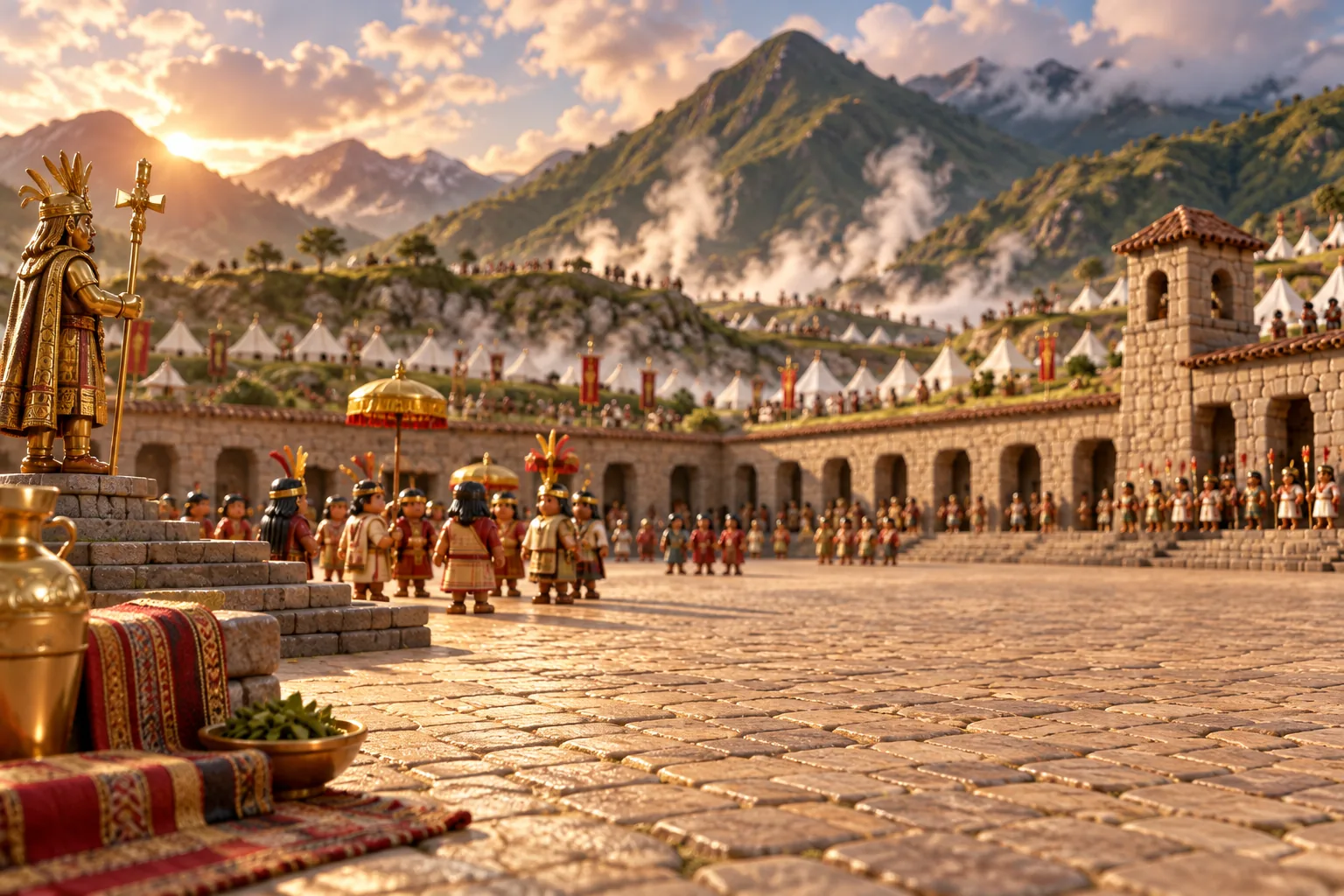
The Inca emperor had 80,000 soldiers camped on the hills, and he had himself carried into the town square to meet 168 strangers because he planned to capture them.
The Inca Empire, Tawantinsuyu, stretched along the Andes from Ecuador to Chile, run from Cusco without money, iron, the wheel or writing, but with roads reaching every corner and records kept in knotted strings. In the 1520s an epidemic, possibly smallpox, killed the emperor Huayna Capac and his heir, and two of his sons, Atahualpa and Huáscar, fought a civil war. In 1532 Atahualpa's generals won it.
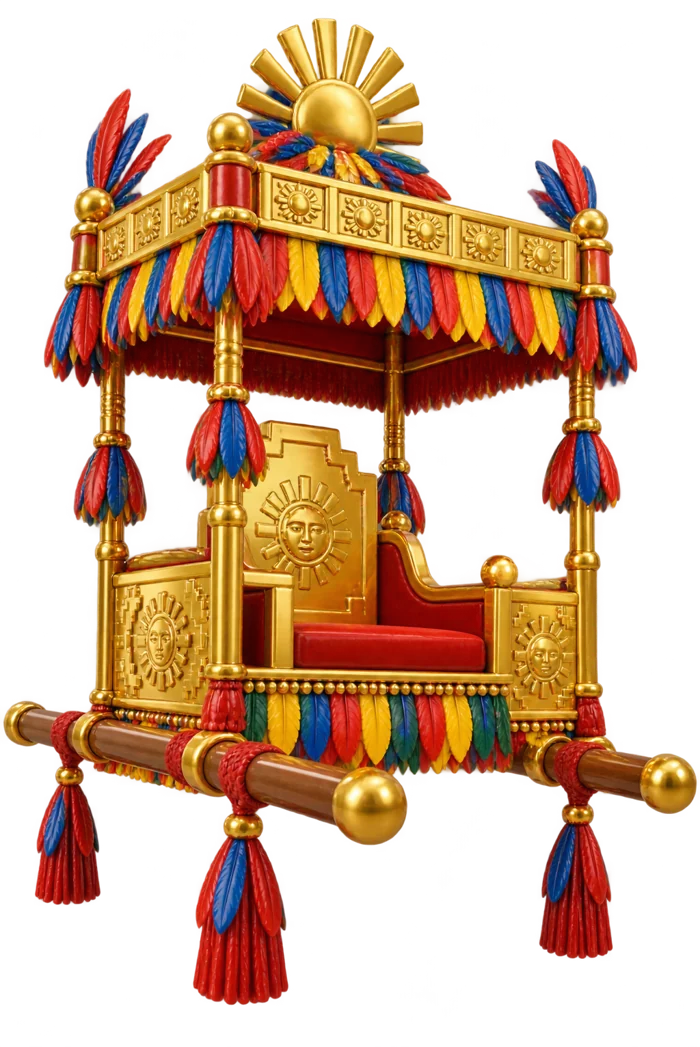
That same year Francisco Pizarro marched inland with 106 foot soldiers and 62 horsemen. Atahualpa, resting near Cajamarca with some 80,000 troops, judged them harmless and invited them in. On 16 November he entered the town's great square on a litter carried by eighty lords, with thousands of attendants armed only with small axes and slings. The Spaniards were hidden in the buildings around it. A friar, Vicente de Valverde, came out with a prayer book; Atahualpa looked at it and threw it to the ground. Pizarro gave the signal. Gunfire and a cavalry charge cut down thousands in the packed square, and Atahualpa was dragged from his litter. No Spaniard was killed.
To save himself, Atahualpa offered to fill a large room once with gold and twice with silver. The treasure came, but in 1533 the Spaniards, fearing an Inca army, staged a mock trial and executed him. They marched on Cusco and ruled through puppet emperors, though the last Inca stronghold, Vilcabamba, held out until 1572.
Read more on Wikipedia
Sources: en.wikipedia.org/wiki/Inca Empire, en.wikipedia.org/wiki/Battle of Cajamarca, en.wikipedia.org/wiki/Atahualpa


