Ancient world · state
Phrygia
King Midas of the golden touch really lived, and Assyrian scribes knew him as Mita, a dangerous rival in the hills of Anatolia.
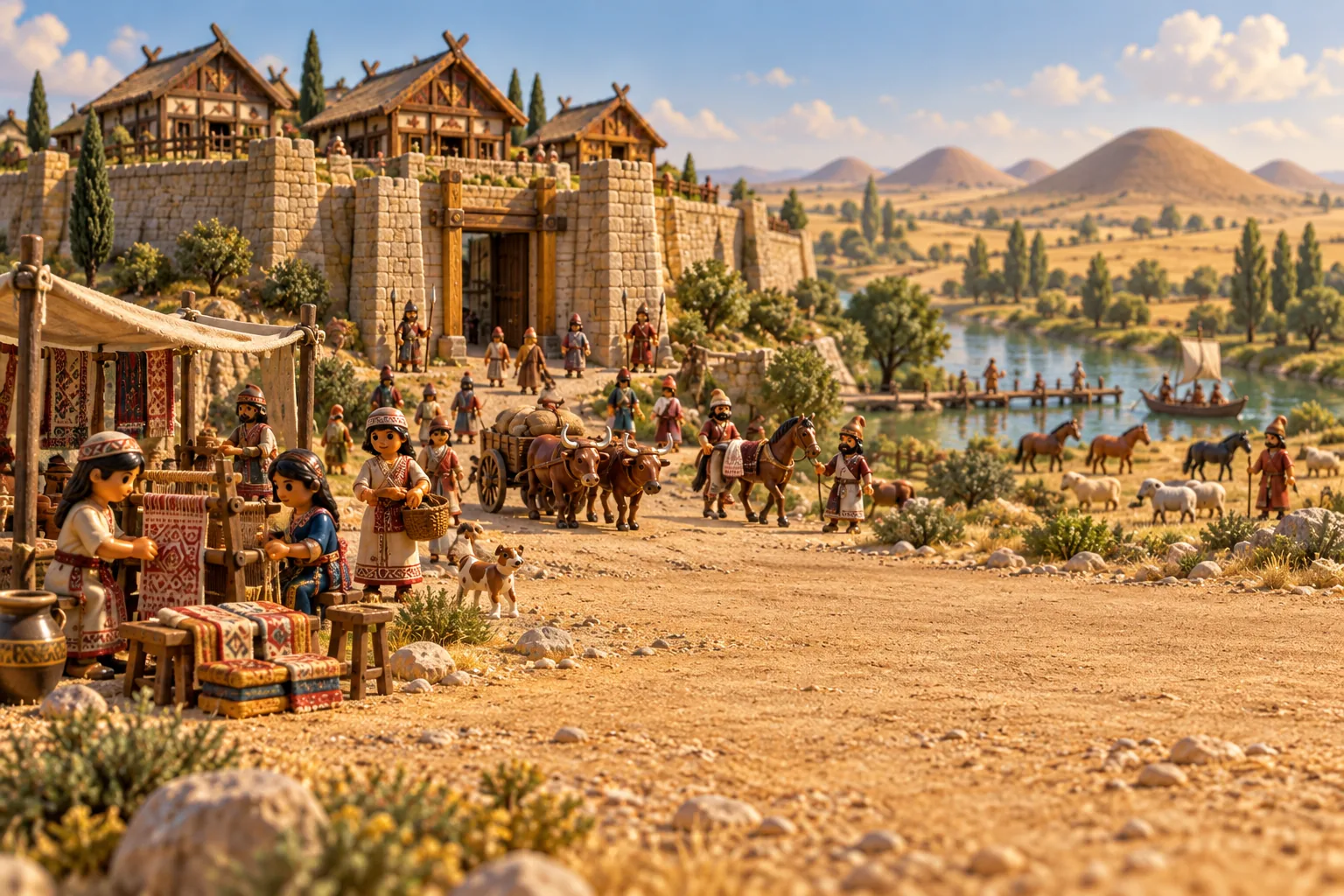
Greek writers said the Phrygians came to Anatolia from the Balkans, where they had been called Bryges. They settled on the dry western end of the Anatolian plateau around the Sangarios River, a land of hot summers, cold winters, barley fields and grazing herds, and made Gordion their capital. In Homer's Iliad they fight as allies of Troy.
In the 8th century BC Phrygia became an empire covering most of central and western Anatolia, bordering Assyria to the south-east and Urartu to the north-east. Its king was Midas, the Mita of Assyrian texts, who probably reigned from about 720 BC. From 715 BC he fought Sargon II for the Neo-Hittite lands, and by 709 BC he had made a truce. Herodotus says Midas sent a throne to the oracle at Delphi, the first foreigner to make an offering there. Phrygians wrote their language in an alphabet borrowed from the Phoenicians, and they worshipped a great mother goddess, Matar Kubeleya, whom the Greeks and Romans later knew as Cybele.
Then the Cimmerians, horsemen from the steppe, overran the kingdom. The excavations confirm that Gordion was violently destroyed around 675 BC, and later writers said Midas killed himself by drinking bull's blood. Phrygia fell under Lydia and then Persia.
Read more on Wikipedia
Sources: en.wikipedia.org/wiki/Phrygia, en.wikipedia.org/wiki/Midas