Prehistory · exploration
People reach Australia
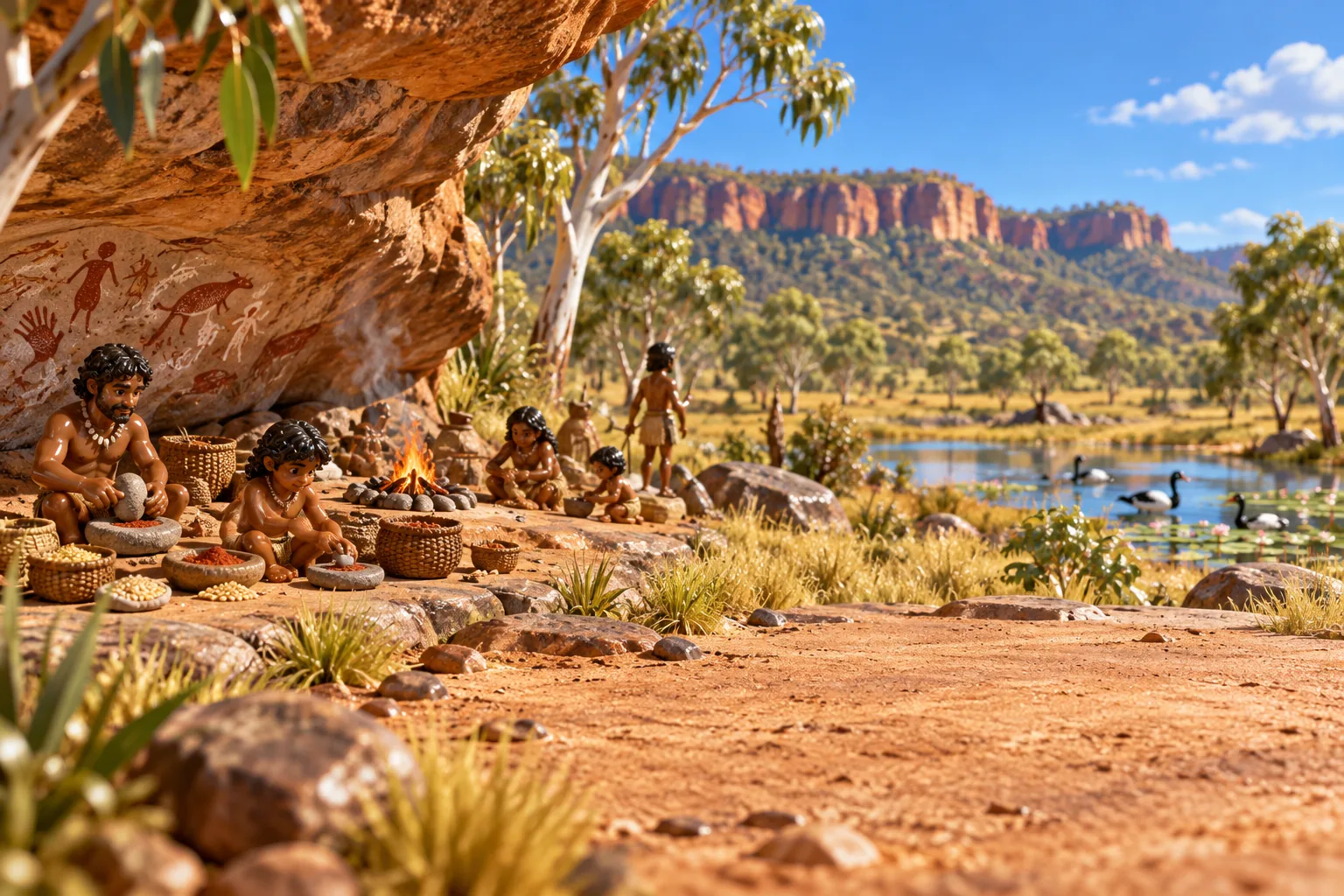
Under a sandstone overhang in northern Australia, stone tools lie more than two metres down, left by people who may have arrived 65,000 years ago.
Even at the height of the Ice Age, when the sea was far lower and Australia, New Guinea and Tasmania formed one continent, it was not joined to Asia. Between them lay the islands of Wallacea and stretches of open water that the first Australians had to cross. Madjedbebe, a sandstone rock shelter in Arnhem Land about 50 km from the coast, holds the oldest known evidence that they made it. It lies on the traditional land of the Mirarr people, who have always known the site.
Archaeologists first dug a small test pit there in 1973 and found signs of very old occupation. In 1989 thermoluminescence dating suggested people were there about 50,000 years ago, an age widely accepted since the 1990s. In 2012 and 2015 a team led by Christopher Clarkson, working with the Gundjeihmi Aboriginal Corporation, excavated again and proposed that the shelter was first used possibly by 65,000 years ago. Some experts question that, and a 2020 study suggested termites may have mixed the layers; Clarkson's team stands by its dates.
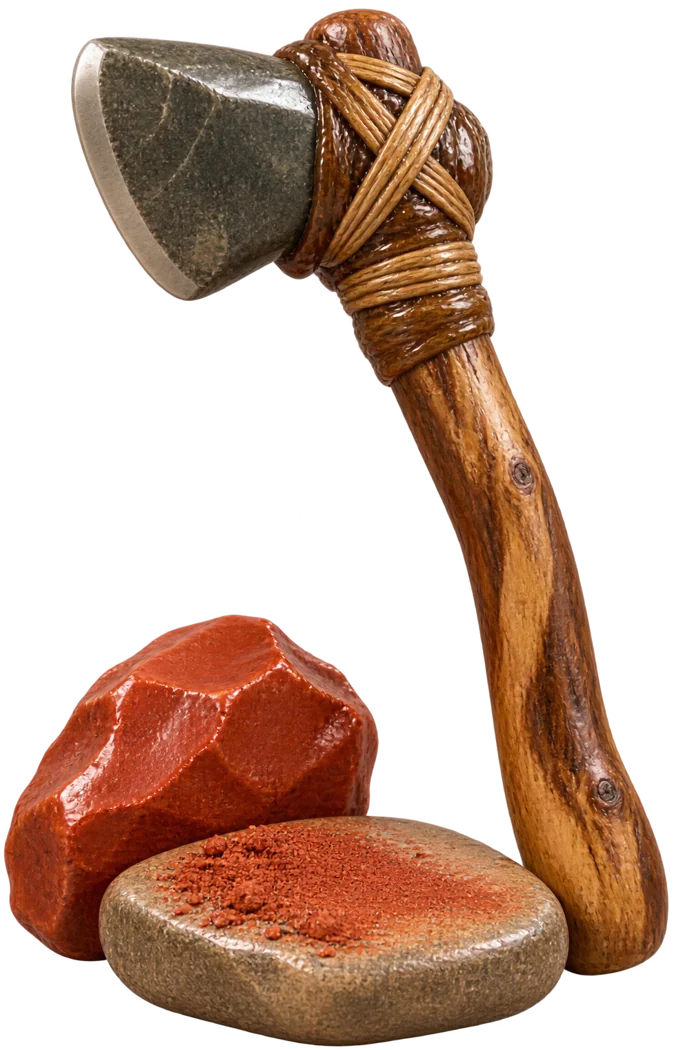
More than 100,000 artefacts have come out of the ground: flaked stone tools, ground stone axe heads, grinding stones, shellfish, seeds, pandanus nuts and human burials. Among the oldest layers are pieces of ochre with ground facets, a hint that even the earliest people here may have painted walls, objects or themselves.
Read more on Wikipedia
Sources: en.wikipedia.org/wiki/Madjedbebe, en.wikipedia.org/wiki/Last Glacial Maximum