
Our time · politics
People Power Revolution
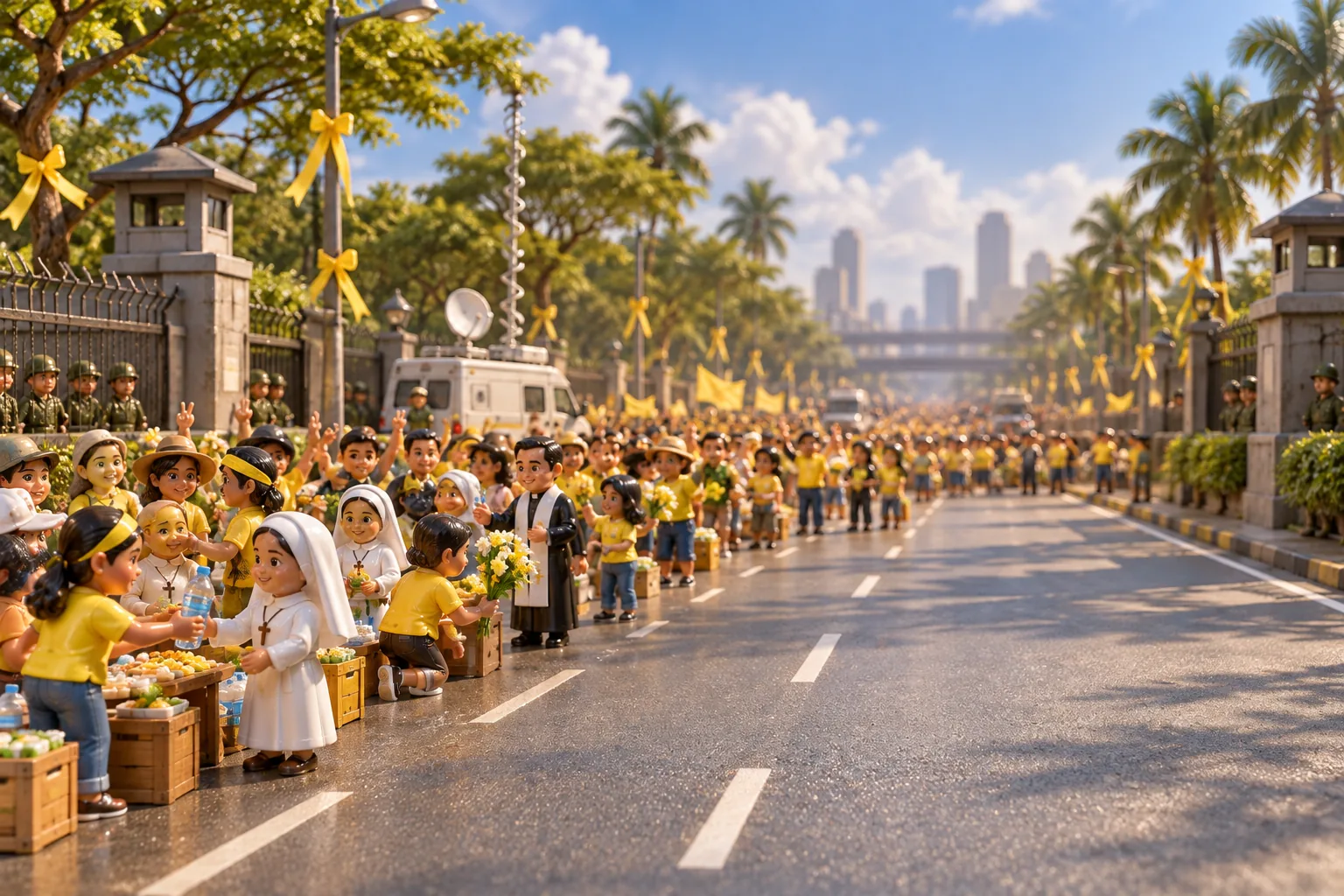
Nuns knelt in front of the tanks with rosaries in their hands, and the marines in the tanks did not drive on.
Ferdinand Marcos was elected president of the Philippines in 1965. In 1972, barred from a third term, he declared martial law, closed Congress and critical newspapers and jailed his opponents, among them Senator Benigno "Ninoy" Aquino. On 21 August 1983, returning from exile in the United States, Aquino was shot dead at Manila airport. Yellow ribbons, from the song "Tie a Yellow Ribbon Round the Ole Oak Tree", became the sign of protest, and his widow Corazon Aquino ran against Marcos in a snap election on 7 February 1986.
The count was marred by violence and fraud; 30 computer technicians of the election commission walked out in protest, yet Marcos was proclaimed the winner. On 22 February Defence Minister Juan Ponce Enrile and General Fidel Ramos, whose coup plot had been discovered, announced that they no longer supported Marcos and holed up in two army camps on EDSA, the great highway of Manila. That evening Cardinal Jaime Sin went on Radio Veritas and asked people to go to EDSA and protect them.
Hundreds of thousands came, and in all more than two million civilians joined. When marines with tanks moved in along Ortigas Avenue, crowds blocked them, nuns knelt in front of the tanks praying the rosary, and the troops stopped. On the morning of 25 February Corazon Aquino was sworn in as president at Club Filipino; an hour later Marcos held his own inauguration at Malacañang Palace. That same night Marcos, his family and close supporters left, and they went into exile in Hawaii.
Read more on Wikipedia
