Prehistory · exploration
People in the Americas
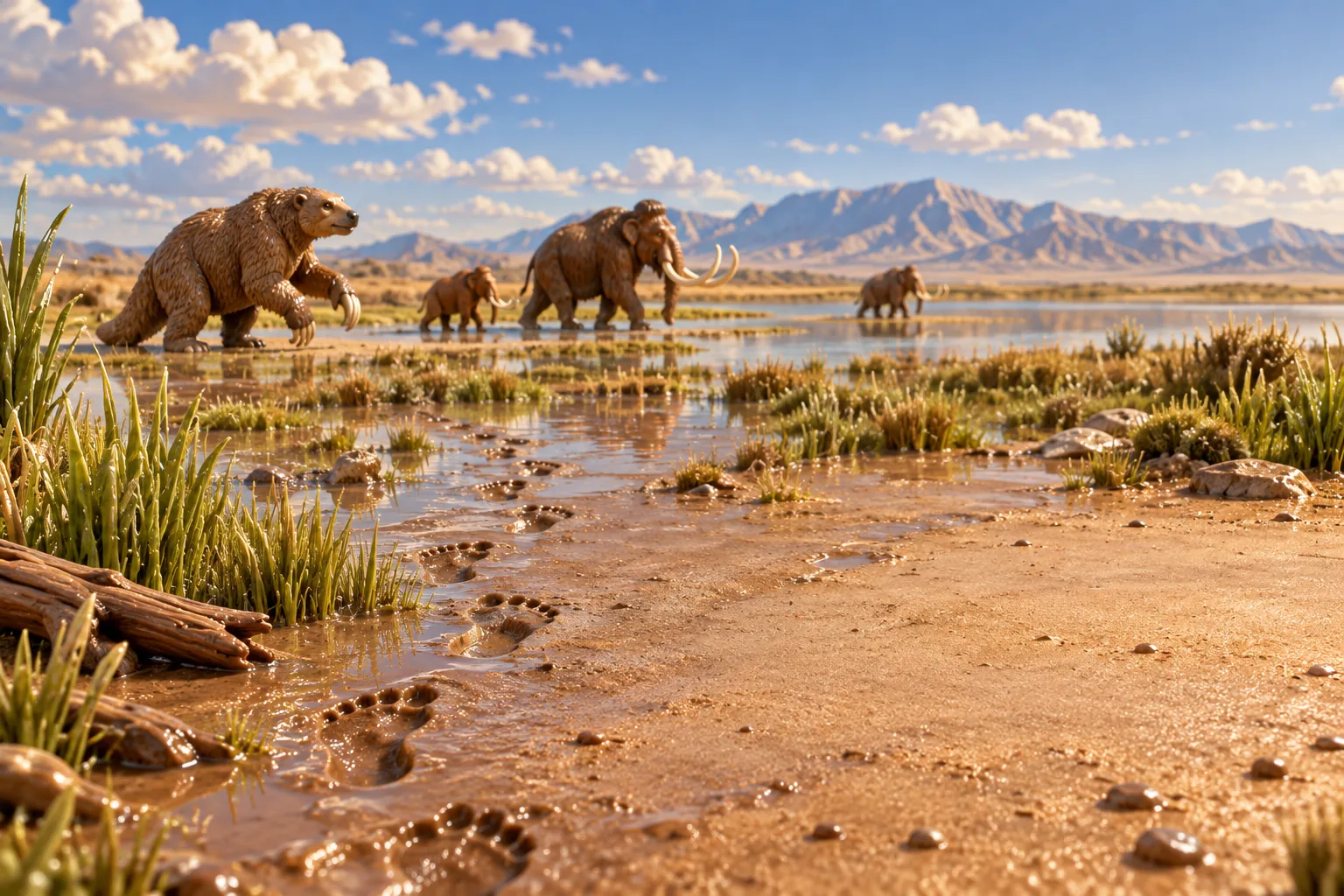
Some 60 footprints in a dry lakebed in New Mexico may show that people walked in North America at the height of the last Ice Age.
During the last Ice Age so much water was locked up in ice that the sea fell and a land bridge, Beringia, joined Siberia to Alaska. Hunter-gatherers from northeast Asia lived there; geneticists think their ancestors split from other Siberians about 36,000 years ago and were cut off around 25,000 years ago, becoming the ancestors of today's Indigenous peoples of the Americas. The question is when they moved south past the great ice sheets that covered Canada, and how: along the Pacific coast, perhaps by boat, or later through an ice-free corridor inland.
For much of the 20th century the answer was the Clovis culture, known for its spear points dated to about 13,000 years ago. Then older sites piled up. Monte Verde in southern Chile is dated to about 14,500 years ago, human droppings in Oregon's Paisley Caves to 14,300, and stone tools at Buttermilk Creek in Texas to 15,500. Most scholars now think people were south of the ice sometime between 15,000 and 20,000 years ago.
The boldest evidence comes from White Sands National Park in New Mexico, where about 60 human footprints were found in old lakebed layers. Seeds above and below them gave ages of 21,000 to 23,000 years. Critics argued the seeds could make the prints look older than they are, but follow-up studies by other methods have supported dates of up to 23,000 years. Other archaeologists still doubt them, since no site that old with a large number of artifacts has been found.
Read more on Wikipedia