Middle Ages · state
Pannonian Avars
Steppe horsemen whom the Turks called runaway slaves ruled central Europe for two centuries, until Charlemagne's son seized their fortified treasure camp, the Ring.
The Avars were steppe horsemen who fled west from the power of the Göktürks, who called them escaped slaves. Around 558 they sent an embassy to Emperor Justinian in Constantinople and agreed to fight the empire's enemies in return for yearly payments. In 567, under their khagan Bayan I, they joined the Lombards to destroy the Gepid kingdom in the Carpathian Basin, then persuaded the Lombards to move on into Italy and kept the basin for themselves.
By about 580 Bayan ruled most of the Slavic, Germanic and Bulgar tribes of Pannonia, and in 582 he took Sirmium, an old Roman capital. By 600 the khaganate stretched from modern Austria to the Pontic steppe. In 617 the Avars struck at Constantinople during talks with Emperor Heraclius, plundering the suburbs and taking 270,000 captives. In 626 they besieged the city together with a Sasanian Persian force, and failed.
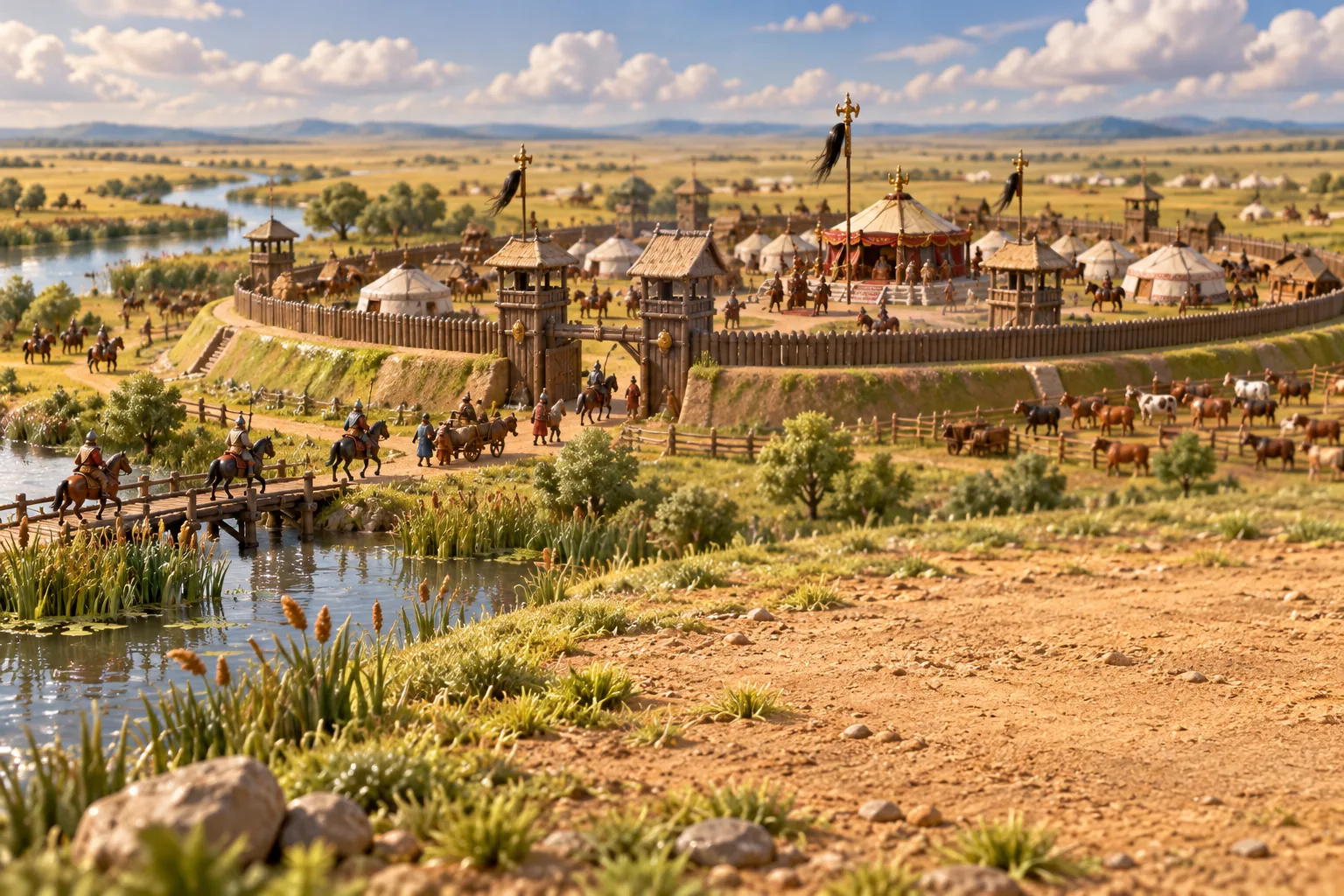
After 626 their power waned. The Slavic ruler Samo and the Bulgar leader Kubrat broke away in the 630s, and the realm later shrank to half its size. From 788 the Franks attacked. Charlemagne led an army into Avar land in 791, and his son Pepin of Italy captured the fortified camp known as the Ring, full of plunder from earlier wars. By 796 the Avar chiefs had surrendered and accepted baptism, and the last Avar prince is mentioned in 822.
Read more on Wikipedia