Middle Ages · state
Pallava dynasty
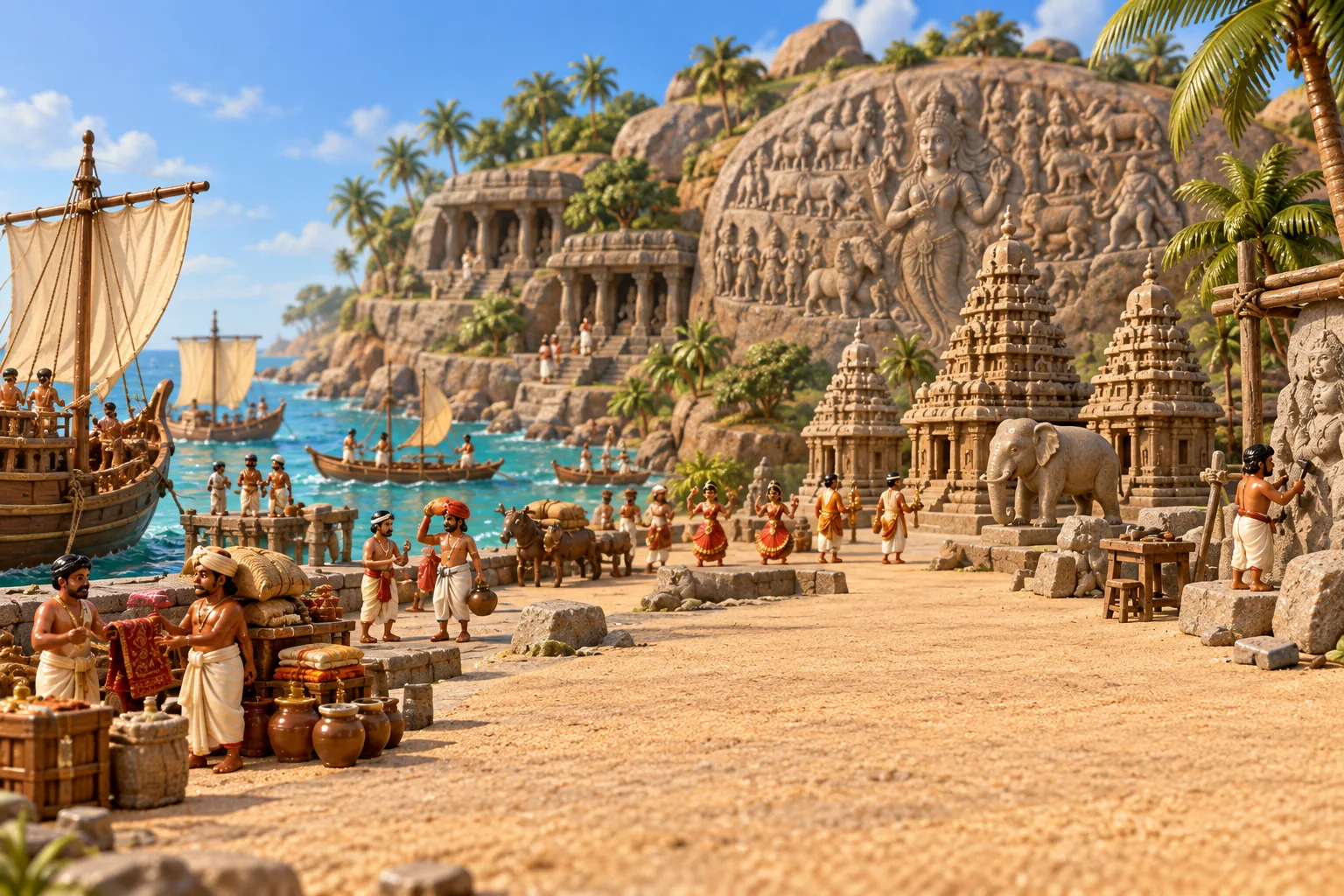
Pallava kings carved whole temples out of boulders by the sea, and their script became the mother of writing systems from Tamil Nadu to Cambodia.
The Pallavas first served the Satavahana Empire and rose after its fall. Their early copper-plate grants of the 4th century were issued from Kanchipuram, which they had taken from the Cholas and which remained their capital. In the 6th century the Kalabhras overran the Tamil country, until near its end Simhavishnu struck back. The Tamil lands were then shared between the Pallavas in the north and the Pandyas of Madurai in the south.
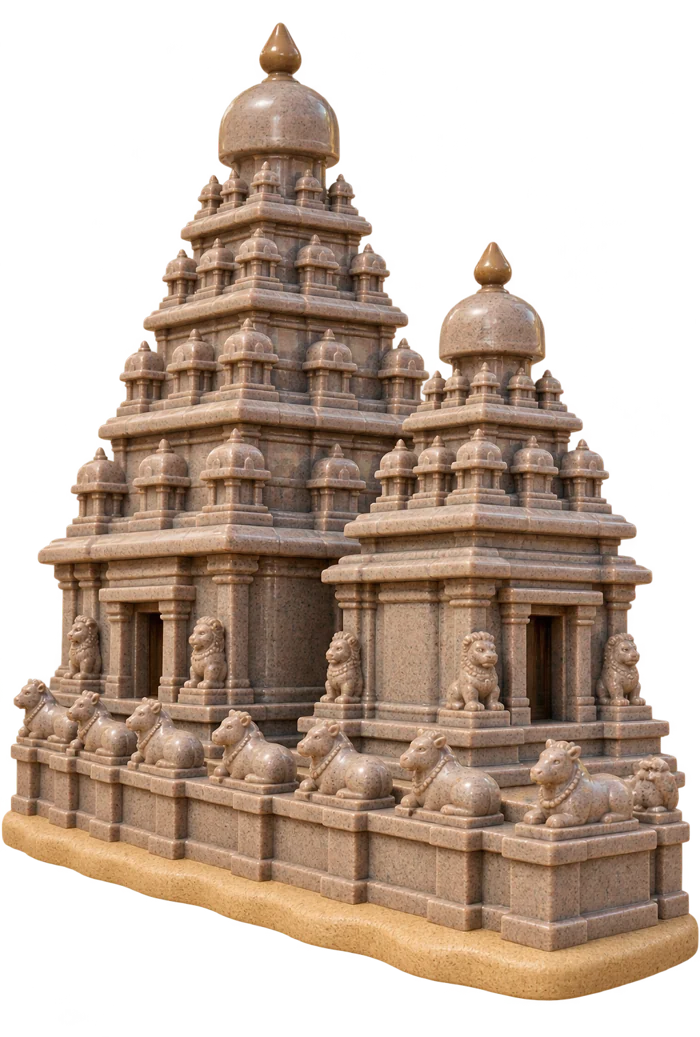
Under Mahendravarman I, from about 600 to 630, and his son Narasimhavarman I, the Pallavas became a great power. They fought the Chalukyas of Vatapi for generations: in 642 Narasimhavarman, called Mamalla, the great wrestler, took and held their capital Badami. The port of Mamallapuram, or Mahabalipuram, carries his name. Pallava builders moved from cave temples cut into rock, from about 610 to 690, to free-standing stone temples, and Narasimhavarman II, known as Rajasimha, built the Kailasanatha temple at Kanchipuram and the Shore Temple, finished around 725.
In the 8th and 9th centuries the Chalukyas and then the Rashtrakutas raided deep into Pallava land, and the Pandyas pressed from the south. The last Pallava king, Aparajitavarman, was defeated by the Chola king Aditya I, and by 897 the kingdom was gone.
Read more on Wikipedia
Sources: en.wikipedia.org/wiki/Pallava dynasty, en.wikipedia.org/wiki/Shore Temple


