Middle Ages · state
Pagan kingdom
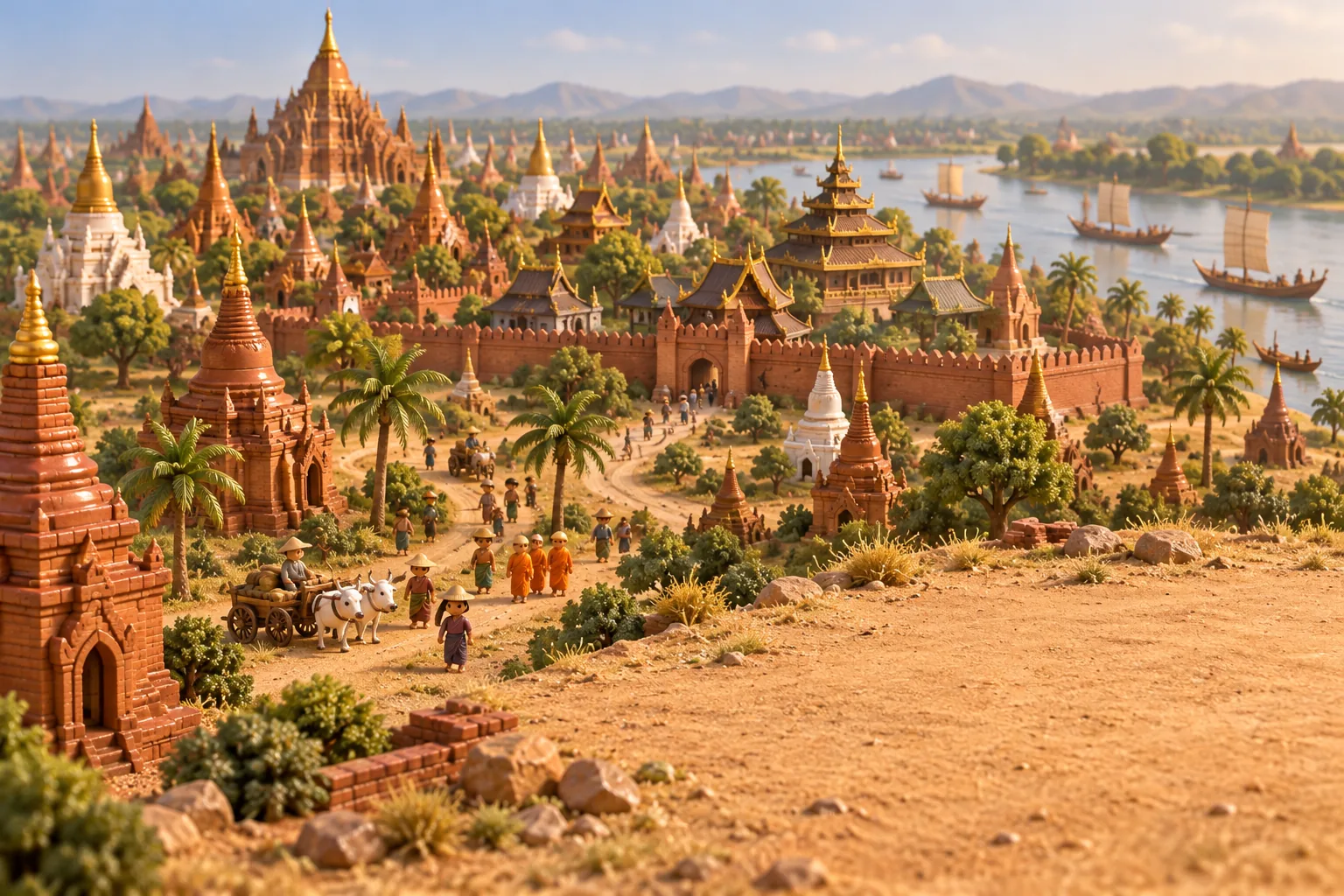
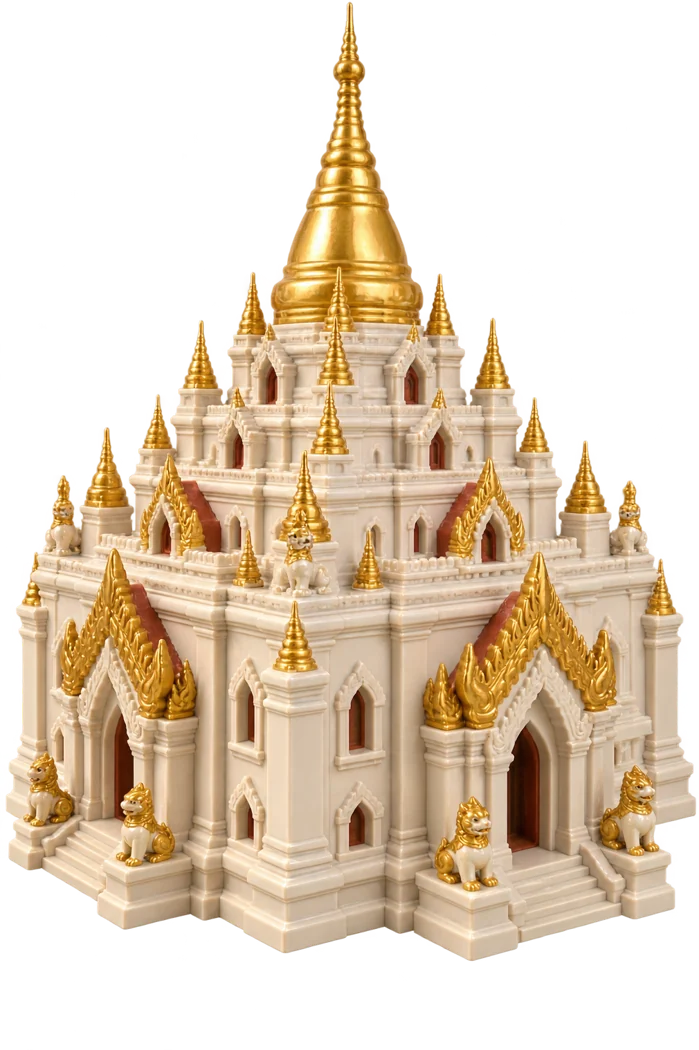
Its rulers built more than 10,000 Buddhist temples on one plain by the Irrawaddy, and the rich gave so much tax-free land to religion that the crown ran short.
Pagan grew from a small 9th-century settlement of the Mranma, the ancestors of today's Bamar, on the middle Irrawaddy. In December 1044 a prince named Anawrahta came to power, and verifiable Burmese history begins with him. He turned the dry lands around Kyaukse into a rice granary with weirs and canals, and from the mid-1050s conquered the Irrawaddy valley and its edges, founding the first Burmese empire.
His successors kept the peace for two centuries. Kyansittha, who reigned from 1084 to 1112, blended Burman, Mon and Pyu culture and favoured Theravada Buddhism, and Pagan was recognised as a sovereign kingdom by the Song emperors of China and the Chola kings of India. Alaungsithu standardised weights and measures, and under Sithu II, around 1200, the empire reached its greatest extent. In the 12th and 13th centuries Pagan and the Khmer Empire were the two great powers of mainland Southeast Asia, and the city may have held 200,000 people.
But the rich kept giving tax-free land to the Buddhist clergy, and the crown ran short of revenue. King Narathihapate refused Mongol demands for tribute, Kublai Khan's armies invaded from 1277, and in 1287 the vassal states broke away and the empire fell apart.
Read more on Wikipedia
Sources: en.wikipedia.org/wiki/Pagan Kingdom