Industrial age · war
Pacific War
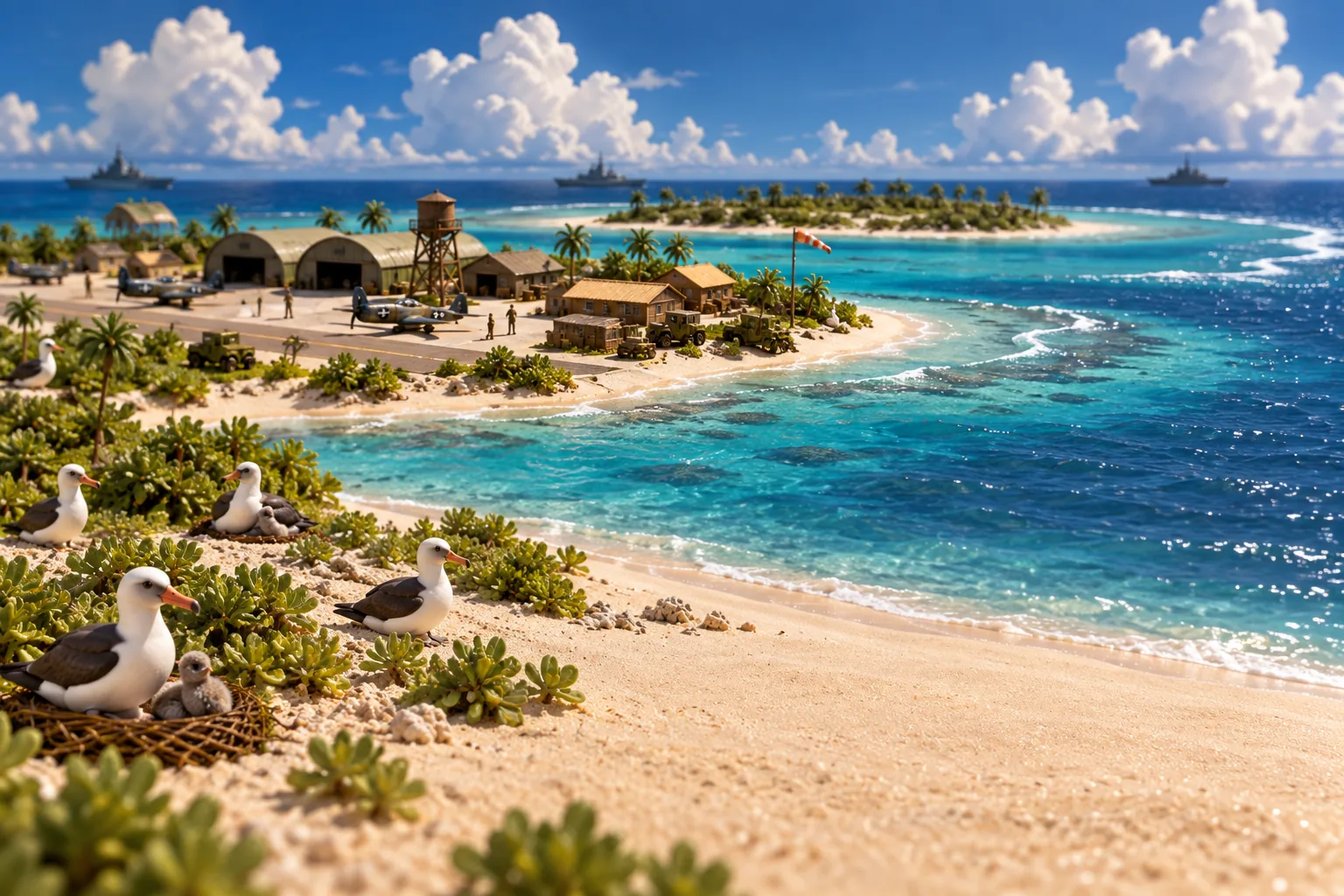
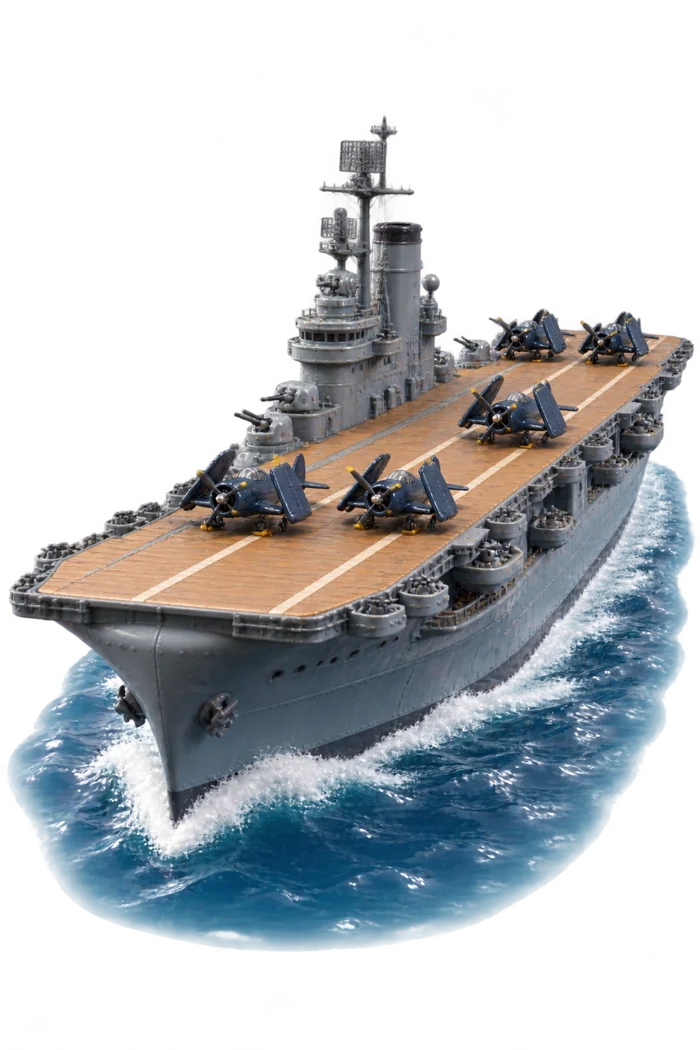
For six months after Pearl Harbor Japan seemed unstoppable; then, near a tiny atoll called Midway, it lost four aircraft carriers in a single day.
Japan had been at war with China since 1937, and in 1940–1941 it occupied French Indochina. On 7–8 December 1941 it struck across the Pacific at once: the American fleet at Pearl Harbor in Hawaii, the Philippines, Guam and Wake Island, and the British colonies of Malaya, Singapore and Hong Kong. In six months Japan took them all except Hawaii, along with the Dutch East Indies, Burma and parts of New Guinea. Then, in May 1942, aircraft carriers fought at the Coral Sea, and in June Japan was defeated at the Battle of Midway, the turning point of the war.
From August 1942 the Allies fought back on Guadalcanal and New Guinea. Admiral Chester Nimitz's forces then 'island-hopped' across the central Pacific, leaving strong Japanese bases to wither. In June 1944 the Japanese fleet was badly damaged in the Philippine Sea, and in October the Battle of Leyte Gulf, perhaps the largest naval battle in history, left it unable to fight again; Japanese pilots turned to kamikaze attacks. American submarines cut off nearly all of Japan's oil imports.
Iwo Jima and Okinawa were taken in 1945 at terrible cost, and American bombers burned Japan's cities. After the atomic bombings of Hiroshima and Nagasaki and the Soviet invasion of Manchuria, Japan announced its surrender on 15 August and signed it on 2 September 1945. Allied forces occupied Japan until 1952.
Read more on Wikipedia
Sources: en.wikipedia.org/wiki/Pacific War


