Industrial age · person
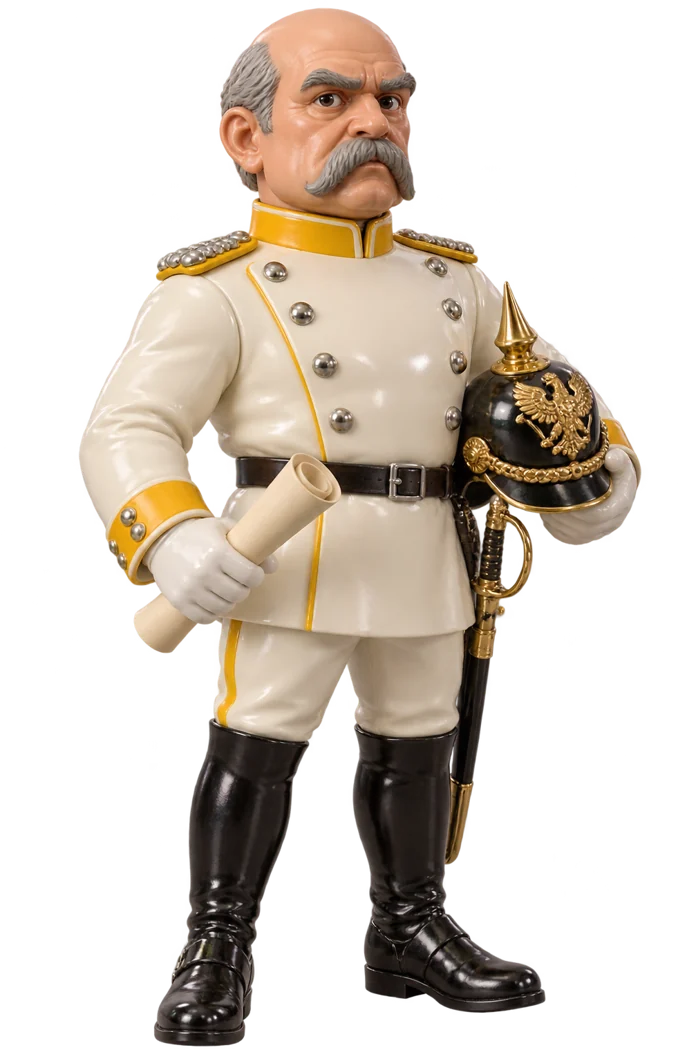
Otto von Bismarck
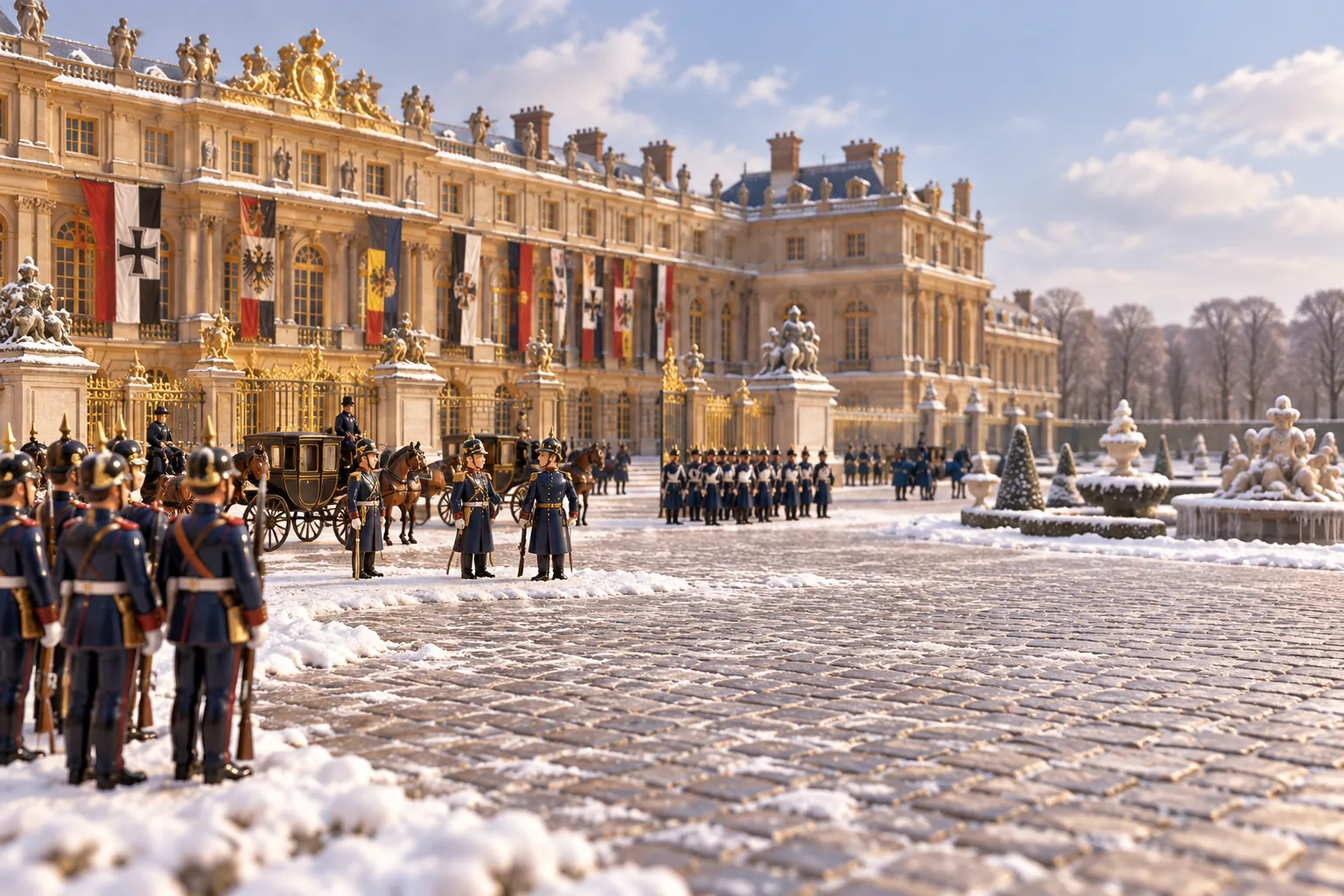
With the war against France in its final phase, the German princes gathered in the Hall of Mirrors at Versailles and proclaimed the King of Prussia German Emperor, the work of his chief minister.
Otto von Bismarck was born on 1 April 1815 at Schönhausen, his family's estate west of Berlin, the son of a Junker landowner. He studied law at Göttingen and Berlin, wanted to be a diplomat, and wrecked his first legal post by taking unauthorised leave to chase two English girls. After years managing family estates he entered politics, and from 1851 he represented Prussia at the German Confederation in Frankfurt, then served as ambassador in Saint Petersburg and Paris.
In 1862 King Wilhelm I, locked in a budget fight with parliament over the army, made him minister president. Bismarck told legislators that the great questions of the day would be settled not by speeches and majority votes but "by iron and blood", and governed without an approved budget. He then won three short wars: against Denmark in 1864, against Austria in 1866, when Prussia's victory at Königgrätz came after only seven weeks, and against France in 1870. On 18 January 1871, in the Hall of Mirrors at Versailles, Wilhelm was proclaimed German Emperor, and Bismarck became the first chancellor of the new empire.
He fought the Catholic Church in the Kulturkampf, passed laws against the socialists and, in the 1880s, created accident, old-age and health insurance, the first welfare state. Abroad he worked to keep the peace. The young Wilhelm II forced him to resign on 18 March 1890. He died at Friedrichsruh on 30 July 1898, aged 83.
Read more on Wikipedia


