Industrial age · exploration
Oregon Trail
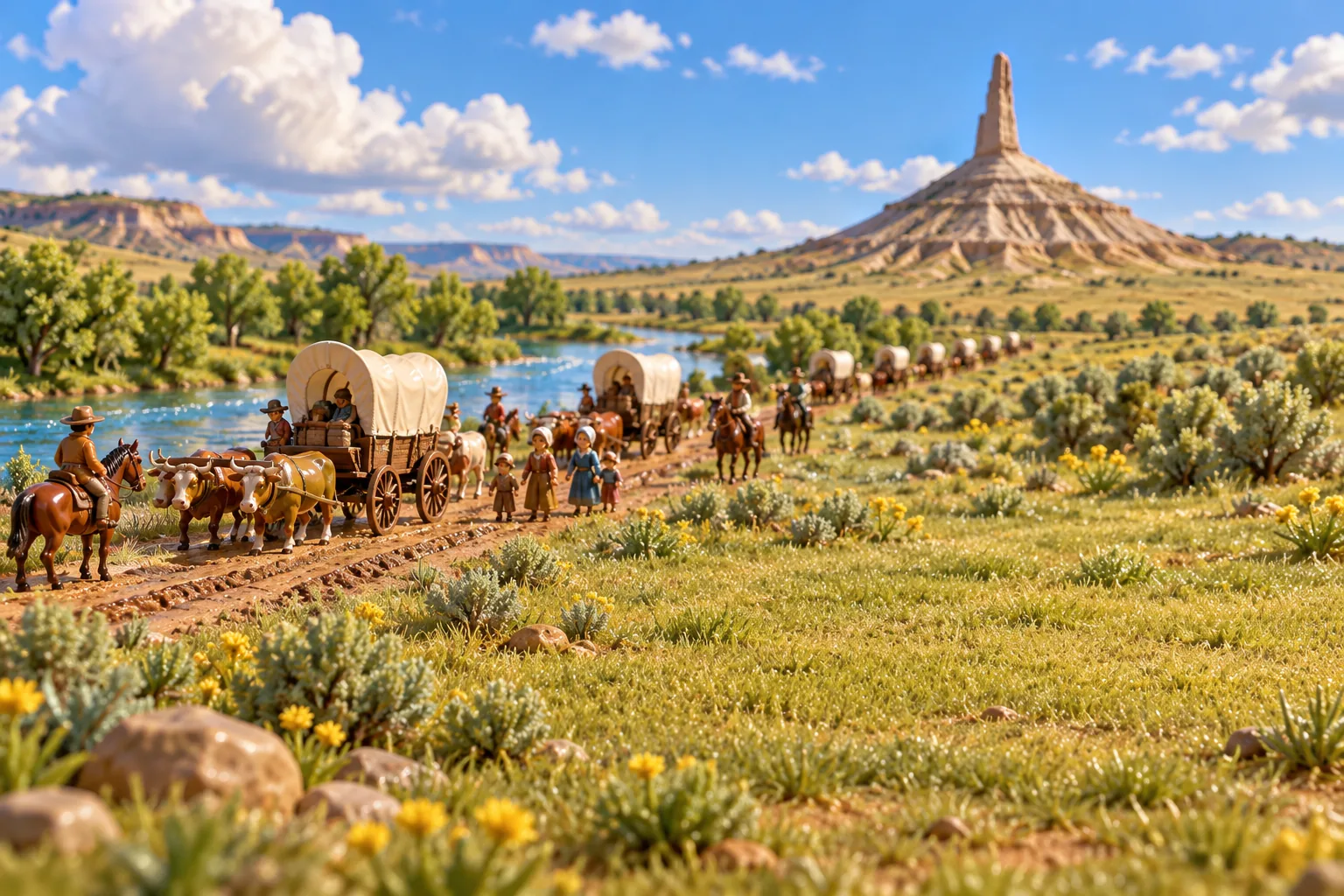
Families walked for months beside their wagons across prairie, desert and mountains, and buried their dead in the middle of the road.
The Oregon Trail was a 2,170-mile (3,490 km) wagon route from the Missouri River to the green valleys of Oregon, across what are now Kansas, Nebraska, Wyoming, Idaho and Oregon. Fur traders and trappers laid it out from about 1811. Heading back east from Fort Astoria on the Pacific, Robert Stuart's party found South Pass, a wide and easy crossing of the Continental Divide in Wyoming. By 1836, when the first emigrant wagon train left Independence, Missouri, wagons could get as far as Fort Hall in Idaho.
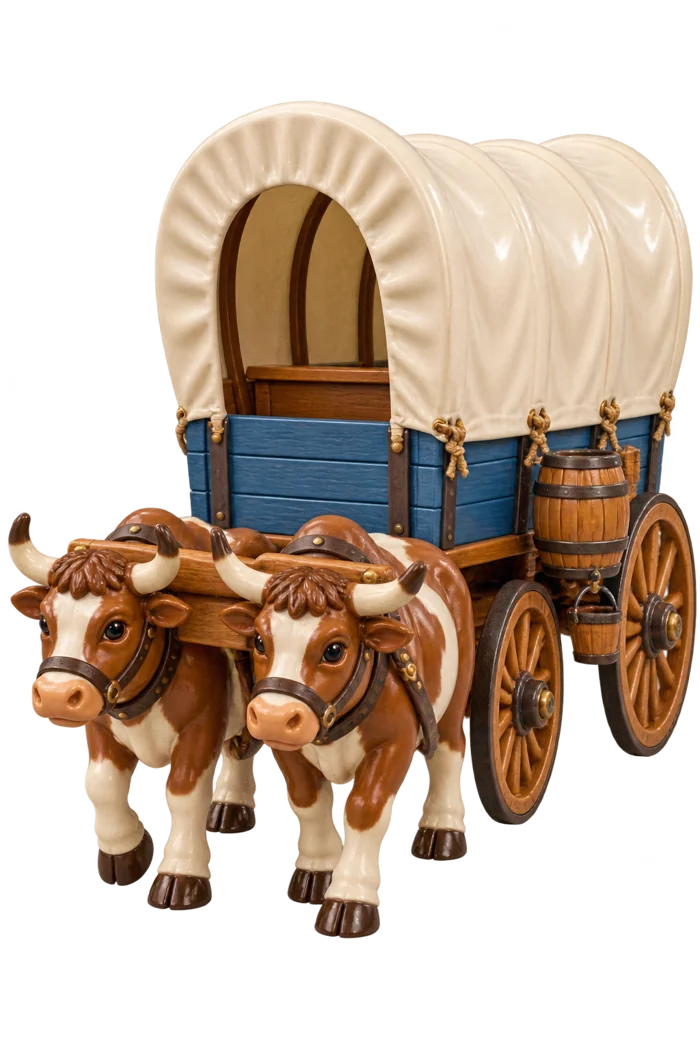
In the Great Migration of 1843 an estimated 700 to 1,000 people set out for Oregon. At Fort Hall they were told to abandon their wagons, but the missionary Marcus Whitman led them on. They cut a road through the timber of the Blue Mountains, took their wagons apart at The Dalles and floated them down the Columbia River, and nearly all reached the Willamette Valley by early October. Most families used oxen, which were docile, cheap, ate prairie grass and kept going through mud and snow at up to two miles an hour.
About 400,000 settlers, farmers, miners and ranchers used the trail and its branches, most between 1846 and 1869. Disease was the main killer: in the cholera years of 1849 to 1855 it took up to 3% of all travellers. The trail faded after the first transcontinental railroad was finished in 1869, when the trip west took seven days and could cost as little as $65.
Read more on Wikipedia
Sources: en.wikipedia.org/wiki/Oregon Trail

