Industrial age · state
Orange Free State
Boer farmers who had trekked away from British rule got a republic almost by accident, when Britain decided it no longer wanted the land.
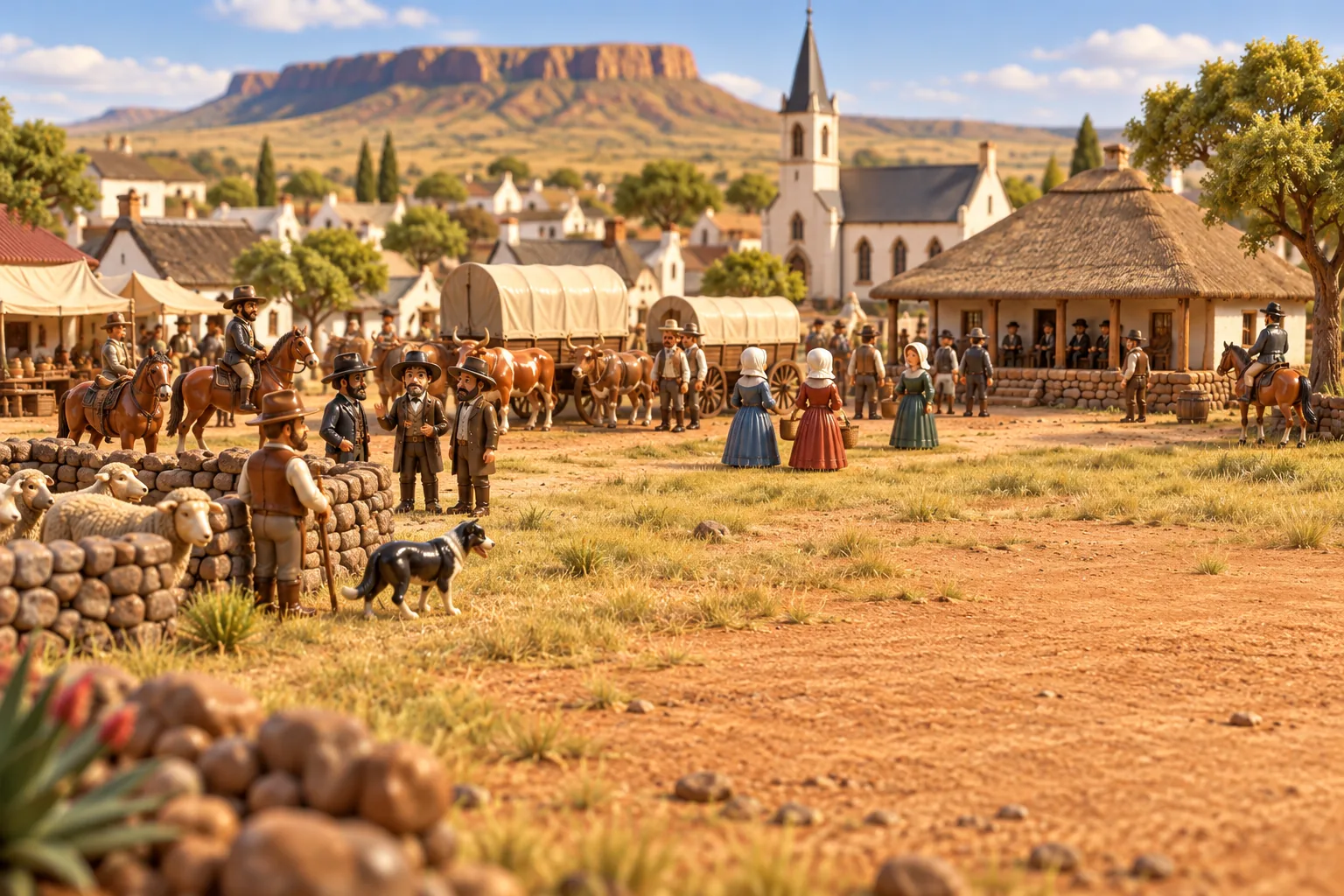
From 1824 Boer farmers of Dutch, French Huguenot and German descent moved north of the Orange River from the Cape Colony, and from 1836 the Great Trek brought many more who wanted to be free of British rule. In 1837 they defeated Mzilikazi's Matabele, founded Winburg and elected a Volksraad. Britain annexed the land between the Orange and the Vaal in 1848 as the Orange River Sovereignty, with Bloemfontein as its seat, but soon wanted to drop its responsibilities there.
On 23 February 1854 the Orange River Convention made the country independent as the Orange Free State. Its constitution gave full burgher rights only to people of European descent, with a single elected Volksraad and a president chosen for five years. The state fought several wars with Moshoeshoe's Basotho over the border. Under Johannes Brand, president from 1864 to 1888, it became peaceful and prosperous, and the diamond rush of the 1870s brought money to its farmers and mines such as Jagersfontein.
In 1899 the Free State joined the South African Republic against Britain, and its burghers seized a Natal train on 11 October, the first act of the Second Boer War. British troops occupied Bloemfontein on 13 March 1900, and the Treaty of Vereeniging on 31 May 1902 ended the republic.
Read more on Wikipedia