Antiquity · state
Olmecs
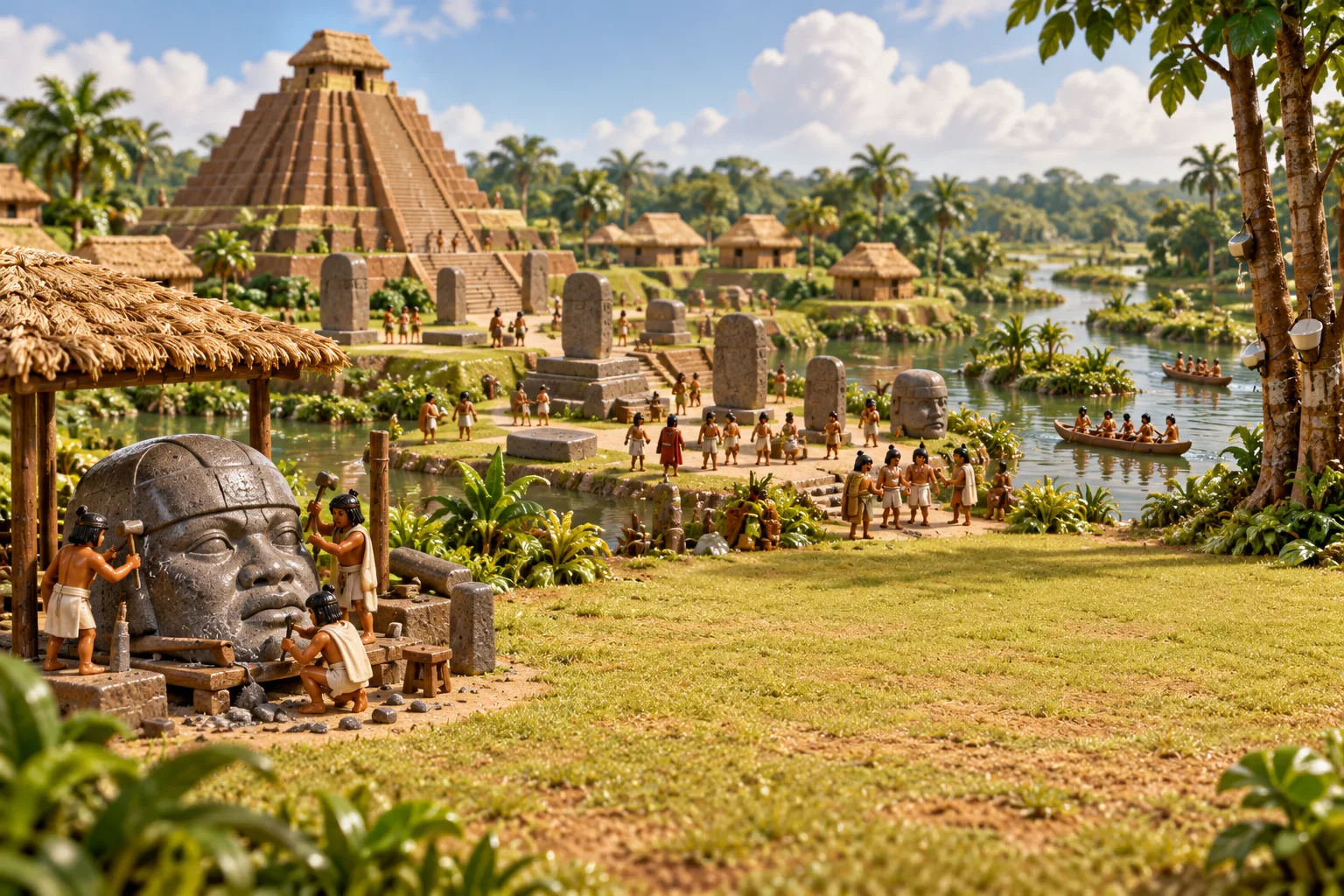
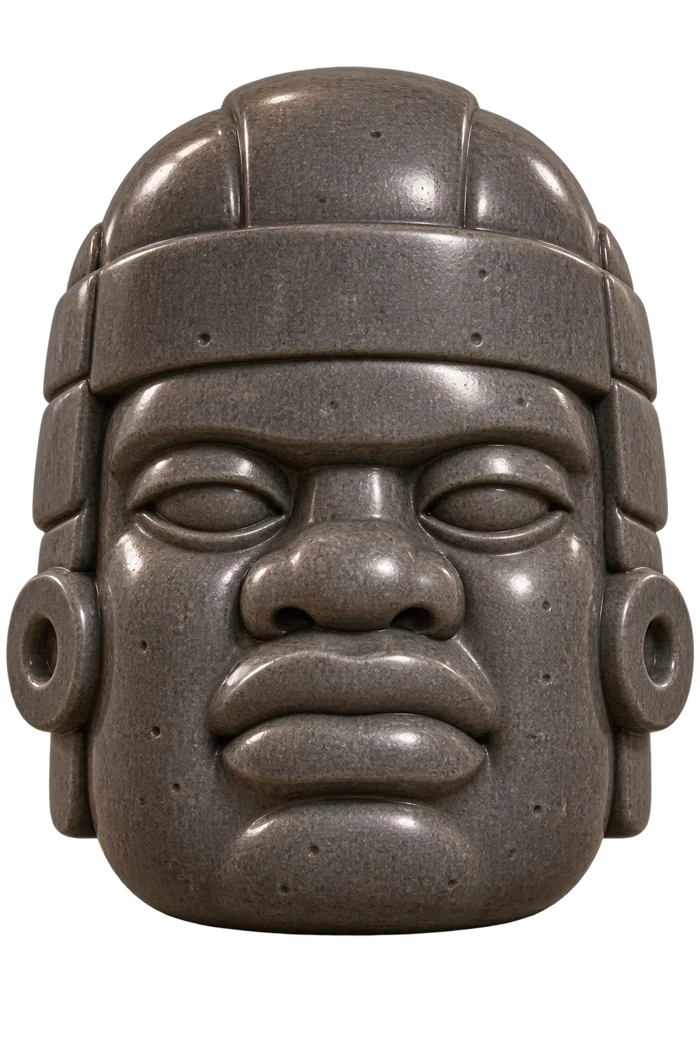
They carved colossal heads of basalt up to 3.4 metres tall, from boulders brought out of the Tuxtla mountains without wheels or draught animals.
The Olmecs lived in the wet lowlands of today's Veracruz and Tabasco, on the Gulf of Mexico, where rivers such as the Coatzacoalcos gave rich soil and easy transport. Distinctive Olmec features appeared at San Lorenzo around 1400 BC, and it became their first great centre. Around 900 BC San Lorenzo was all but abandoned, after many of its monuments were destroyed, and La Venta rose in its place until it too was abandoned around 400 BC.
Their elites traded far for luxuries: jade from the Motagua valley of Guatemala and obsidian from the Guatemalan highlands and Puebla. They seem to have practised ritual bloodletting and played the Mesoamerican ballgame with balls of rubber, made by mixing latex from the rubber tree with the juice of a vine. The best-known Olmec works are their colossal heads, carved from single boulders of volcanic basalt from the Sierra de los Tuxtlas. Once thought to show ballplayers, they are now generally seen as portraits of rulers, perhaps dressed for the game.
By about 400 BC the major centres had been abandoned and the population of the eastern heartland fell sharply, probably because of changes in the rivers. Olmec style faded, but many of its traditions lived on in the cultures that followed.
Read more on Wikipedia
Sources: en.wikipedia.org/wiki/Olmecs, en.wikipedia.org/wiki/Olmec colossal heads


