Industrial age · politics
October Revolution
The revolution that shaped the 20th century happened in November, and its first night cost almost no lives.
In February 1917 a first revolution forced Tsar Nicholas II to abdicate, and a Provisional Government, later led by Alexander Kerensky, took power. It kept Russia in the First World War and grew ever more unpopular, while workers and soldiers organised themselves into councils called soviets. Vladimir Lenin's Bolsheviks, a far-left party, called for an armed rising, and on 23 October the Petrograd Soviet, led by Leon Trotsky, voted to back one.
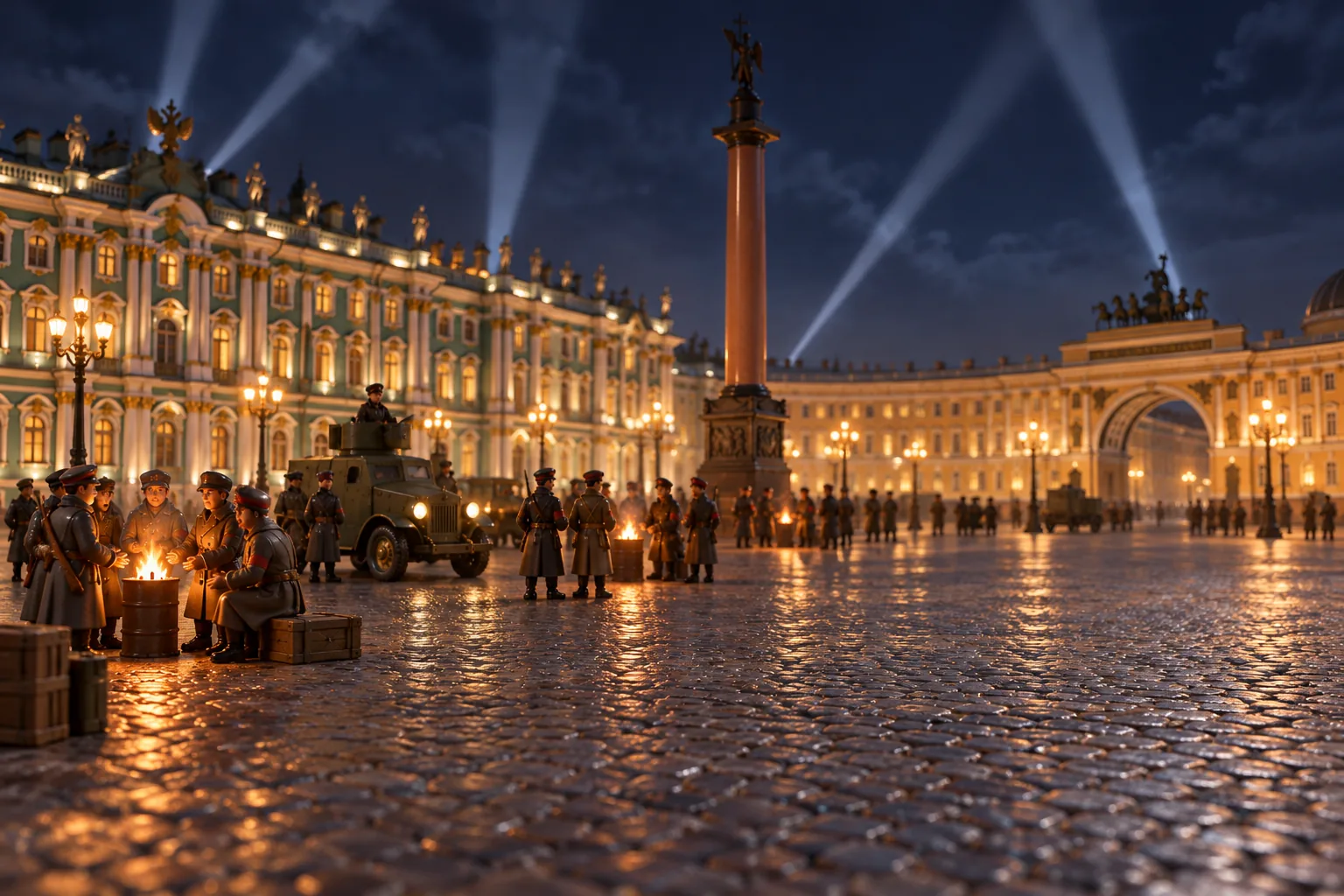
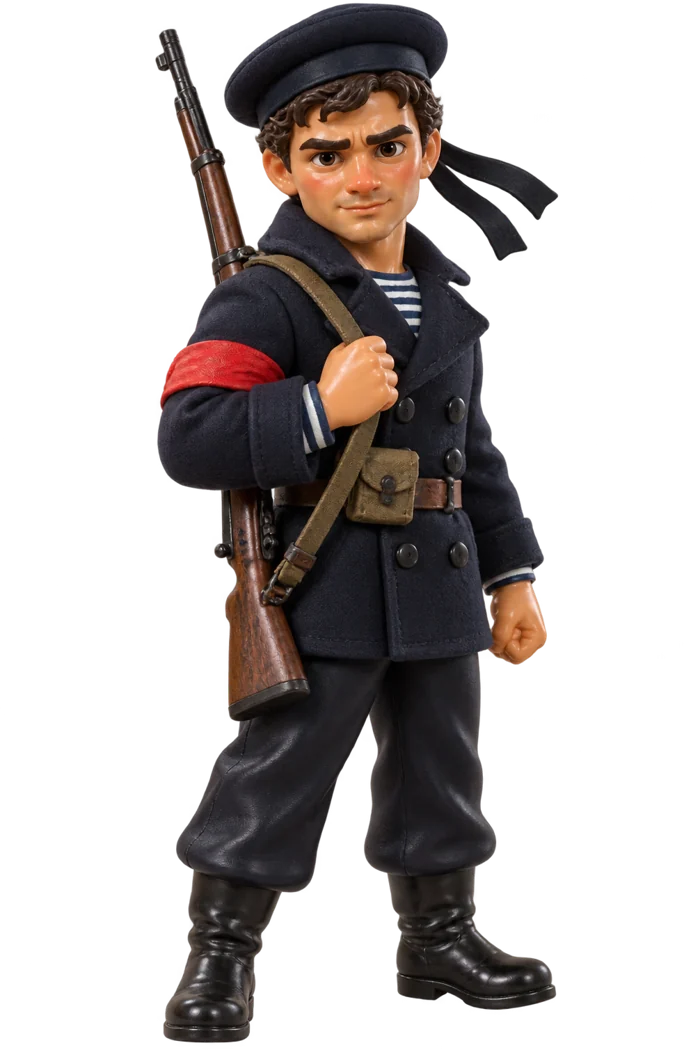
The uprising began on 7 November, 25 October in the Julian calendar Russia still used. Red Guards and soldiers under the Military-Revolutionary Committee occupied bridges and government buildings, while Kerensky drove out of the city in a car borrowed from the American embassy, hoping to find loyal troops. Crowds surrounded the Winter Palace, the seat of the government. At 9:45 p.m. the cruiser Aurora fired a blank shot from the harbour. By 2:10 a.m. the Bolsheviks controlled the palace: its defenders, military cadets and the 140 volunteers of the Women's Battalion, surrendered, and the ministers were taken to the Peter and Paul Fortress.
That same night the Second All-Russian Congress of Soviets approved the rising. When moderate socialists walked out in protest, Trotsky told them to go "into the dustbin of history". The new Bolshevik cabinet passed the Decree on Peace and the Decree on Land, which confirmed the peasants' seizure of private estates. Many Russians refused to accept the new power, and the country descended into a civil war that lasted until late 1922 and led to the creation of the Soviet Union.
Read more on Wikipedia